Society and News in Brief
Society is not an abstraction. It is the bus route that gets you to work on Main Street, the school board meeting announced in your neighbourhood newsletter, the local food bank that quietly feeds thousands of families across Winnipeg every month. This page, Society and News in Brief, is dedicated to making sense of the social world around us — clearly, briefly and without jargon.
Think of this page as a friendly explainer hub. Each short piece answers one question: what is happening in our communities, why does it matter, and how does it affect daily life in Winnipeg and across Canada? Whether you are new to the city, a curious student, or simply someone who wants to follow local affairs with confidence, you will find practical, accessible context here.
What ‘Society and News in Brief’ Actually Covers
The word ‘society’ covers a vast territory. To keep things useful, this category focuses on a handful of recurring themes that shape everyday life in Manitoba and beyond:
- Community life and demographics — how neighbourhoods change, who lives where, and what that means for services like transit, schools and healthcare.
- Civic affairs and local government — city council decisions, municipal budgets, and the policies that quietly shape your commute and your taxes.
- Social issues in the news — housing, food security, public safety, mental health, and reconciliation, explained with nuance rather than slogans.
- Education, culture and family life — what is happening in schools, libraries, community centres and cultural institutions.
Why focus on ‘in brief’? Because attention is a scarce resource. A news brief works like a good summary in a medical chart: it gives you the essentials first, and points you to the deeper story if you want more. Our goal is to respect your time while never oversimplifying the substance.
Why Local Context Matters: The Winnipeg and Manitoba Angle
National headlines travel fast, but social realities are deeply local. A story about housing affordability means something different in Winnipeg than it does in Toronto or Vancouver. Here, prices and rents remain comparatively moderate, yet vacancy rates, rental demand and the cost of living have all tightened in recent years, putting pressure on students, seniors and newcomers alike.
Winnipeg’s social fabric is also uniquely shaped by its history and geography. The city sits on Treaty One territory, home to one of the largest urban Indigenous populations in Canada. Any serious discussion of society here must include topics like reconciliation, the legacy of residential schools, and the ongoing work of organizations and communities to build respectful relationships. Ignoring this context would mean telling half the story.
Weather plays its part too. A cold snap that pushes temperatures below -30°C is not just a conversation topic — it becomes a public health issue. Extreme cold warnings activate warming shelters and bus freeze-zone exceptions across the city, reminding us that in Manitoba, climate and social policy are inseparable.
How to Read News Briefs Critically
Being informed is a skill, not just a habit. A brief news item compresses complex events, so it helps to approach it with a few simple tools — think of them as a filter you pass every headline through:
- Check the source. Who is reporting the story, and are they close to the community involved? A report on Winnipeg’s North End carries more weight when it includes voices from that neighbourhood.
- Look for the number behind the number. ‘Crime is up 10%’ may reflect a real trend, a small base number, or a change in how incidents are counted. Ask what the baseline is.
- Distinguish facts from framing. ‘The city approved a new shelter’ is a fact; ‘the city finally acted’ is an opinion dressed as news.
- Wait for the second report. Early figures on topics like population growth or employment are often revised. Patience is part of accuracy.
These habits take seconds to apply, and they protect you from the two most common traps of short-form news: overreaction and indifference.
The Key Institutions Shaping Society in Winnipeg
To follow local news effectively, it helps to know the main actors on the stage. Think of the city as an ecosystem, where each institution plays a distinct role:
- The City of Winnipeg and its council — responsible for transit (Winnipeg Transit), policing (Winnipeg Police Service), water, waste and zoning. Council votes regularly appear in society news because they decide how public money is spent.
- The Province of Manitoba — in charge of health care, education and social assistance. The Winnipeg Regional Health Authority, school divisions like Winnipeg School Division and Pembina Trails, and Manitoba Housing all fall under provincial oversight.
- Community organizations — groups such as Siloam Mission, Main Street Project, Winnipeg Harvest and neighbourhood associations often deliver frontline services and are frequently the first to spot emerging social trends.
- Local media and public broadcasters — they set much of the public agenda, which makes their editorial choices part of the story itself.
Understanding who does what prevents a common confusion: blaming city hall for problems that are provincial (or federal) in nature, and vice versa. A useful rule of thumb: if it involves a road or a bus route, start with the city; if it involves a hospital or a classroom, start with the province.
Trends Currently Reshaping Canadian Society
Several broad currents keep surfacing in society news across Canada, and Winnipeg offers a microcosm of each:
- Population growth and immigration. Canada has welcomed record numbers of newcomers in recent years, and Winnipeg has been one of the beneficiaries. Newcomer settlement agencies report rising demand for language classes and housing support, and the city’s cultural landscape — from Osborne Village to the North End — keeps diversifying.
- Housing affordability. What was once a Toronto and Vancouver story has become a national one. Rents have climbed, social housing waitlists remain long, and debates about densification versus suburban sprawl animate city councils everywhere, including Winnipeg’s.
- The mental health conversation. Public discussion of mental health has moved from the margins to the mainstream, with growing attention to youth wellbeing, addictions and the role of community-based services.
- Reconciliation in practice. Calls to action continue to translate into concrete measures — renamed streets, curriculum changes, partnerships — and these developments regularly make society news.
- Trust in institutions. Surveys consistently show declining confidence in media and government. This makes clear, honest local reporting more valuable, not less.
How to Stay Informed Without Burning Out
Constant exposure to bad news can produce what psychologists call ‘doomscrolling fatigue’. The solution is not to disengage, but to engage deliberately. Here is a simple routine many informed readers follow:
- Choose two or three trusted sources — one local, one national, one international — and stick with them rather than grazing across dozens of feeds.
- Set a time limit. Fifteen to twenty minutes a day is enough to stay current on society news.
- Follow up one story per week in depth. Depth beats breadth for genuine understanding.
- Participate once in a while. Attend a council meeting, join a community forum, or volunteer locally. Firsthand experience is the best antidote to cynicism.
Frequently Asked Questions
What is the difference between society news and general news?
General news covers events as they happen — politics, accidents, markets. Society news looks at the underlying patterns: demographics, inequality, community health, education. It answers the ‘why’ behind the ‘what’.
Why focus on Winnipeg rather than Canada as a whole?
Because the local scale is where abstract issues become tangible. National housing debates, for instance, take a very concrete form in Winnipeg’s rental market and neighbourhood planning. Understanding your own city gives you a grounded reference point for national conversations.
How often does this category update?
New short pieces are added regularly, covering current social topics relevant to Winnipeg and Canada. Bookmark this page and return often — society never stops moving, and neither does its news.
Can I trust brief formats to be accurate?
Brevity and accuracy are not enemies. A well-written brief respects facts while cutting decoration. That is the editorial promise of this category: fewer words, same rigour, more clarity.
Society is a story we are all writing together, one council vote, one community supper and one headline at a time. We hope this page helps you read that story with sharper eyes and greater confidence.
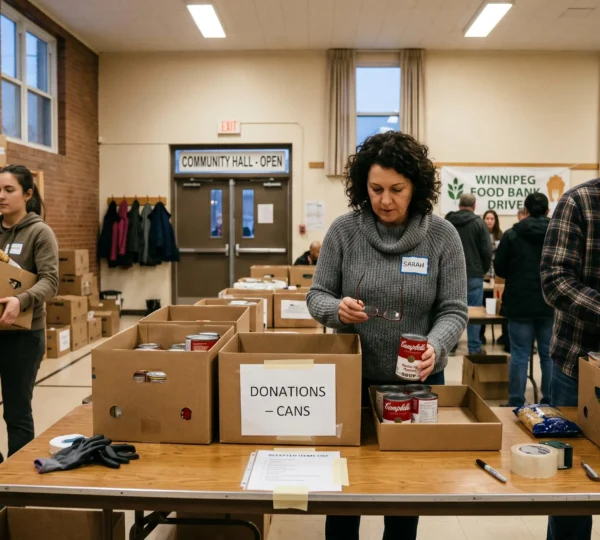
How Can a Winnipeg Food Drive Deliver More Useful Support to Local Communities?
A Winnipeg food drive delivers more useful community support when donations match what local food assistance organizations need and when volunteers have the capacity to move those donations safely and efficiently. Collecting more food is not necessarily the same as…
Read more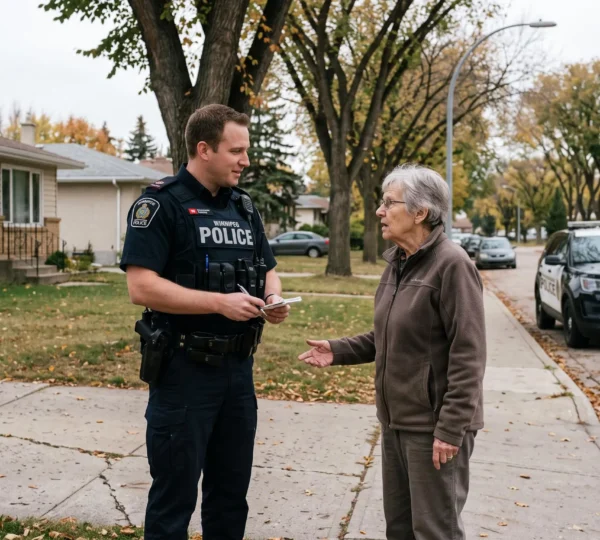
How Does Local Law Enforcement Fit Into Everyday Public Safety in Winnipeg?
Public safety in Winnipeg involves more than responding to emergencies. The Winnipeg Police Service (WPS) handles criminal incidents, receives reports of suspicious activity, supports crime prevention, and works alongside municipal services and community organizations. Understanding these different responsibilities helps residents…
Read more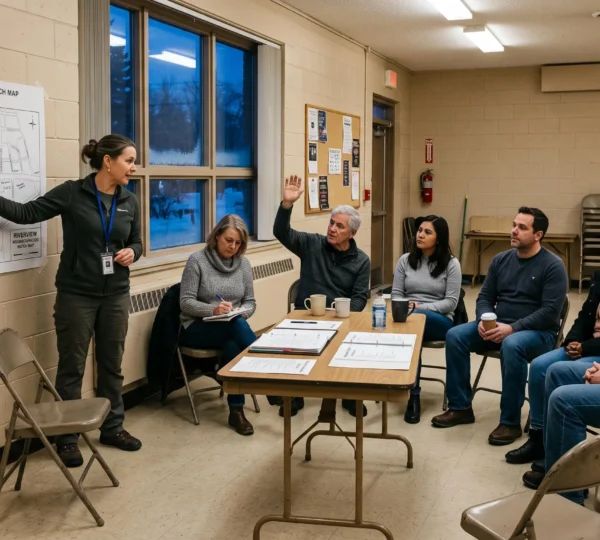
How Can Winnipeg Neighbourhood Watch Programs Improve Community Safety?
Neighbourhood Watch programs can improve community safety in Winnipeg by helping residents recognize concerning activity, communicate responsibly and report relevant information to the appropriate authorities. Their value comes from coordinated awareness and prevention, not from residents taking law enforcement into…
Read more