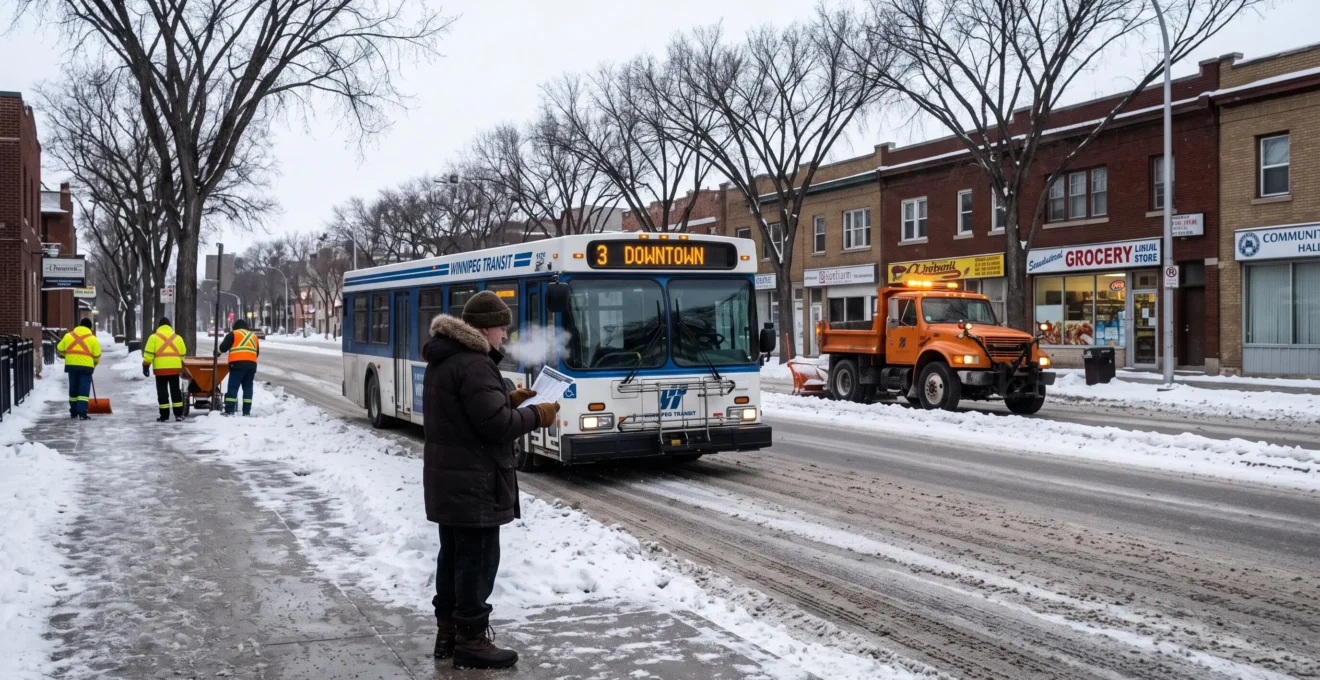
The Winnipeg issues most likely to affect everyday life are municipal taxes, public transit, road maintenance, housing development, public safety and infrastructure investment. These decisions influence household expenses, commuting reliability, neighbourhood conditions and access to essential services. Their effects can persist long after a particular news story disappears from the headlines.
Not every major local controversy has an equally important impact on residents. A temporary road closure may demand immediate attention, while a municipal budget amendment or sewer upgrade can shape costs and services for years. Understanding the difference helps residents follow Winnipeg current affairs without becoming overwhelmed by constant updates.
For households across Winnipeg, from established neighbourhoods to growing suburban areas, the useful question is not simply what happened at City Hall. It is what could change, who would be affected, when the change might happen and whether residents still have an opportunity to influence the outcome.
Winnipeg local issues at a glance
- Property taxes, transit decisions, housing policies and infrastructure budgets have some of the most direct and lasting effects on residents.
- City Council agendas, official service updates and neighbourhood information help distinguish confirmed decisions from speculation.
- Following proposed decisions before committee hearings or public consultations close is often more useful than reacting after a vote.
- Why Do Certain Winnipeg News Stories Matter More to Residents’ Daily Lives?
- How Can Winnipeg Residents Follow Local Developments Without Missing Important Updates?
- Which Winnipeg Current Affairs Deserve Closer Attention From Local Residents?
- Common Mistakes That Can Distort Your Understanding of Winnipeg Local News
- When Is a Winnipeg News Story Important Enough to Follow Closely?
- Which Winnipeg Council Debates Matter Most to Everyday Residents?
- How Can You Tell Whether Winnipeg’s Economy Is Strengthening or Slowing?
- How Does Winnipeg Local Government Turn Civic Priorities Into City Decisions?
Why Do Certain Winnipeg News Stories Matter More to Residents’ Daily Lives?
Winnipeg news matters most when it changes what residents pay, how they travel, where they can live or which public services they can access. Property taxes, transit schedules, road conditions and housing policies therefore deserve particular attention. A story’s prominence is less important than its practical consequences, geographic reach and duration.
A useful way to assess local relevance is to separate immediate neighbourhood effects from long-term municipal decisions. A closed intersection, temporary transit diversion or recreation facility schedule change can disrupt a particular week. An infrastructure budget or zoning amendment may change neighbourhood conditions over several years.
Winnipeg’s rivers, bridges and major arterial roads make location especially important. A disruption involving a heavily used crossing may affect travellers from multiple neighbourhoods, while a local construction project could have a limited geographic impact. The effect depends on actual travel patterns, available alternatives and the duration of the disruption.
Consider four practical examples:
- Property tax decisions: Changes in municipal taxation can affect homeowners’ annual expenses and may influence rental operating costs, although any effect on individual rents depends on several factors.
- Winnipeg Transit changes: Route adjustments, frequency changes and fare decisions can alter commuting time, travel expenses or access to workplaces.
- Snow-clearing priorities: Service standards and operational decisions influence winter accessibility for drivers, pedestrians and transit users.
- Combined Sewer Overflow work: Infrastructure investment can improve long-term environmental and system performance, while construction may temporarily affect streets and surrounding properties.
Taxation provides a particularly clear example of how budget decisions reach households. The City’s 2026 multi-year budget update identifies a property tax increase of 3.5 % in 2026. That percentage concerns the municipal tax decision; it does not establish the exact change on every property owner’s bill.
3.5%
Property tax increase identified in Winnipeg’s 2026 budget update. Individual property tax bills can also depend on assessment and applicable taxation arrangements.
City of Winnipeg — official 2026 multi-year budget update.
These examples also reveal why less visible municipal decisions deserve attention. Infrastructure planning, maintenance funding and service standards often affect residents repeatedly, even when they generate relatively few headlines.
Once an issue passes that relevance test, the next challenge is finding reliable updates before its outcome becomes difficult to influence.
How Can Winnipeg Residents Follow Local Developments Without Missing Important Updates?
Winnipeg residents can follow local developments through three complementary sources: official municipal information, independent local journalism and neighbourhood organizations. City documents establish what has been proposed or decided, journalists provide context and scrutiny, and community groups identify street-level effects. Checking these sources regularly is more effective than relying entirely on social media.
Each source serves a different purpose. Municipal notices are particularly useful for service changes, committee agendas and consultations. Independent news coverage can explain competing perspectives, investigate implementation problems and connect individual decisions to wider political or financial questions. Neighbourhood associations may identify practical concerns that receive limited citywide attention.
The central habit is to follow a proposal before the final decision. Residents can examine the City of Winnipeg‘s Council and committee meeting information to locate agendas and related public documents. Meeting-specific instructions should be checked when considering a delegation or other participation opportunity.
Following a committee agenda can reveal an upcoming decision before it becomes a major local news story. This matters because public participation procedures and deadlines vary. A resident who identifies a proposal early may have more opportunities to submit comments or communicate with the appropriate councillor.
For transportation, the City’s official Winnipeg Transit news updates are useful for checking announced service changes. For urgent trips, riders should also consult the applicable current route and service information rather than relying on an older news article.
Provincial announcements require a further filter. A Manitoba infrastructure or housing announcement becomes directly relevant to Winnipeg when its funding, implementation or eligibility conditions affect city services, projects or residents.
Build a five-step Winnipeg news monitoring routine
- Identify three local priorities: Write down the issues most relevant to your household, such as transit, housing and property taxes. Deliverable: a three-topic watchlist.
- Select primary information sources: Bookmark the relevant municipal meeting, budget and service information pages. Deliverable: a short list of official reference pages.
- Review upcoming decisions: Scan relevant meeting agendas and record proposals affecting your ward. Deliverable: a dated list of agenda items.
- Verify circulating claims: Compare an important social media or news claim with an official document and independent reporting when available. Deliverable: a note distinguishing confirmed facts from unresolved questions.
- Schedule a recurring review: Check outstanding issues monthly, more frequently when deadlines or service disruptions require it. Deliverable: a simple update log showing each issue’s status and next action.
This routine also limits information overload. Facebook groups and local Reddit discussions may reveal concerns quickly, but individual posts should be treated as leads to investigate rather than automatic evidence of a citywide pattern.
With reliable channels established, attention can shift toward the recurring issues whose financial and community consequences accumulate over time.
Which Winnipeg Current Affairs Deserve Closer Attention From Local Residents?
Winnipeg residents should pay sustained attention to municipal budgets, public transit planning, housing and infill development, water infrastructure and provincial-municipal funding arrangements. These issues influence costs, accessibility, neighbourhood growth and service reliability over multiple years. Short-lived emergencies also matter, but long-term policies often produce consequences that are less immediately visible.
The municipal budget is a useful starting point because it connects policy priorities to financial commitments. Operating spending affects ongoing services, while capital planning concerns assets and investments such as roads, facilities and water infrastructure. Proposed funding should be distinguished from approved expenditures and completed projects.
Transit network decisions merit attention even among residents who do not regularly ride buses. Service design can influence access to employment, education, shopping and community facilities. It can also affect how neighbourhoods connect as the city develops.
Housing policy is another enduring concern. Infill development and increased density in established areas can create additional housing opportunities, but individual proposals may raise questions about building scale, parking, drainage, infrastructure capacity or neighbourhood character. The practical impact depends on the applicable zoning rules and specific development proposal.
Water and wastewater projects, including work involving the North End Water Pollution Control Centre and combined sewer systems, are particularly important examples of structural issues. Their potential implications extend to environmental performance, infrastructure reliability, construction disruption and municipal financing.
Residents should distinguish two categories of local affairs:
| Factor | Immediate or episodic issues | Structural civic issues |
|---|---|---|
| Typical examples | Winter storm, temporary service interruption, labour disruption | Long-term transit planning, infrastructure renewal, housing policy |
| Usual attention required | Prompt practical response | Periodic review over months or years |
| Main household concern | Safety, access and temporary disruption | Future costs, service standards and neighbourhood conditions |
| Useful evidence | Current service notices and confirmed situation updates | Budgets, planning documents, committee reports and implementation milestones |
Provincial involvement must also be considered. Winnipeg projects can depend on provincial legislation, infrastructure funding or agreements involving different levels of government. Consequently, a municipal announcement does not always establish whether the required financing and approvals are secured.
A quick personal relevance test is to ask whether an issue could change your commute, housing expenses, neighbourhood density or family access to services. If at least two categories are affected, the subject is a strong candidate for active monitoring. This is a practical screening method, not an official municipal assessment standard.
That perspective becomes especially valuable when dramatic headlines obscure the difference between a documented trend, an isolated incident and an unresolved proposal.
Common Mistakes That Can Distort Your Understanding of Winnipeg Local News
Winnipeg local news can become misleading when residents treat isolated incidents as trends, confuse government responsibilities, assume preliminary votes guarantee implementation or give controversy more weight than documentary evidence. A reliable interpretation checks the scale of the problem, the responsible authority, the decision’s status and whether available records support the headline.
One frequent mistake is extrapolating from an individual experience. A missed snow-clearing operation or late bus may identify a legitimate service concern, but it does not independently demonstrate that the entire system is deteriorating. Establishing a pattern requires comparable observations over time, preferably supported by service records or performance information.
Another distortion comes from the headline effect. Disagreements between elected officials are often easier to communicate than technical financing decisions. Yet less-publicized budget amendments, infrastructure allocations or borrowing arrangements may have wider consequences for future service costs.
Jurisdictional confusion can also lead residents toward the wrong institution.
| Issue | Main municipal role | Main provincial role |
|---|---|---|
| Local roads and transit | Municipal network management and service decisions | Provincial transportation responsibilities and potential funding support |
| Housing development | Local planning, zoning and applicable municipal approvals | Legislative framework and provincial housing programs |
| Health care | Limited indirect or supporting roles | Primary responsibility for the provincial health-care system |
| Schools | Local land-use and infrastructure considerations where applicable | Education legislation, provincial oversight and funding framework |
| Policing | Municipal police-service funding and local oversight responsibilities | Relevant policing legislation and provincial justice responsibilities |
Responsibilities are not always completely separate. Shared funding, regulatory requirements and coordination can make a single project dependent on more than one public authority.
A further mistake is treating approval as implementation. A council vote may authorize a policy direction, but subsequent administrative work, detailed design, procurement, financing or external approvals may still be necessary. Some decisions can also be amended or reconsidered through applicable procedures.
For example, a news report about a proposed road project should not be interpreted as confirmation that construction has begun. The relevant questions are whether the project is approved, funded, scheduled and actually being delivered.
Finally, residents should avoid interpreting all trends from one neighbourhood. Winnipeg communities differ in density, housing conditions, transport options and development pressures. A conclusion drawn from one local experience may not describe the whole city.
Once the evidence is reasonably clear, residents can decide whether a particular story deserves continued attention or only an occasional status check.
When Is a Winnipeg News Story Important Enough to Follow Closely?
A Winnipeg news story deserves close attention when it involves substantial public spending, has consequences that may be difficult to reverse, affects a significant number of residents or presents a time-limited opportunity for public input. These four signals help distinguish decisions requiring action from routine updates that can be checked occasionally.
Financial significance should be evaluated in context. A proposal involving an operating or capital budget commitment may warrant scrutiny because it competes with other municipal priorities. However, the headline amount alone does not establish the project’s value, affordability or household impact.
Reversibility is often the strongest engagement signal. An early planning proposal may leave room for changes to design, location or implementation. Once contractual commitments or construction work are advanced, the practical range of alternatives may become narrower.
The geographic reach of an issue matters as well. A citywide transit policy can affect many residents, whereas a neighbourhood zoning application may be particularly significant to people living nearby. Neither should automatically be considered more important without assessing its consequences.
Timing completes the assessment. A short consultation or upcoming public hearing may demand action before a deadline, while a long-term infrastructure program may be monitored through periodic budget reviews.
| Signal | Question to ask | Practical response |
|---|---|---|
| Financial significance | Does the proposal commit meaningful municipal resources? | Examine the budget implications and alternatives. |
| Reversibility | Can public feedback still influence the decision? | Identify the next decision point and participation rules. |
| Reach | Which households, streets or neighbourhoods are affected? | Assess the consequences for your own circumstances. |
| Timeline | Are there deadlines or long-lasting commitments? | Record important dates and follow the relevant process. |
For most residents, a monthly review of relevant council business and budget developments offers a manageable baseline. Additional checks become worthwhile when a consultation opens, a scheduled vote approaches or an issue directly affects household arrangements.
Routine administrative matters or proposals outside municipal jurisdiction may require less detailed monitoring. Following every story equally can consume substantial attention without improving residents’ understanding or ability to participate.
This approach is particularly useful at City Hall, where debates about taxes, services and capital financing differ considerably in their long-term significance.
Which Winnipeg Council Debates Matter Most to Everyday Residents?
The Winnipeg Council debates most relevant to everyday residents concern property taxes and municipal spending, transit service and fares, snow-clearing standards, police funding, neighbourhood development and major infrastructure financing. These debates determine how public resources are distributed and which services, locations and future obligations receive priority.
Annual operating budget discussions deserve attention because they involve competing spending priorities. A decision to increase resources for one municipal service may require additional revenue, savings elsewhere or other financial adjustments. Residents should examine the complete budget context rather than judging a proposal solely by the amount assigned to one department.
Public transportation debates involve more than ticket prices. Council discussions can address service coverage, operating resources, accessibility and how transportation investment is distributed across Winnipeg. A proposed change that benefits one travel corridor may affect passengers elsewhere, depending on its design and funding.
Snow clearing presents another direct connection between spending and household life. Winter maintenance decisions involve priorities across roads, sidewalks and other transportation infrastructure, as well as service expectations under difficult weather conditions.
Police funding is also a substantial civic question. Discussion may concern staffing, operating costs, public safety priorities and the relationship between policing expenditures and other municipal services. Budget figures should be assessed alongside the specific activities and outcomes under consideration.
Neighbourhood development adds a geographic dimension to council debates. Infill projects, growth patterns and infrastructure allocation can affect different wards differently. Residents benefit from understanding their councillor’s stated position, while distinguishing political arguments from the details of an individual proposal.
Some of the most consequential financial debates receive less public attention. Borrowing authorizations, reserve fund decisions and municipal asset transactions can change future financial flexibility. Their significance depends on repayment obligations, restricted fund purposes, transaction terms and long-term effects.
Standing committees are important because proposals may receive detailed scrutiny and recommendations before reaching full Council. However, committee responsibilities and final decision-making authority differ by matter, so a committee recommendation should not automatically be treated as final approval.
Following only the final Council vote can therefore conceal important context: proposed alternatives, administrative analysis, committee changes and the arguments considered during earlier stages.
Council decisions also interact with the wider economy, particularly through infrastructure investment, construction activity and the conditions affecting development across Winnipeg.
How Can You Tell Whether Winnipeg’s Economy Is Strengthening or Slowing?
Winnipeg’s economic direction is best assessed using several indicators together, including building permits, housing starts, commercial occupancy, transit ridership and investment activity. No single announcement or monthly figure reliably establishes a trend. Comparing sustained changes across different sectors gives residents a more balanced understanding of local conditions.
Building permit values can indicate planned construction activity, but the figures require interpretation. A large project may produce a temporary increase without showing that smaller-scale investment has strengthened across the city. Permit values also should not be treated as identical to completed construction spending.
Housing starts offer another perspective on residential development. A sustained increase may signal stronger building activity, although it does not automatically mean housing has become more affordable. Prices, financing conditions, household demand and the types of units being built all matter.
Downtown commercial vacancy and office occupancy provide information about business space usage. Changes can reflect shifts in employment arrangements, business demand or individual properties rather than a uniform improvement or decline across Winnipeg.
Transit ridership adds a different kind of evidence. Usage trends can reflect travel demand and network activity, but they may also respond to schedule changes, fares, service availability or changes in commuting habits.
Winnipeg’s economic structure also matters when interpreting national news. The city has important public-sector, transportation, logistics and agri-food-related activities. This mix can produce economic conditions that differ from larger Canadian metropolitan areas with other sector concentrations.
Major public projects can connect municipal policy to economic activity. Capital spending schedules, development rules and intergovernmental funding agreements may influence when construction proceeds. However, an announced project should not be counted as realized economic activity until relevant implementation evidence is available.
A practical review can compare the direction of several indicators over at least a year, while accounting for seasonality and unusual one-time events. For instance, increased housing starts alongside sustained permit activity may provide stronger evidence of construction momentum than either indicator alone.
The opposite is equally important: one cancelled development or a temporary decline in ridership does not establish an economy-wide slowdown. The scope, timeframe and reliability of each measurement must remain explicit.
To understand why local economic conditions change, residents should also examine how municipal priorities become funded policies, approved projects and delivered services.
Key takeaways before examining City Hall decisions
- Separate political commitments from approved budget allocations and implementation milestones.
- Identify which municipal committee, department or external government has authority over the issue.
- Look for participation opportunities early, before financing, approvals and contracts substantially narrow available choices.
How Does Winnipeg Local Government Turn Civic Priorities Into City Decisions?
Winnipeg turns civic priorities into decisions through a process involving elected officials, municipal administration, committees, Council approval and departmental implementation. Strategic objectives guide proposals, but budgets, legal powers and required approvals determine what can proceed. Residents generally have more opportunities to influence a proposal before its final authorization and implementation.
The process begins with priorities identified through elected leadership, planning exercises, public needs and administrative recommendations. City departments then develop proposals, cost estimates, policy options or implementation plans within their respective responsibilities.
Depending on the matter, a proposal may be reviewed by a standing committee, another authorized body or Council directly. Committees can examine administrative reports and make recommendations, while final approval or delegated decisions follow the applicable municipal framework.
Budget authorization is a critical distinction. A strategic plan can describe an intended improvement without establishing that all required funding has been committed. Residents should compare policy objectives with the relevant operating or capital budget documents and any subsequent amendments.
Even after approval, implementation can require additional work. Departments may need to complete detailed planning, procurement, permitting, construction coordination or operational preparations. External funding conditions and provincial requirements may also affect the outcome.
Housing development illustrates the distinction between policy and delivery. A citywide objective to accommodate more housing does not determine the outcome of every individual development. Applicable zoning, application requirements, technical reviews and authorization procedures shape what can be built at a particular location.
Residents have several possible ways to participate, each with different practical limits:
- Ward councillor contact: Useful for explaining local impacts, raising concerns and asking how an issue is being considered.
- Public consultation: An opportunity to provide feedback on a proposal while the relevant engagement process remains open.
- Committee delegation: A formal means of addressing an eligible meeting, subject to the applicable registration and procedural rules.
- Written submission: A way to communicate documented concerns or recommendations where the process permits submissions.
- Municipal elections: An opportunity to evaluate broader policy directions and the record of elected representatives.
These methods do not guarantee that a preferred outcome will be adopted. Their effectiveness depends on the decision’s stage, available evidence, jurisdiction and legal constraints.
Winnipeg’s municipal authority operates within Manitoba’s legislative framework. Provincial legislation can establish responsibilities and limits, while conditional federal or provincial funding can influence the projects the City can realistically undertake. Property assessment and tax-related disputes may also involve distinct procedures that cannot be resolved simply through a Council debate.
For residents, the most valuable approach is to trace one issue from the initial proposal through committee consideration, budget authorization and implementation. This reveals not only what elected officials promised, but also what has actually been funded, approved and delivered.
Choose one issue affecting your household or neighbourhood, identify its latest documented decision, and record the next relevant meeting, deadline or implementation milestone. That single, focused action can make local affairs easier to follow and more meaningful in daily life.
Where can Winnipeg residents confirm whether a municipal proposal has been approved?
Residents can review relevant Council and committee agendas, minutes and associated documents to determine the status of a proposal. It is important to distinguish a recommendation from a final approval and to check whether funding or further implementation steps remain outstanding.
Does a Winnipeg property tax increase mean every homeowner’s bill rises by the same percentage?
No. A municipal property tax rate decision does not necessarily translate into an identical percentage change on every individual bill. Changes in assessed property values, applicable tax components and other assessment or taxation circumstances can affect the final amount payable.
How can residents find out which Winnipeg ward they live in?
Residents should consult the City’s current ward boundary and councillor information using their residential address. Confirming the correct ward helps identify the relevant elected representative and distinguish neighbourhood-specific issues from citywide matters.
Are municipal project announcements proof that construction will begin soon?
Not necessarily. An announcement may communicate a planning objective, funding intention or approved project without establishing a construction start date. Residents should look for confirmation of financing, authorizations, procurement and implementation schedules before treating a project as imminent.
How often should residents review Winnipeg civic developments?
A monthly review of relevant agendas, budget developments and neighbourhood issues is a reasonable starting routine. More frequent checks are appropriate when public participation deadlines approach, service disruptions occur or a proposal has an immediate effect on household arrangements.