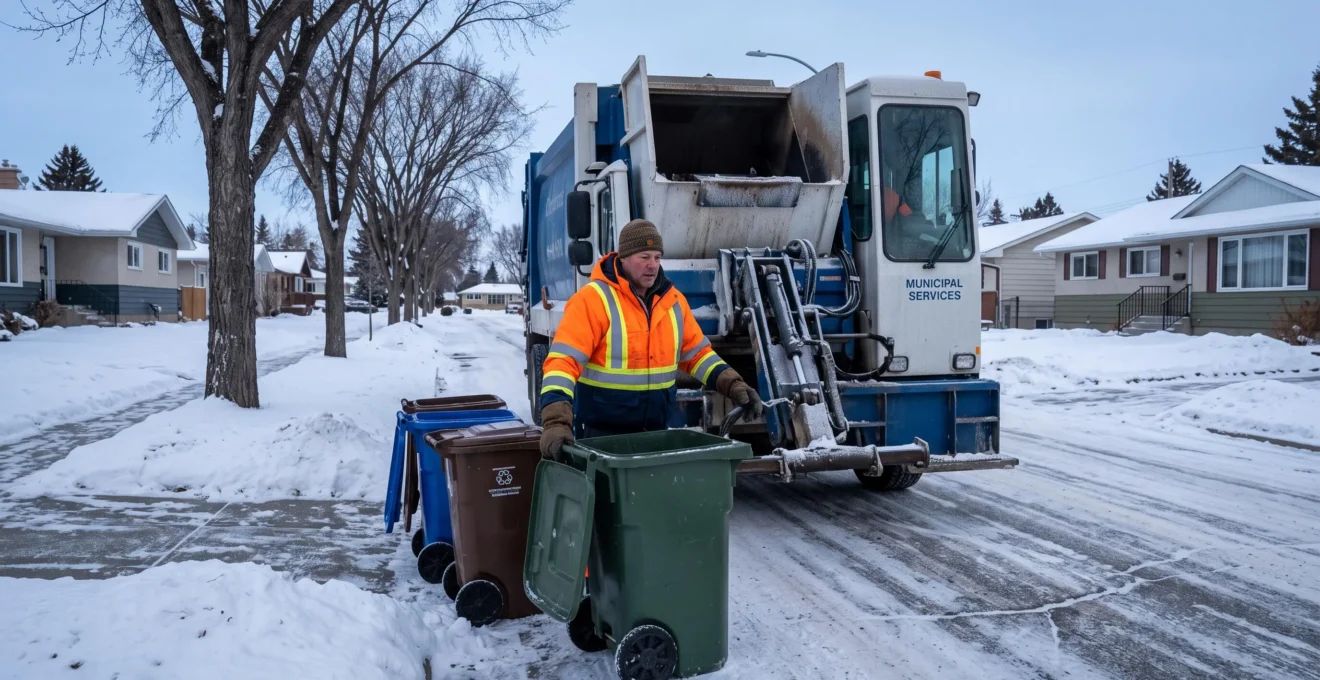
Winnipeg municipal services influence nearly every part of daily life, from the water flowing through household taps to the condition of neighbourhood streets and the collection of household waste. Most of these systems operate quietly until a disruption makes residents search for help.
The City of Winnipeg manages essential local infrastructure and services, including water and wastewater systems, municipal roads, garbage collection, public transit, emergency services and certain property-related responsibilities. Other services involve provincial agencies or partners such as Manitoba Hydro. Understanding these distinctions makes everyday problems easier to report and follow up.
For residents, the most useful starting point is often Winnipeg’s 311 service, which provides municipal information and accepts non-emergency service requests. Seasonal awareness matters just as much: a pothole after spring thaw, a missed collection during a busy period and a winter street-light outage may require different contacts or responses.
Winnipeg municipal services at a glance
- Water, wastewater, waste collection, roads and public safety are among the local services with the greatest everyday impact.
- Winnipeg 311 helps residents identify municipal responsibilities, report non-emergency problems and obtain service information.
- Seasonal planning, accurate reporting and clear jurisdictional knowledge help residents manage disruptions more effectively.
- Why Do Winnipeg Municipal Services Become Most Visible When Something Goes Wrong?
- How Can You Find the Right Winnipeg Municipal Service for a Local Problem?
- Municipal or Provincial: Who Provides Common Services in Winnipeg?
- Municipal Service Problems Winnipeg Residents Should Not Ignore
- When Are Winnipeg Municipal Services Under the Most Seasonal Pressure?
- How Can You File a Winnipeg Service Request That Is Easier to Assess?
- When Should Winnipeg Residents Recheck Their Recycling and Composting Routine?
- How Can Winnipeg Public Service Delivery Better Match Residents’ Everyday Needs?
Why Do Winnipeg Municipal Services Become Most Visible When Something Goes Wrong?
Winnipeg municipal services often become noticeable when routine infrastructure stops working as expected. Residents may rarely think about water mains, road maintenance or garbage collection until a pipe breaks, a pothole develops or a waste cart remains uncollected. These disruptions reveal how dependent everyday neighbourhood life is on coordinated public services.
Municipal infrastructure operates largely in the background. Water networks deliver household supplies, wastewater systems remove sewage, crews maintain streets and collection vehicles follow established routes. When these arrangements function normally, residents have little reason to investigate the departments and procedures behind them.
Problems change that relationship. A street defect raises questions about road maintenance. A sewer backup creates an immediate need to identify the appropriate reporting channel. An unexpected collection interruption makes residents check their regular pickup arrangements.
Winnipeg’s climate makes these moments especially important. Repeated freezing and thawing can damage pavement, while snow accumulation and spring melt create distinct maintenance and drainage concerns. Residents who understand these seasonal patterns can recognize developing issues before they become more disruptive.
The difference between reactive and proactive use of municipal services is straightforward. Someone who checks collection schedules, understands winter parking restrictions and knows where to report street damage is better prepared than someone discovering these arrangements during a disruption.
Small defects also deserve attention. A pothole may deteriorate further, and a blocked catch basin can interfere with local drainage. Reporting these observations promptly gives the responsible service an opportunity to assess the situation, although reporting alone does not guarantee a repair or prevent damage.
Residents can use the City of Winnipeg’s 311 contact and service information to identify the appropriate municipal reporting process. The service operates around the clock and covers numerous everyday concerns.
The practical advantage is preparation rather than constant monitoring. Knowing a few essential contacts and seasonal responsibilities makes the next unexpected problem easier to handle.
How Can You Find the Right Winnipeg Municipal Service for a Local Problem?
Winnipeg residents can usually begin with 311 when they need information about a municipal problem or want to request a non-emergency service. However, some issues have a different responsible organization. Identifying the problem, its precise location and the appropriate service operator helps avoid sending reports to the wrong place.
The City’s 311 Contact Centre accepts inquiries about issues such as potholes, garbage collection, sewer backups, water main breaks, snow clearing and property conditions. Customer service representatives are available 24 hours a day throughout the year.
Residents can call 311 within Winnipeg or use 1-877-311-4974. The City also provides online municipal services, including MyAccount features for accessing personalized information and tracking service requests. In-person options are available at designated municipal service locations during their applicable business hours.
Not every local infrastructure problem belongs directly to a City maintenance crew. Winnipeg street lighting illustrates the distinction: Manitoba Hydro maintains street lights, while the City determines lighting levels and approves design requirements.
| Problem | Appropriate starting point | Information to prepare |
|---|---|---|
| Missed garbage collection | Winnipeg 311 or applicable online service | Address, expected pickup day and cart details |
| Pothole or damaged municipal street | Winnipeg 311 | Intersection, lane or exact road location |
| Sewer backup or suspected water main break | Winnipeg 311 | Address, observations and apparent urgency |
| Burnt-out or damaged street light | Manitoba Hydro | Street location and identifying nearby landmarks |
| Street lighting levels or design | Winnipeg 311 | Location and description of the concern |
| Municipal property condition concern | Winnipeg 311 | Relevant address and observable condition |
| Police, fire or medical emergency | 911 | Exact location and nature of the emergency |
For defective street lights, residents can consult the City of Winnipeg’s street light problem reporting instructions. The City’s guidance identifies Manitoba Hydro as the maintenance contact and provides 204-480-5900 as its Winnipeg telephone number.
Before making contact, record the location, date, observable condition and any relevant photographs. If a previous request exists, retain its reference number and explain what has changed. A recurring problem involving several addresses may need a fuller description rather than repeated reports with identical information.
For non-emergencies, an online service may be convenient when the request can be clearly described in writing. A phone call is useful when the responsible department is uncertain, the issue requires explanation or its urgency needs clarification.
When the correct contact remains unclear, first establish whether the issue is municipal, provincial or handled by another organization. That distinction is particularly valuable for services whose responsibilities overlap.
Municipal or Provincial: Who Provides Common Services in Winnipeg?
Winnipeg’s municipal government manages many services tied directly to city infrastructure, neighbourhoods and local regulations, while Manitoba’s provincial government oversees broader responsibilities such as healthcare, education and driver licensing. Some services involve shared responsibilities or separate public organizations, so the location of a problem does not always identify the correct authority.
Confusing these responsibilities can lead to unnecessary transfers or requests that cannot be handled by the organization contacted. The most practical approach is to identify the service operator rather than assuming that every public service within Winnipeg belongs to City Hall.
| Service or concern | Principal responsibility | Practical distinction |
|---|---|---|
| Municipal drinking water and wastewater | City of Winnipeg | Local water and sewer infrastructure |
| Residential garbage and recycling collection | City of Winnipeg | Municipal collection programs and schedules |
| City streets and local potholes | City of Winnipeg | Municipal road maintenance |
| Provincial highways | Province of Manitoba | Responsibility depends on the road segment and jurisdiction |
| Winnipeg Transit | City of Winnipeg | Municipal public transportation |
| Driver licensing | Provincial system through Manitoba Public Insurance | Driver licensing and related administration |
| Healthcare services | Provincial healthcare system | Healthcare delivery and oversight |
| Public education | Provincial education framework and school divisions | Not a routine City 311 service |
| Winnipeg property assessment | City of Winnipeg | Municipal property assessment administration |
| Street light maintenance | Manitoba Hydro | Utility maintenance with municipal lighting standards |
Property assessment is an important exception to oversimplified explanations of provincial authority. The Manitoba government’s property assessment information specifies that provincial assessment services cover properties outside Winnipeg, while the City of Winnipeg is responsible for property assessment inside the city.
This distinction matters when residents need information about a Winnipeg property’s assessed value. Although provincial legislation establishes the broader assessment framework, the local assessment service is municipal.
Another grey area involves roads. A roadway passing through an urban area is not necessarily maintained under the same arrangements as every nearby residential street. Residents should identify the specific road before choosing a government contact.
A useful sorting method begins with two questions:
- Does the concern involve municipal infrastructure, a City service or local property administration?
- Does it involve a provincial program, licence, healthcare responsibility or another service operated outside City government?
The answers provide a starting point, not an absolute rule. Major transportation projects, flood management and infrastructure financing can involve more than one level of government. Street lighting demonstrates how a separate organization can perform maintenance within a municipal framework.
When responsibilities overlap, describing the precise service and location to the appropriate information centre helps clarify who can investigate or direct the request.
Municipal Service Problems Winnipeg Residents Should Not Ignore
Winnipeg residents should give prompt attention to water interruptions, sewer backup warning signs, hazardous street or sidewalk damage, failed street lighting and repeated waste collection problems. These conditions can affect sanitation, mobility, property and neighbourhood safety. Their urgency depends on the actual circumstances, with immediate threats requiring emergency assistance rather than routine service reporting.
Not all municipal defects carry the same consequences. Some are inconvenient but manageable; others may worsen quickly or create risks for nearby residents.
| Problem | Why it deserves attention | Recommended resident response |
|---|---|---|
| Unexplained water interruption | Loss of household water service or a possible network problem | Contact 311 and explain the observed conditions |
| Sewage backing up into a building | Potential contamination and property damage | Avoid contact with contaminated water and seek urgent appropriate assistance |
| Large pothole or hazardous sidewalk defect | Possible vehicle damage, falls or mobility barriers | Report its exact location and visible condition |
| Non-functioning street light | Reduced visibility in affected public areas | Report the defect to Manitoba Hydro |
| Repeated missed waste collection | Accumulating waste and possible property condition concerns | Check the schedule and report the missed collection |
Water and sewer issues deserve particular care because the visible symptom may not reveal the underlying cause. A backup affecting a basement, for example, may involve private plumbing, municipal infrastructure or another factor that requires assessment. Residents should not assume responsibility before the situation is investigated.
Similarly, street damage varies in severity. A shallow pavement defect and a deep pothole in a heavily travelled lane may call for different priorities. Reports should describe what is actually visible rather than exaggerating the danger.
Early reporting provides the City or responsible operator with information it may not otherwise have. However, there is no basis for assuming that several duplicate reports automatically accelerate repairs or that every reported defect receives immediate attention. Prioritization may depend on operational needs, safety and available resources.
Recurring issues are easier to explain when residents maintain a simple record:
- The date and location of each occurrence.
- Photographs showing the condition, where safe to take them.
- Existing municipal request numbers.
- Any communication or observed change following the report.
Tenants can also report observable concerns affecting municipal streets, collection services and other City-managed areas. Problems involving private building maintenance may require contacting the landlord or the appropriate rental housing authority. The correct path depends on the specific issue and applicable responsibilities.
Good reporting records are especially valuable when a condition persists through changing weather, collection periods or repeated maintenance cycles.
When Are Winnipeg Municipal Services Under the Most Seasonal Pressure?
Winnipeg municipal services face different pressures throughout the year. Spring thaw increases attention to road damage and drainage, summer brings roadwork and water infrastructure activity, autumn affects leaf and yard waste management, and winter concentrates demand around snow clearing, parking restrictions and freezing conditions. Residents can prepare by checking the relevant seasonal rules before disruptions occur.
The city’s climate creates a repeating maintenance cycle, but individual service workloads depend on actual weather, infrastructure conditions and operational schedules. Seasonal awareness therefore helps with planning without predicting a particular repair date or response time.
| Season | Typical service pressures | Useful resident preparation |
|---|---|---|
| Spring | Potholes, melting snow and drainage concerns | Check catch basin conditions and report observable street defects |
| Summer | Road construction, infrastructure repairs and yard waste | Review construction information and collection schedules |
| Autumn | Fallen leaves, drainage maintenance and winter preparation | Verify accepted yard waste materials and seasonal collection dates |
| Winter | Snow clearing, parking restrictions and freezing-related problems | Check current snow route rules and protect vulnerable household plumbing |
Spring deserves attention because freezing and thawing can affect pavement and drainage. Residents may notice newly exposed potholes or water collecting near streets. Reporting exact locations helps the responsible municipal team identify the condition for assessment.
Summer is commonly associated with outdoor infrastructure work. Road and utility projects may affect access, parking or travel routes. Residents should consult official project and service information rather than assuming that normal arrangements will remain unchanged during construction.
Autumn shifts attention toward falling leaves and seasonal waste. Yard waste collection follows a specific municipal program, and collection timing should not be confused with regular garbage and recycling arrangements.
Winter brings particularly visible service demands. Snow clearing and related parking restrictions can affect where vehicles may be left, while prolonged cold creates concerns about exposed or vulnerable plumbing. Residents should check current City notices because restrictions and operational arrangements depend on conditions.
Periods of heavy seasonal demand can affect the handling of non-urgent work. A reported pothole, for instance, may require assessment and scheduling rather than immediate repair. Conversely, residents should not assume that a quieter season automatically means faster service: staffing, weather and maintenance priorities still matter.
Seasonal preparation becomes most effective when combined with a clear, specific service request that the receiving organization can understand and assess.
How Can You File a Winnipeg Service Request That Is Easier to Assess?
A useful Winnipeg service request identifies one specific problem, gives its precise location, describes observable conditions and includes relevant supporting information. Accurate details help the receiving service understand what needs assessment. Residents should keep the request number for follow-up and remember that submission initiates a service process rather than guaranteeing immediate repairs.
The distinction between a complaint and an actionable report is largely one of precision. Saying that a street is in poor condition expresses dissatisfaction, but it gives limited information about the defect. Describing a pothole near a named intersection, in a particular direction of travel, is more useful for locating and evaluating it.
A well-prepared report should answer four questions: What is wrong? Where exactly is it? When was it observed? What can the reporting resident directly confirm?
Photographs can provide supporting context when they can be captured safely. A wider image establishes the location, while a closer image can show the relevant defect. Images should not be taken in a way that exposes residents to traffic, unstable infrastructure or other hazards.
Severity descriptions must remain factual. A damaged sidewalk affecting pedestrian passage can be described in terms of the observable obstruction. Residents should avoid speculating about causes or presenting an estimated danger as an established technical finding.
Five steps to prepare a clear Winnipeg service request
- Identify the issue. Write one sentence describing a single observable problem. Deliverable: a specific issue description.
- Record its location. Note the street address, nearest intersection or identifiable landmark. Deliverable: a location that a service worker can find.
- Collect relevant evidence. Record the observation date and, when safe, take contextual and close-up photographs. Deliverable: a dated description with optional supporting images.
- Choose the responsible contact. Use Winnipeg 311 for municipal non-emergencies or the appropriate separate organization for matters such as street-light maintenance. Deliverable: a request directed to the appropriate channel.
- Keep a follow-up record. Save the request number, submission date and any response. Deliverable: a reference history that can be used when seeking an update.
Winnipeg’s 311 service can provide an approximate completion timeframe when a customer service representative creates a service request. Such an estimate is not a guarantee. Actual handling depends on the nature of the problem and operational circumstances.
When a request remains unresolved, use the existing reference number to explain the continuing issue and ask about its status. If circumstances have changed materially, provide that information rather than assuming that the original description still reflects the situation.
An online request is not a substitute for emergency assistance. Immediate threats to life or situations requiring police, fire or medical emergency response belong with 911.
The same habit of checking current information and documenting changes is useful for household collection programs, where routines often become outdated as seasons and addresses change.
When Should Winnipeg Residents Recheck Their Recycling and Composting Routine?
Winnipeg residents should review their waste sorting and collection arrangements after moving, when seasonal yard waste service changes, following a collection notice or whenever material is repeatedly left uncollected. Recycling and yard waste have different requirements, and Winnipeg’s seasonal yard waste program should not be mistaken for a universal household food-scrap composting service.
A waste sorting routine can become automatic after years at the same address. That convenience becomes a disadvantage when collection schedules, accepted materials or program requirements differ from what a household remembers.
The City of Winnipeg’s 2026 yard waste program illustrates why seasonal checks matter. For that collection season, service began during the week of May 4 in Area A and May 11 in Area B. Eligible residential yard waste was scheduled for collection every two weeks, on the same weekday as regular garbage and recycling.
These dates are specific to the 2026 program rather than permanent opening dates for every year. Residents should confirm the applicable area and current collection schedule.
According to the City of Winnipeg’s 2026 yard waste collection information, eligible materials include grass clippings, leaves, plants, undecorated pumpkins and qualifying small branches.
The City identifies reusable lidless containers, cardboard boxes and brown paper yard waste bags as acceptable ways to present collected material. Residents are instructed to place yard waste at the collection point before 7 a.m. on their scheduled day.
Branch requirements also matter. The 2026 instructions set limits for qualifying bundled branches, including a maximum diameter of 10 centimetres, a length of one metre and a stated weight limit of approximately 22 kilograms. Larger branches and tree stumps can be taken to a 4R Winnipeg Depot.
Recycling requires a separate check against current accepted-material rules. An item that belongs in general garbage should not be placed in recycling merely because it looks reusable, and residents should not assume that food scraps belong in the seasonal yard waste stream.
Sorting mistakes may create processing difficulties or cause material to be rejected, depending on the program and circumstances. The important principle is to follow Winnipeg’s actual accepted-material guidance instead of relying on generic recycling or composting advice.
Households should make an additional check when they receive a notice tag, change neighbourhoods or experience repeated missed pickups. They should also verify any special arrangements before setting out materials such as holiday trees, rather than presuming those arrangements match regular yard waste collection.
A reliable household routine is one that can be updated. Checking the current municipal calendar and accepted-material instructions is more useful than maintaining the same assumptions indefinitely.
What residents should remember
- Identify the actual service operator before submitting a report, especially when City services interact with provincial authorities or utilities.
- Keep precise locations, request numbers and dated observations so recurring problems can be assessed with appropriate context.
- Use seasonal changes as reminders to verify municipal rules, then provide constructive feedback when recurring difficulties reveal broader neighbourhood needs.
How Can Winnipeg Public Service Delivery Better Match Residents’ Everyday Needs?
Winnipeg public services can better match everyday needs through accessible reporting channels, clear responsibility information, practical service tracking and planning that reflects neighbourhood conditions. Residents contribute by reporting specific problems, following up constructively and participating in public engagement opportunities. However, improvements must account for seasonal pressures, infrastructure needs and municipal budget constraints.
Delivering services across a large city requires coordinating infrastructure, people, equipment and funding. A resident may experience a missed collection or damaged street as an individual incident, while the municipality must consider many locations and competing demands.
Winnipeg’s extreme seasonal variation adds complexity. Road maintenance, snow clearing, drainage, collection and utility work do not experience identical workloads throughout the year. Aging infrastructure can also create maintenance requirements that compete with new improvements.
These challenges do not eliminate the importance of responsive service. They explain why better information and prioritization can matter as much as an individual repair.
There are several practical directions for improvement:
- Clearer service ownership: residents should be able to identify the responsible municipal department or external partner without unnecessary transfers.
- Accessible request tracking: understandable status information can help residents distinguish an acknowledged issue from work that has been completed.
- Seasonal communication: timely information about collection schedules, snow restrictions and maintenance activities supports household planning.
- Neighbourhood-level feedback: recurring reports and public engagement can help identify issues extending beyond a single property or street.
- Evidence-informed prioritization: combining service records with appropriate technical assessment may help municipal teams understand patterns of need.
These are improvement priorities to consider, not claims that a particular future system or repair program has already been approved. Residents should look to official City announcements for confirmation of new service-tracking features, public engagement processes or operational changes.
Constructive participation can extend beyond 311. Municipal budget consultations, neighbourhood associations and relevant public engagement opportunities may provide ways to discuss recurring concerns, local accessibility and longer-term infrastructure priorities.
A single report cannot determine a city’s maintenance policy. Consistent, specific information, however, gives decision-makers a clearer description of what residents are experiencing. Public engagement provides another channel for raising issues that involve planning, resources or service standards rather than an individual maintenance request.
For the next everyday municipal problem, identify the responsible service, document the issue, choose the appropriate contact and retain the response. Combine that practical routine with seasonal checks and participation in relevant City consultations to make municipal services easier to navigate and more responsive to community needs.
Is Winnipeg 311 available outside regular business hours?
Yes. Winnipeg’s 311 Customer Service Representatives are available 24 hours a day, seven days a week, throughout the year. Residents can use the service for municipal information and non-emergency requests. In-person customer service locations have separate business hours.
Does reporting a pothole guarantee that it will be repaired immediately?
No. Reporting a pothole allows the relevant municipal service to receive and assess the concern. Repair timing depends on operational circumstances and the nature of the defect. Residents should retain their request number for follow-up rather than treating submission as confirmation that repair work has been scheduled.
Can a Winnipeg renter report a problem on a public street?
Yes. A resident does not need to own a nearby property to report an observable municipal street problem. Issues involving maintenance inside a privately rented building may instead require the landlord or the appropriate housing authority, depending on the circumstances.
Can Winnipeg households put kitchen food scraps in seasonal yard waste collection?
Residents should not assume that ordinary kitchen food scraps are accepted in Winnipeg’s seasonal yard waste program. The documented program covers specified yard materials, including leaves, grass clippings, plants and qualifying branches. Accepted materials for other composting arrangements must be checked separately against the applicable program rules.
Who should residents contact about a malfunctioning traffic signal?
A malfunctioning traffic signal is different from a burnt-out street light. Residents should contact Winnipeg 311 for guidance on reporting a non-emergency municipal traffic signal problem. If the situation presents an immediate danger requiring emergency responders, call 911 rather than relying on an ordinary service request.