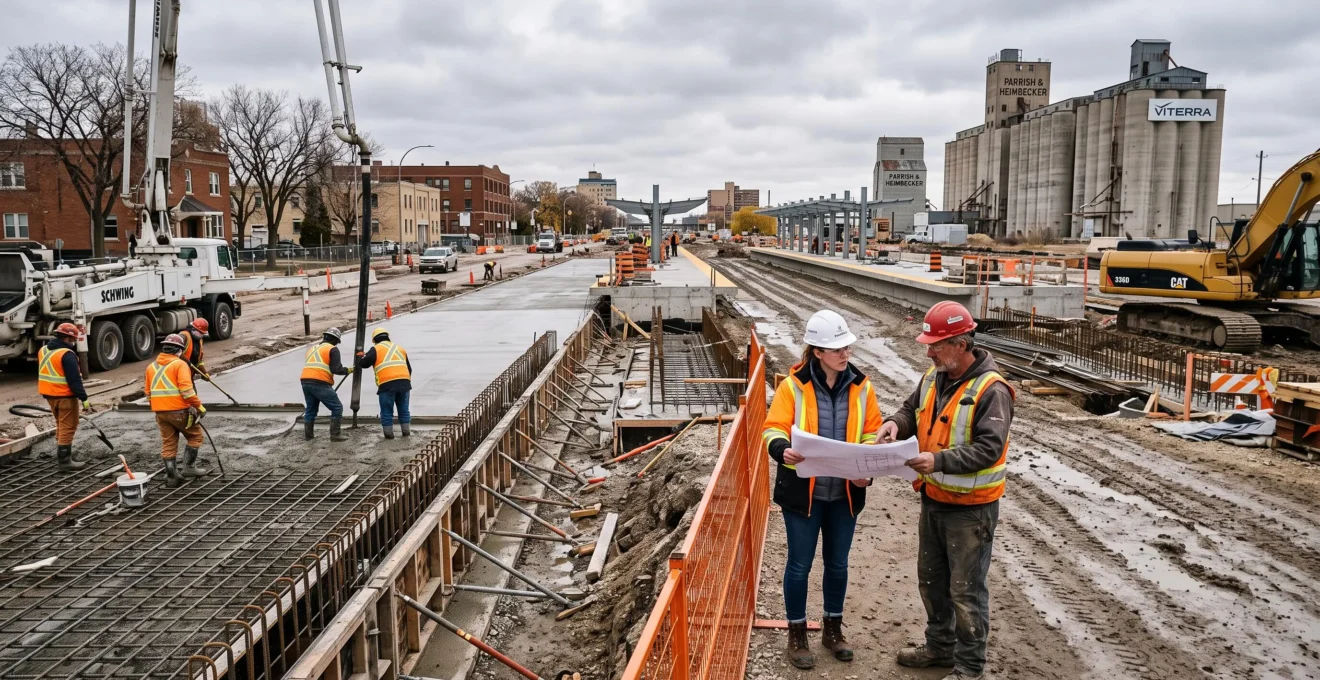
Public sector investment shapes Winnipeg’s long-term development by financing infrastructure, supporting essential municipal services and influencing where households and businesses can grow. Roads, transit corridors, wastewater facilities and public amenities all affect the city’s economic capacity, but their benefits depend on how projects are funded, delivered and maintained.
Winnipeg’s 2026 budget materials outline a six-year capital program of approximately $3.8 billion. That planned expenditure reflects the scale of municipal infrastructure needs, not money already spent or a guarantee that every proposed project will proceed unchanged.
For residents, public investment can mean more reliable water service, safer streets or better transit access. For businesses, it can affect transportation costs, development opportunities and infrastructure reliability. Understanding these effects requires looking beyond funding announcements to actual expenditures, project outcomes and long-term operating obligations.
Public Investment in Winnipeg: Key Points
- Infrastructure spending can support construction activity immediately while influencing development, service capacity and economic opportunities over many years.
- Budget announcements, approved allocations and actual project expenditures are different measures. Winnipeg provides public tools to distinguish them.
- Long-term value depends on coordinated funding, timely infrastructure renewal and sufficient resources to operate and maintain completed assets.
- Why Can One Public Investment Create Wider Economic Effects in Winnipeg?
- How Can You Track Whether Winnipeg Public Investment Actually Reaches a Project?
- Infrastructure or Services: Where Does Public Investment Affect Winnipeg Residents Most?
- Public Investment Assumptions That Can Mislead Winnipeg Residents
- When Do Winnipeg Residents Start Seeing Results From Major Public Investment?
- Why Do Major Winnipeg Infrastructure Projects Need Multiple Funding Partners?
- Why Can Delayed Infrastructure Renewal Become More Expensive for Winnipeg?
- How Does Long-Term Infrastructure Planning Prepare Winnipeg for Future Growth?
Why Can One Public Investment Create Wider Economic Effects in Winnipeg?
One public investment can generate wider economic effects in Winnipeg because its spending passes through contractors, workers, suppliers and local businesses. Beyond construction, infrastructure may improve accessibility, service reliability and development capacity. However, the size and duration of these benefits depend on local participation, project usefulness and whether the completed asset supports lasting economic activity.
Consider a hypothetical municipal water infrastructure contract awarded to a Winnipeg-based construction company. The contractor purchases materials, employs tradespeople and pays specialist subcontractors. Workers then spend part of their earnings at local retailers and service businesses. Each transaction can create additional demand beyond the initial municipal payment.
This chain illustrates an economic multiplier mechanism, but it does not establish a specific multiplier value. Some purchases and profits may flow to suppliers or owners outside Winnipeg, while taxes, savings and imports limit how much spending recirculates locally.
Public investments also generate different types of benefits over time:
- Immediate activity: Construction wages, equipment rentals, professional services and materials purchased during project delivery.
- Operational improvements: Better service reliability, accessible facilities and potentially more efficient movement of people or goods.
- Long-term development effects: Infrastructure capacity that may make housing, business expansion or redevelopment more feasible.
Winnipeg’s Southwest Rapid Transitway illustrates the distinction. The project required construction expenditure, but the longer-term economic questions concern accessibility, travel performance and whether development patterns respond to improved transit connections. Those outcomes must be assessed independently rather than assumed from construction spending.
The North End Sewage Treatment Plant upgrades provide another example. Wastewater infrastructure supports environmental compliance and can help address capacity constraints relevant to future housing and commercial development. Whether specific private developments proceed still depends on market demand, planning decisions and other infrastructure requirements.
Local procurement opportunities and workforce participation can influence how much project spending remains within the Winnipeg economy. Yet selecting contractors must also account for procurement rules, technical qualifications, competition and value for money.
The strongest economic case for public investment therefore rests not simply on the number of construction jobs created, but on the useful services and productive capacity the completed infrastructure can provide.
How Can You Track Whether Winnipeg Public Investment Actually Reaches a Project?
Winnipeg residents can track public investment by comparing approved budgets, project oversight reports, procurement milestones and actual expenditures. A funding announcement alone does not confirm that construction has begun. The most reliable approach follows the same project from budget authorization through tendering, delivery and final reporting, while checking whether its scope and costs have changed.
The City of Winnipeg’s capital projects oversight and reporting page identifies public monitoring tools, including the Open Capital Projects Dashboard and Open Budget information. These resources help residents distinguish project progress from financial authorization.
Three financial stages deserve particular attention:
- Announced funding: A public statement identifying an intended investment, which may depend on later approvals or conditions.
- Approved or committed funding: An authorized allocation or documented funding commitment, which is not necessarily an expenditure.
- Actual expenditure: Money recorded as spent on work, goods or services, which may occur over several reporting periods.
Under the City’s documented oversight framework for the 2024–2027 budget cycle, projects valued at $25 million to less than $500 million are classified as major capital projects. The mega-project threshold is $500 million or more, subject to Council’s ability to classify smaller projects accordingly.
$5 million or more
The budget threshold for open capital projects included in Winnipeg’s Open Capital Projects Dashboard, according to the City’s project oversight documentation. Smaller projects may require separate research.
City of Winnipeg, Capital Projects Oversight.
Major projects are generally reported quarterly to the Standing Policy Committee on Finance and Economic Development unless another arrangement is approved. The framework also establishes monthly reporting for mega capital projects to the Executive Policy Committee and Council.
To follow a specific project, begin with the adopted capital budget and identify its project name, approved allocation and relevant financial year. Then check Council and committee reports for amendments, project oversight information for delivery status, and public procurement records for tender or contract awards. Finally, compare reported actual costs with the latest authorized budget.
For projects with provincial or federal contributions, funding announcements from those governments can help explain the financing structure. They should not automatically be counted as additional money beyond the total project budget because the same contribution may already appear in municipal figures.
Five Steps to Verify a Winnipeg Public Investment
- Locate the project in the City’s adopted capital budget and record its official name, budget year and allocation in a short project record.
- Check public Council or committee reports for approvals and amendments, producing a dated list of decisions.
- Search procurement and contract-award information for the project, recording any identifiable tender, supplier and award milestone.
- Compare project dashboard updates or committee reports with the original schedule, creating a brief status timeline.
- Review available actual expenditure figures and completion reporting, producing a comparison of approved funding, reported spending and outstanding work.
Multi-year forecasts require particular care. They show anticipated investments beyond the current approval period, but priorities, construction schedules and costs can change. A project appearing in a future-year forecast should not be described as fully financed or underway without further evidence.
Financial transparency is most useful when it helps residents determine not only whether money has been allocated, but also what has been delivered and whether the project remains consistent with its approved objectives.
Infrastructure or Services: Where Does Public Investment Affect Winnipeg Residents Most?
Infrastructure and municipal services affect Winnipeg residents in different but connected ways. Capital investment provides assets such as roads, pipes, transit facilities and recreation buildings, while operating expenditure supports the people, maintenance and activities needed to use them. The greatest everyday benefit depends on whether a new or renewed asset is matched by reliable, adequately funded service delivery.
The City distinguishes these two categories in its budget and finance information. Capital funding generally supports specific investment projects, while operating budgets support continuing municipal programs and services.
A renewed road can improve physical conditions, but residents also depend on snow clearing, traffic management and ongoing maintenance. A transit corridor creates the infrastructure for bus operations, but service frequency and staffing determine much of the passenger experience.
The following comparison helps identify where each type of spending is likely to be felt.
| Resident concern | Capital investment | Operating expenditure |
|---|---|---|
| Daily travel | Road reconstruction, transit facilities and bridges | Transit operations, snow clearing and routine road maintenance |
| Water reliability | Pipe replacement and treatment infrastructure | System operation, inspections and routine maintenance |
| Community recreation | Construction or renewal of public facilities | Facility staffing, programming and operating hours |
| Public safety | Emergency-service facilities and major equipment | Staffing, training and ongoing service delivery |
For residents, the relevant question is not necessarily which category receives more money. It is whether the expenditure addresses the problem they actually experience.
Capital and operating budgets can also face different funding opportunities and restrictions. Grants tied to construction may not pay for future service delivery. Consequently, a new facility can create lasting operating obligations even where outside governments contribute substantially to construction.
This raises the importance of lifecycle funding: the financial resources required to build, operate, maintain, rehabilitate and eventually replace an asset. Ignoring any of these stages can make a seemingly affordable project costly over time.
Residents assessing an announced investment can ask whether it will reduce commute disruption, improve water-system reliability, expand recreation access or address an identifiable safety concern. They should also establish how the improvement will be measured and whether ongoing services can support it.
Infrastructure and services should therefore be evaluated together, especially when new capital assets could increase future operating costs or compete with existing municipal priorities.
Public Investment Assumptions That Can Mislead Winnipeg Residents
Several assumptions can distort how Winnipeg residents interpret public investment. Announced funding is not always new money, a project listed in a multi-year plan is not guaranteed to proceed, and outside grants rarely eliminate every municipal responsibility. Large spending totals also reveal little about the distribution, effectiveness or long-term affordability of the resulting benefits.
One common mistake is treating every government announcement as a fresh increase in available funding. An announcement may describe a previously approved allocation, confirm one partner’s contribution to an existing project or publicize a specific phase of a larger program.
For example, funding for engineering design does not mean the construction contract has been awarded. Equally, the combined investment announced by several governments may represent a single shared project budget, not separate amounts that should be added again.
Another misconception concerns multi-year capital forecasts. Winnipeg’s annual budget approval process means future-year planned investments remain subject to subsequent decisions. Cost escalation, changing priorities, revised project designs or funding conditions can alter anticipated work.
A budgeted project is not automatically a completed project, and an approved spending amount is not evidence that the full allocation has been used.
Government cost-sharing also requires close examination. A federal or provincial contribution may cover only an agreed portion of eligible expenses. Municipal authorities can remain responsible for their share, costs outside the funding agreement and future asset maintenance.
Finally, investment value should not be judged solely by project size. A large facility serving an essential citywide function may justify substantial expenditure, while smaller distributed improvements can sometimes reach more neighbourhoods or address pressing daily needs.
These comparisons depend on context. A wastewater treatment investment may have benefits that are less immediately visible than road resurfacing, but that does not make its environmental or development functions less important.
To evaluate competing claims, consider the stated public objective, total project cost, contribution from each government, expected service outcome, geographic reach and future operating burden. Where performance evidence is unavailable, distinguish projected benefits from verified results.
Once an announcement has been interpreted accurately, the next question is when planned investment is likely to produce observable results.
When Do Winnipeg Residents Start Seeing Results From Major Public Investment?
Winnipeg residents may see early economic activity during project design and construction, but the main public benefits often arrive only after completion and commissioning. Large infrastructure projects can require years of planning, approvals, procurement and phased construction. The schedule varies according to technical complexity, funding arrangements, regulatory requirements, seasonal conditions and changes in project scope.
Different stages produce different forms of progress, some of which are largely invisible to the public.
- Planning and feasibility: Identifying infrastructure needs, assessing options and estimating costs.
- Design and approvals: Preparing technical specifications and securing relevant regulatory or environmental approvals.
- Procurement: Inviting bids, evaluating proposals and awarding contracts.
- Construction: Completing physical work, often in stages with temporary disruptions.
- Testing and commissioning: Verifying that the infrastructure can perform its intended function before full operation.
- Operational assessment: Monitoring reliability, capacity and user outcomes after delivery.
Winnipeg’s North End wastewater infrastructure upgrades illustrate why visible construction is only part of the project story. Major treatment facilities require complex engineering, coordination and regulatory considerations. Their usefulness cannot be assessed simply by counting construction milestones.
Local conditions can also influence schedules. Winter construction constraints, freeze-thaw conditions, utility relocation and the management of traffic or neighbourhood access may affect how work is organized. Such conditions are project-specific and should not be treated as proof of a particular delay without supporting reporting.
Residents looking for evidence that work is progressing can monitor design contracts, public consultation notices, tender publications, contract awards and construction advisories. These provide more meaningful information than repeated announcements that describe the same intended investment.
Benefits rarely arrive evenly. People near an active construction site may experience noise, detours and restricted access well before enjoying any improvement. Businesses may face temporary access challenges, while future users of the completed asset benefit later.
After commissioning, the effects may become apparent gradually. Road reliability, transit usefulness or wastewater capacity must be considered through actual operations rather than assumed at opening.
Schedule transparency is particularly important when delivery depends on several governments, contractors and approval processes, each with distinct responsibilities.
Why Do Major Winnipeg Infrastructure Projects Need Multiple Funding Partners?
Major Winnipeg infrastructure projects often need municipal, provincial and federal funding because their capital requirements can exceed what the City can reasonably finance through its own revenue sources. Cost-sharing allows governments to combine resources for infrastructure with local, regional or broader public benefits. However, shared financing introduces eligibility conditions, approval dependencies and reporting obligations.
Canadian municipalities generally rely heavily on property taxation, user fees and other authorized local revenues. Their capacity to raise funds differs from that of federal and provincial governments, which have broader taxation powers and infrastructure funding programs.
Winnipeg must also finance continuing services and maintain existing municipal assets. Funding a particularly large bridge, transit or wastewater project entirely through municipal resources could limit spending on other priorities or increase financing pressures.
Intergovernmental partnerships can therefore make larger projects feasible, although the arrangement depends on the program, approved contributions and conditions negotiated by the parties.
Winnipeg Example: Southwest Rapid Transitway Stage 2
When Stadium Station officially opened on July 4, 2017, it marked the first completed component of the Southwest Rapid Transitway Stage 2 and Pembina Highway underpass project.
The City of Winnipeg’s Stadium Station opening announcement identified PPP Canada, the Province of Manitoba and the City of Winnipeg as funding participants. The project used a public-private partnership delivery structure. This establishes the multi-partner financing arrangement, but does not by itself measure the transitway’s subsequent economic impact.
Cost-sharing can influence the pace and design of infrastructure projects. Each government may need to authorize its contribution, verify eligible expenses and obtain the reporting required by the funding arrangement.
A project can face uncertainty if one funding contribution remains unconfirmed, even when other partners support it. Likewise, costs exceeding eligible grant amounts may require additional municipal resources or adjustments to project scope.
Winnipeg’s 2026 budget materials identify the City’s approximate $500 million share, plus financing charges, for the nutrient removal component of the North End facility. The stated municipal contribution represents one-third of the component’s financing arrangement, illustrating the scale of cost-sharing obligations.
Partnership funding can introduce another trade-off: projects aligned with available grant eligibility may become easier to advance than equally pressing local needs that do not qualify. That possibility makes independent municipal prioritization important.
Funding partnerships work best when the division of financial obligations, delivery responsibilities and future maintenance costs is transparent to residents before construction proceeds.
Why Can Delayed Infrastructure Renewal Become More Expensive for Winnipeg?
Delayed infrastructure renewal can become more expensive in Winnipeg because deterioration continues while repairs are postponed. Minor defects may eventually require extensive rehabilitation or replacement, and unexpected failures can cause service interruptions and urgent construction expenses. Inflation, changing asset conditions and limited emergency scheduling flexibility can further increase costs, although the precise financial effect varies by infrastructure type.
Roads, underground pipes and municipal facilities have finite service lives. Maintenance can slow deterioration, but it cannot indefinitely eliminate the need to rehabilitate or replace aging assets.
Consider a hypothetical water main with recurring signs of deterioration. Planned replacement allows the municipality to coordinate design, procurement, traffic access and nearby utility work. If the pipe fails unexpectedly, crews may instead need to isolate the affected area, excavate urgently and restore service under more restrictive conditions.
The emergency response may impose costs beyond replacing the damaged component. Residents and businesses could experience interrupted water service, temporary road closures and additional disruption. Actual liability or compensation costs, however, depend on the circumstances of each failure.
Winnipeg’s climate adds an important maintenance consideration. Seasonal freezing and thawing, winter road maintenance and temperature fluctuations create conditions that infrastructure design and renewal programs must address.
The City’s 2026 budget materials include more than $1 billion for road renewal across the six-year capital plan. This allocation indicates the prominence of roadway investment in municipal planning, but does not establish how much future deterioration will be avoided or what savings individual projects will produce.
The economic consequences of deferral can extend beyond direct repair expenses:
- Unplanned traffic restrictions may disrupt deliveries, commuting and access to commercial premises.
- Repeated emergency interventions can complicate budget planning and contractor scheduling.
- Unreliable utility infrastructure may constrain development until necessary capacity or condition issues are resolved.
- Extensive failures can create greater restoration requirements than timely, targeted rehabilitation.
These risks support a shift from reactive repairs toward condition-based asset management. Regular inspections, credible renewal forecasts and coordinated replacement schedules help municipalities identify problems before they become emergencies.
Nevertheless, immediate replacement is not always the economically optimal choice. Some assets can be maintained safely and effectively for longer, while others need urgent intervention. Condition, failure probability, service criticality and whole-life cost should guide the decision.
Effective renewal programs balance timely intervention with evidence about actual asset condition, rather than treating every aging component as equally urgent.
Key Takeaways for Future Infrastructure Decisions
- Long-term priorities should be based on asset condition, service criticality and expected growth rather than project visibility alone.
- New construction and renewal of existing assets must be coordinated so additional development does not overwhelm established systems.
- Residents can influence investment priorities most meaningfully when they participate before budgets and project designs become difficult to change.
How Does Long-Term Infrastructure Planning Prepare Winnipeg for Future Growth?
Long-term infrastructure planning prepares Winnipeg for growth by connecting development forecasts with the capacity, condition and replacement needs of municipal assets. It helps identify where transit, water, wastewater and transportation investments may be required before additional housing or businesses can be supported. Effective plans also consider climate resilience, affordability and the continuing cost of maintaining infrastructure.
Planning begins with an understanding of what infrastructure exists and what condition it is in. Asset inventories, inspections, condition assessments and renewal forecasts help identify the investment needed to preserve existing services.
Growth planning adds another dimension. New housing or business activity can create demand for water distribution, wastewater treatment, transportation access and other municipal facilities. Whether an area can support development depends partly on the availability and capacity of those systems.
For instance, infrastructure investment at the North End wastewater facility is linked in Winnipeg’s municipal budget materials to environmental compliance and future development needs. The connection does not mean that any specific housing project is guaranteed; land-use approvals, market conditions and other services remain relevant.
Long-term planning must therefore account for both renewal of existing assets and capacity for future growth. Expanding infrastructure without adequate renewal resources may increase the burden on future budgets.
Climate resilience further changes infrastructure requirements. Flood protection, stormwater management and resistance to temperature extremes are relevant considerations for Winnipeg. Evaluating these risks during planning can help determine which design standards, locations or renewal strategies are appropriate.
The City’s 2026 multi-year budget update outlines a six-year capital plan that includes road renewal, wastewater infrastructure, preliminary transit planning and other priorities. Residents can examine the City of Winnipeg’s 2026 multi-year budget update to understand those priorities and find the relevant budget documentation.
Public participation becomes particularly valuable when future priorities are still being evaluated. Residents can review proposed capital allocations, attend applicable committee meetings, submit comments through available consultation processes and identify neighbourhood needs supported by practical evidence.
Effective feedback might document recurring accessibility problems, localized flooding concerns or gaps in service reliability. Such observations can help decision-makers understand impacts that aggregated financial figures do not reveal.
Planning outcomes should ultimately be assessed against measurable objectives: infrastructure condition, service reliability, delivery costs, accessibility and the ability to accommodate anticipated demand. A long-term plan is useful only when priorities can be translated into funded projects and reviewed as circumstances change.
Residents and businesses can begin by reviewing Winnipeg’s adopted capital budget, identifying investments relevant to their area and comparing those priorities with the City’s long-term infrastructure needs. This provides a practical basis for informed participation in future budget and planning decisions.
Does public investment in Winnipeg always increase property taxes?
No. Public investment may be financed through combinations of municipal revenues, borrowing, user fees and contributions from other governments. The effect on property taxation depends on the approved funding arrangement, debt obligations, operating costs and broader budget decisions. A project announcement alone cannot establish its eventual tax impact.
Can Winnipeg businesses benefit from infrastructure projects outside their neighbourhood?
Yes. Investments in wastewater capacity, major transportation connections and other shared infrastructure may support economic activity beyond their immediate location. The extent of any benefit depends on how the business uses those systems, whether service conditions improve and whether development opportunities materialize.
How can residents distinguish an infrastructure grant from a municipal spending commitment?
Residents should identify which government announced the contribution, the total project cost, the portion covered by the grant and any conditions attached. They can then compare those details with Winnipeg’s adopted budget and project reporting. A grant may represent only one portion of the financing package and should not be confused with total municipal expenditure.
Are smaller infrastructure projects necessarily less valuable than major developments?
No. Smaller projects can address important safety, accessibility, maintenance or service reliability needs. Their value should be assessed in relation to the problem solved, people affected, long-term costs and achievable outcomes. Large projects may serve essential citywide functions, while smaller investments can produce meaningful local improvements.
What should residents do when a Winnipeg infrastructure project appears delayed?
Start by checking the latest project oversight report, relevant Council or committee documentation and available procurement information. Compare the current schedule with previously published milestones and look for an explanation of changes in funding, scope, approvals or construction conditions. If the public record does not explain the situation, residents can raise questions through the City’s appropriate public participation or inquiry channels.