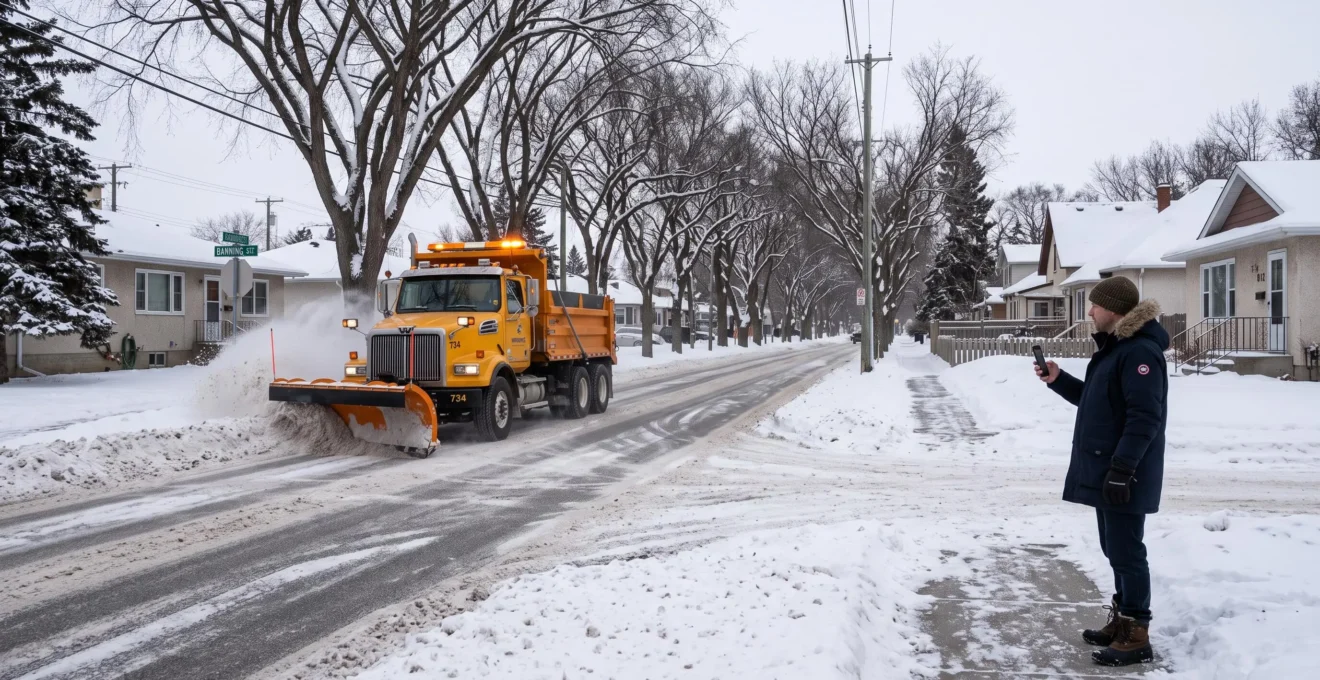
Winnipeg residents experience municipal service delivery through ordinary events: a garbage truck arriving on collection day, a snowplow clearing a street, a pothole being repaired, or a water-related problem receiving attention. These interactions shape how reliable and accessible local government feels.
Better service delivery depends on more than responding to individual complaints. It requires understandable standards, accurate reporting channels, realistic completion expectations, and ways for residents to check whether a reported problem has actually been addressed.
Winnipeg’s 311 system provides a central contact point for municipal information, concerns, and service requests. However, different services operate under different procedures, and the response appropriate for one location or problem may not apply elsewhere.
Residents can navigate these differences more effectively by identifying the relevant service, describing problems precisely, retaining reference numbers, and following up when the estimated completion period has passed. These practices also help distinguish an administrative delay from a service standard that genuinely needs reconsideration.
Winnipeg City Services: What Residents Should Know
- Service expectations depend on the type of problem, its location, applicable operational priorities, and seasonal conditions.
- Winnipeg 311 accepts municipal service requests around the clock. Detailed reports and retained reference numbers make subsequent inquiries easier.
- Residents can compare stated service expectations with actual outcomes, document unresolved problems, and provide specific feedback on recurring local needs.
- Why Can Winnipeg Public Service Levels Vary Across the City?
- How Can You File a Winnipeg Service Request That Is Easier to Assess?
- Which Winnipeg City Service Should Handle Your Neighbourhood Problem?
- Service Request Mistakes That Can Slow Down a Winnipeg City Response
- When Should You Follow Up on an Unresolved Winnipeg Service Request?
- How Can You Find the Right Winnipeg Municipal Service for a Local Problem?
- How Can You Report Winnipeg Road Damage Clearly and Effectively?
- Which Winnipeg Municipal Services Matter Most in Everyday City Life?
Why Can Winnipeg Public Service Levels Vary Across the City?
Winnipeg public service levels can feel different across neighbourhoods because municipal infrastructure, street classifications, development patterns, and service demands vary by location. A city-wide policy does not necessarily require identical treatment of every street or facility. Residents should distinguish published service standards from observed results before deciding whether a particular response represents a delay or an established operational priority.
Winnipeg covers an extensive urban area containing older central neighbourhoods, established residential districts, commercial corridors, and newer suburban developments. These environments present different maintenance needs. An older street may have recurring pavement deterioration, while a newly developed area may have different infrastructure conditions and maintenance demands.
The age of infrastructure can influence the nature of a reported problem. Repeated surface deterioration, for example, might warrant a different assessment from an isolated defect, although a resident’s observation alone cannot establish the underlying engineering cause.
Snow clearing provides a particularly clear example of how formal service classifications affect everyday experience. Winnipeg’s system distinguishes major regional routes, collector streets, non-regional bus routes, and residential streets.
According to the City of Winnipeg’s snow-clearing street-priority map, Priority 1 generally covers major regional roads, Priority 2 covers collector streets and certain bus routes, and Priority 3 generally covers residential streets. These distinctions determine operational sequencing and conditions for clearing.
A resident living on a residential street may therefore see a major road cleared first without either street necessarily being outside the City’s stated approach. The relevant comparison is between the service performed and the standard applicable to that particular road.
Hypothetical example: Two streets after a snowfall
A resident notices that a nearby collector street has been plowed while their residential street remains snow-covered. Instead of assuming inconsistent treatment, they check the two streets’ priority classifications and the conditions governing residential plowing.
If the applicable criteria have not been met, the different outcomes may reflect the published system. If the residential street should already have received service, the resident can report the precise location and circumstances through 311.
Service differences also need to be evaluated separately across departments. Snow-clearing priorities do not establish that pothole repairs, garbage collection, street lighting, or other municipal operations use the same sequencing. Nor does a difference in outcomes, by itself, prove that ward-based political priorities determined the response.
For a meaningful comparison, residents can record the service category, street or property location, applicable municipal standard, date of the problem, and observed outcome. Repeated observations are more informative than a single comparison between unrelated situations.
Once the appropriate standard is identified, a detailed request provides a practical way to document any apparent discrepancy and ask the City to assess it.
How Can You File a Winnipeg Service Request That Is Easier to Assess?
To make a Winnipeg service request easier to assess, identify one specific problem, provide its exact location, describe when it was observed, and explain the practical impact. Include photographs where the reporting channel supports them. Winnipeg’s online forms collect information needed by municipal departments, while 311 representatives can help residents report problems and understand the next steps.
A useful report answers four basic questions: What is wrong? Where is it? When was it observed? What consequence does it create? These details help distinguish a general expression of dissatisfaction from a condition that staff can locate and evaluate.
For instance, « the road is terrible near my house » leaves the location, type of damage, and hazard unclear. A more assessable description would identify the street, nearest intersection, affected lane, visible pavement damage, and date observed.
The City of Winnipeg’s advice on contacting 311 explains that online self-service forms are designed to collect the details departments need. Available categories include potholes, missed garbage collection, snow-clearing concerns, parking violations, and insect-related issues. Some forms are seasonal.
Residents can choose between online reporting and contacting 311 directly. The appropriate choice depends on the problem and whether clarification or immediate communication is needed.
| Consideration | Online self-service form | 311 contact centre |
|---|---|---|
| Typical use | Problems covered by an available reporting form | Municipal inquiries, requests, concerns, and reporting guidance |
| Information collection | Fields tailored to the relevant service category | Details collected during communication with a representative |
| Tracking | Eligible submissions can appear in MyAccount when submitted while signed in | Created service requests receive a reference number and approximate completion timeframe |
| Availability | Depends on the availability of the applicable form | Representatives available 24 hours a day, seven days a week |
| Important limitation | Not every online submission is tracked through the same dashboard | Calling does not establish that a request receives greater operational priority |
When using online services, signing in to MyAccount before submitting an eligible form is important if the resident wants the request to appear in their account dashboard. Signing in afterwards does not automatically provide the same tracking arrangement.
As a practical reporting method, residents should keep unrelated concerns separate. A missed collection and damaged roadway at the same address may involve different assessment processes. Separate submissions make it easier to identify which problem has been addressed, although the available sources do not establish that combining concerns automatically leads to rejection.
Five Steps to Prepare an Assessable Winnipeg Service Request
- Identify the problem. Write a one-sentence description of the specific condition to be assessed.
- Record the location. Save the address, nearest intersection, or other fixed landmark that allows the issue to be found.
- Document the observation. Note the date, visible condition, and relevant safety or accessibility consequences; retain photographs when appropriate and safe to obtain.
- Choose the reporting channel. Find the applicable online form or contact 311, then retain a copy or record of the information submitted.
- Preserve the tracking details. Save the reference number, approximate completion timeframe if provided, and any confirmation or status information for later follow-up.
The next question is whether the reported condition belongs to the City itself, another public authority, or a privately operated service.
Which Winnipeg City Service Should Handle Your Neighbourhood Problem?
The responsible Winnipeg service depends on the infrastructure or activity involved, not simply where the problem appears. Road maintenance, waste collection, snow clearing, water infrastructure, and traffic signals can require different municipal processes. Winnipeg 311 is a practical starting point for City-related problems, while provincial infrastructure, private property, and utility assets may require another responsible organization.
Residents generally do not need to identify the internal municipal department before contacting 311. The important first step is to describe the problem accurately enough to determine which service category applies.
Problems that appear similar may need different handling. A streetlight that does not illuminate, for example, is not necessarily handled through the same process as a malfunctioning traffic signal. Likewise, a roadway depression and a damaged stormwater inlet may require different types of assessment.
The following grid provides an initial routing guide rather than a guarantee of infrastructure ownership or a final department assignment.
| Observed problem | Likely service area | Suggested first action |
|---|---|---|
| Pothole or damaged City street | Municipal road maintenance | Report the exact location through 311 |
| Missed household garbage collection | Municipal waste collection | Use the applicable collection reporting service |
| Snow accumulation affecting a City street | Municipal snow clearing | Check street priority and report concerns through 311 |
| Streetlight outage | Street lighting and potentially utility-owned infrastructure | Confirm the appropriate reporting authority |
| Traffic signal malfunction | Traffic signal operations | Report the location and observed malfunction promptly |
| Graffiti on a public surface | Municipal maintenance or the responsible property operator | Identify the affected surface and its apparent ownership |
| Overgrown boulevard vegetation | Municipal vegetation maintenance or another responsible property party | Clarify maintenance responsibility before assuming City ownership |
| Blocked catch basin or suspected sewer problem | Municipal drainage or sewer service, where City-owned | Describe the drainage condition to 311 |
Infrastructure ownership matters particularly near jurisdictional boundaries or on privately maintained land. A road located geographically within Winnipeg should not automatically be assumed to have the same maintenance responsibility as every other road. Similar uncertainty may arise around back lanes, access roads, sidewalks, utility installations, and property boundaries.
When ownership is unclear, provide the precise location and explain the visible condition rather than choosing a department by guesswork. Ask 311 whether the matter falls within City responsibility or whether another operator should be contacted.
Do not assume a misdirected report will automatically be transferred or completed. The available municipal guidance establishes 311 as a central contact service but does not guarantee successful redirection in every jurisdictional situation.
For potentially dangerous conditions, the type of emergency determines the contact channel. Police, fire, and medical emergencies belong with 911. Other urgent municipal concerns can be explained to 311 so the appropriate handling can be determined.
Even when the responsible service is clear, incomplete information or mistaken expectations can make the response process more difficult to understand.
Service Request Mistakes That Can Slow Down a Winnipeg City Response
Winnipeg service requests become harder to assess when residents provide unclear locations, omit important details, confuse reporting categories, or use routine channels for emergencies. Repeated submissions can also complicate personal tracking. However, an extended response time does not necessarily mean a request was mishandled: service priorities, seasonal workloads, and the nature of the problem may explain why work remains pending.
The most avoidable reporting weakness is an imprecise location. Staff need enough information to identify the relevant street segment, property, intersection, or municipal asset. For a problem extending across several locations, describe the affected area and distinguish specific defects where possible.
Another weakness is describing inconvenience without the observable condition. « This neighbourhood receives poor maintenance » may be useful civic feedback, but a service request is easier to assess when it identifies the particular defect, affected location, and consequence.
Residents should also avoid treating every outstanding request as an administrative error. Municipal operations can prioritize safety-sensitive issues, follow seasonal schedules, and apply service-specific criteria. Snow clearing illustrates this distinction: a residential street may be assessed differently from a major regional road under published operational priorities.
For potholes and road deterioration, seasonal conditions may affect inspection and repair decisions. Winter freeze-thaw cycles and weather-dependent work can create practical constraints. No single completion deadline should be assumed for all road defects without an applicable City estimate or service standard.
Submitting several identical reports is not an established way to obtain higher priority. A better personal recordkeeping practice is to retain the original reference number and request an update using that number. This does not mean the City automatically rejects duplicate reports; the supplied municipal guidance does not support such a claim.
Residents should distinguish three situations:
- Insufficient information: The report lacks a precise location or a clear description of the condition.
- Different service responsibility: The asset may fall under another municipal category, jurisdiction, or property operator.
- Pending operational response: The request may be recorded but awaiting assessment or work under the applicable priority system.
Emergency-channel confusion is more serious. A police, fire, or medical emergency must not be handled as an ordinary municipal maintenance inquiry. Conversely, an unresolved routine complaint should not be characterized as a 911 emergency solely to seek a faster response.
A practical improvement is to keep one organized record per identifiable issue, noting the original description, submission date, reference number, and subsequent changes. This makes it possible to explain what remains unresolved without recreating the entire history.
When the original request is complete and its estimated timeframe has passed, the next step is a documented follow-up rather than an assumption about why service has not occurred.
When Should You Follow Up on an Unresolved Winnipeg Service Request?
Winnipeg residents should normally follow up when the approximate completion timeframe supplied for their service request has passed and the problem remains unresolved. Use the original reference number so 311 can locate the request. A worsening condition or new safety concern may warrant earlier contact, while police, fire, and medical emergencies must be directed to 911 immediately.
When a 311 representative creates a request, the City provides an approximate completion timeframe and a unique reference number. The timeframe is specific to the request rather than a universal deadline covering all municipal services.
The City of Winnipeg’s 311 service information and FAQs explains that residents can contact 311 again if the requested service has not been completed within the timeframe provided. The reference number is needed for subsequent status inquiries.
Before following up, review the original report and determine whether the visible condition has changed. A new obstruction, expanding damage, or increased exposure to risk may materially change the information available to staff.
A useful follow-up should contain:
- The original service-request reference number.
- The location and problem category.
- The date the request was submitted and the approximate completion timeframe provided.
- A factual description of what remains unresolved.
- Any new observations that change the severity or scope of the concern.
Residents who submitted eligible forms while signed in can also review status information through MyAccount. The dashboard may display submission dates, open or closed status, and available notes.
A closed administrative status should not automatically be interpreted as proof that physical work was completed. If the reported condition persists, contact 311 with the original details and ask for clarification about the recorded outcome. The supplied documentation does not establish that every closure is accompanied by an on-site repair.
If the concern relates to the quality of 311 service itself, the City identifies a separate complaint pathway: residents may request the supervisor on duty or submit a written complaint. This is different from demanding automatic escalation of an unresolved maintenance task.
For persistent community-level concerns, residents may also communicate factual records to their ward councillor’s office. Such an inquiry can raise awareness of recurring problems, but it does not replace a formal request or guarantee a particular operational response.
Keep a chronological record of each contact, including dates, reference numbers, information received, and observable changes. This helps distinguish a new development from an issue already documented.
If the reporting category itself remains uncertain, identifying the correct municipal service can clarify whether another request or a different authority is appropriate.
How Can You Find the Right Winnipeg Municipal Service for a Local Problem?
Start with the problem you can observe, then use the City of Winnipeg‘s service information or contact 311 to identify the appropriate reporting category. Search for the condition rather than an unfamiliar department name. When responsibility is ambiguous, provide the exact location and ask whether the matter belongs to a City service, another government authority, or a private operator.
Municipal service directories are easier to navigate when residents use everyday problem descriptions. Search terms such as « missed garbage collection, » « pothole, » « snow clearing, » or « sewer backup » connect a visible condition to a likely service category.
If an initial website search does not identify a useful form, try a more specific description. « Street light not working » and « traffic signal not changing » may refer to distinct problems even though both involve equipment near a road.
For a roadway concern, record whether the problem affects pavement, a sidewalk, a catch basin, or a traffic-control device. This distinction is more useful than searching broadly for « street problems. »
Winnipeg’s 311 Contact Centre handles municipal information inquiries as well as service requests and concerns. It therefore provides a practical alternative when a resident cannot determine which online form applies.
Accessibility also matters. According to the City’s published information, 311 provides assistance in English and French and access to interpretation services for additional languages. Residents who cannot readily navigate an online form may use the telephone service to explain what they need.
Community organizations and ward councillors’ offices may help residents understand whom to approach when a recurring neighbourhood concern is difficult to categorize. However, they should be regarded as supplementary communication routes rather than guaranteed substitutes for the official reporting and tracking process.
When several residents observe the same condition, a shared factual description can help clarify the location and nature of the concern. The number of people expressing concern should not be presented as an official prioritization formula unless the relevant service publishes one.
Once the correct category is identified, retain the applicable reporting instructions and any reference number. This prevents a later follow-up from beginning with the same uncertainty about responsibility.
This approach becomes particularly valuable for roadway damage, where the physical characteristics and exact location of a defect influence how effectively it can be described.
How Can You Report Winnipeg Road Damage Clearly and Effectively?
To report Winnipeg road damage effectively, identify the exact roadway location, describe the defect, document its visible size and condition, and explain any safety or accessibility risk. Distinguish potholes from sidewalk damage, drainage problems, and potentially serious ground failures. Submit the information through the appropriate municipal channel and retain the reference number for follow-up.
Road damage reports benefit from fixed geographic references. A street name alone may cover a long stretch of pavement, while a nearest intersection, lane position, or identifiable curb feature gives a more precise point for assessment.
Residents should report only observations they can reasonably verify. If the depth of a pothole cannot be measured safely, describing its visible edges, approximate dimensions, and effect on road users is preferable to providing an invented measurement.
Photographs can preserve useful context. One wider image may show the location relative to the roadway, while a closer image may illustrate the damaged surface. Measurements or scale references should be obtained only when doing so is safe and lawful; residents should not enter traffic or approach unstable ground to collect evidence.
Different defects require different descriptions:
- Potholes: Describe missing pavement, approximate extent, position within the lane, and visible hazards.
- Sidewalk cracks or displacement: Identify the affected pedestrian route and any observable tripping or accessibility concern.
- Damaged catch basins: Describe the drainage feature, standing water, visible obstruction, or damaged surrounding surface.
- Suspected sinkholes or substantial roadway collapse: Explain the observable instability and potential immediate danger without attempting to approach or test the ground.
For a potentially serious roadway hazard, contacting 311 directly can help communicate the condition promptly. If the circumstances involve a police, fire, or medical emergency, 911 is the correct emergency channel.
When describing risk, specify who may be affected and how. A pothole beside a cycling route may raise a different concern from cosmetic surface wear outside the principal path of travel. The report should describe the observed risk without assuming that a particular description guarantees priority treatment.
Hypothetical example: Reporting a recurring pothole
A resident notices that pavement damage has reappeared near the same intersection following an earlier repair. They record the current condition, its exact location, and the date of the new observation, then reference the previous request when communicating with 311.
The earlier record establishes that a similar concern was reported before. It does not, by itself, prove the cause of the renewed deterioration or establish that an extensive reconstruction is required.
Seasonal context should also be included where relevant. A defect observed during a freeze-thaw period may be affected by changing surface conditions. Residents can document water accumulation or repeated visible deterioration without asserting an engineering explanation that has not been established.
After a repair, reassess the actual condition rather than assuming that the administrative status alone proves the work was effective. If damage returns, provide a new description and reference the previous report to preserve continuity.
Road maintenance is only one part of the broader service system, and its effectiveness must be considered alongside the municipal functions residents depend on throughout the year.
Key Takeaways for Winnipeg Residents
- Judge municipal service performance against the appropriate service category and published operating expectations rather than assuming every problem follows the same schedule.
- Use a consistent record of locations, observations, reference numbers, and outcomes to identify recurring difficulties rather than relying on isolated impressions.
- Communicate patterns of unmet needs through formal service requests and constructive civic feedback, recognizing that routine maintenance and urgent hazards require different responses.
Which Winnipeg Municipal Services Matter Most in Everyday City Life?
The Winnipeg municipal services that matter most in everyday life are those that sustain safe movement, sanitation, essential infrastructure, and access to local facilities. Waste collection, road maintenance, snow clearing, water and sewer services, transit, and street lighting affect residents in different ways. Their relative importance depends on individual needs, seasonal conditions, and the consequences of service disruption.
Municipal performance is not experienced as a single city-wide outcome. A resident relying on public transit may place particular importance on route reliability and accessibility, while a household on a residential street may be especially concerned with snow clearing, drainage, and garbage collection.
Different services also have different operating rhythms. Household waste collection involves scheduled recurring activity. Road maintenance may depend on condition assessments and work planning. Snow clearing is highly seasonal and follows defined operational classifications.
Water and sewer services can involve both routine maintenance and urgent infrastructure concerns. Traffic signals and other safety-related assets may also present conditions requiring prompt attention. By contrast, some vegetation maintenance or routine street-cleaning concerns may be evaluated through scheduled work processes.
The following comparison shows how residents can frame expectations without assuming that all services share one completion deadline.
| Service | Everyday impact | Useful performance question |
|---|---|---|
| Waste collection | Household sanitation and predictable collection routines | Was the scheduled service delivered, and how can a missed collection be reported? |
| Snow clearing | Winter travel, street accessibility, and mobility | What priority classification and operating criteria apply to this location? |
| Road maintenance | Vehicle travel, cycling, pedestrian access, and pavement condition | Has the reported defect been assessed, and what is its current status? |
| Water and sewer | Essential household services and drainage | What type of concern is present, and how should its urgency be communicated? |
| Transit | Access to work, education, appointments, and daily activities | How does the available service meet the travel needs of affected residents? |
| Street lighting and signals | Visibility and movement around public roads | Which asset is affected, and who is responsible for the reported fault? |
Seasonal changes make these expectations more complicated. Snow events concentrate attention on winter maintenance, while warmer periods bring different roadway and outdoor infrastructure demands. Such patterns help explain why workload and response sequencing may change, but they do not establish specific delays without service-level evidence.
Improving alignment with residents’ needs requires making the service process understandable and examining whether the results correspond to those needs. A useful evaluation considers access to reporting, clarity of instructions, stated completion expectations, actual outcomes, and whether recurring concerns are identified.
Neighbourhood comparisons are more meaningful when they account for the same service category, comparable conditions, and applicable standards. Comparing a high-priority transportation route with a residential street, or an emergency repair with routine maintenance, can otherwise produce misleading conclusions.
Constructive civic feedback should identify the public outcome residents need. Rather than requesting generally « better services, » a resident might document repeated missed collections, a persistently inaccessible route, or recurring pavement damage at a defined location.
Service-request records can demonstrate individual experiences, but they do not replace a representative city-wide performance assessment. Evaluating municipal priorities across neighbourhoods also requires reliable operational and community-level evidence, which the available sources do not provide in sufficient detail to rank Winnipeg districts by service quality.
Residents can begin with one concrete issue: confirm the responsible service, document the condition, submit an assessable report, and review the outcome against the timeframe provided. Repeated, specific observations can then support constructive discussions about whether local service delivery matches community needs.
Is Winnipeg 311 available outside regular business hours?
Yes. Winnipeg’s 311 Customer Service Representatives are available 24 hours a day, seven days a week, throughout the year. The City’s guidance identifies weekdays between 8:30 a.m. and 4:30 p.m. as typically the busiest calling period. Availability of a contact service does not mean every type of municipal work is performed immediately.
Can you track a Winnipeg online service request without a MyAccount login?
Tracking depends on how the request was submitted and its category. Eligible online requests appear in the MyAccount dashboard when the resident was signed in before submission. Requests submitted without signing in may require contacting 311 for updates. Certain waste-related requests and older submissions have separate tracking procedures described in the City’s official documentation.
Does a closed Winnipeg service request always mean the problem was fixed?
No such conclusion can be established from the status label alone. MyAccount can display open or closed status and available notes, but the published guidance does not demonstrate that every closed request corresponds to completed physical work. If the condition remains, residents can reference the original request and ask 311 for clarification.
Can residents request municipal service assistance in French?
Yes. Winnipeg’s 311 service provides assistance in English and French. The City’s published information also identifies access to interpretation services for additional languages. Residents can use 311 to obtain guidance about the appropriate municipal information or service-request process.
Is there one guaranteed response deadline for every Winnipeg municipal problem?
No universal completion guarantee is established by the available municipal information. When a 311 representative creates a service request, an approximate completion timeframe is provided for that request. Operational criteria, service categories, and conditions vary, so residents should retain the specific estimate they receive and follow up after it has passed if the problem remains unresolved.