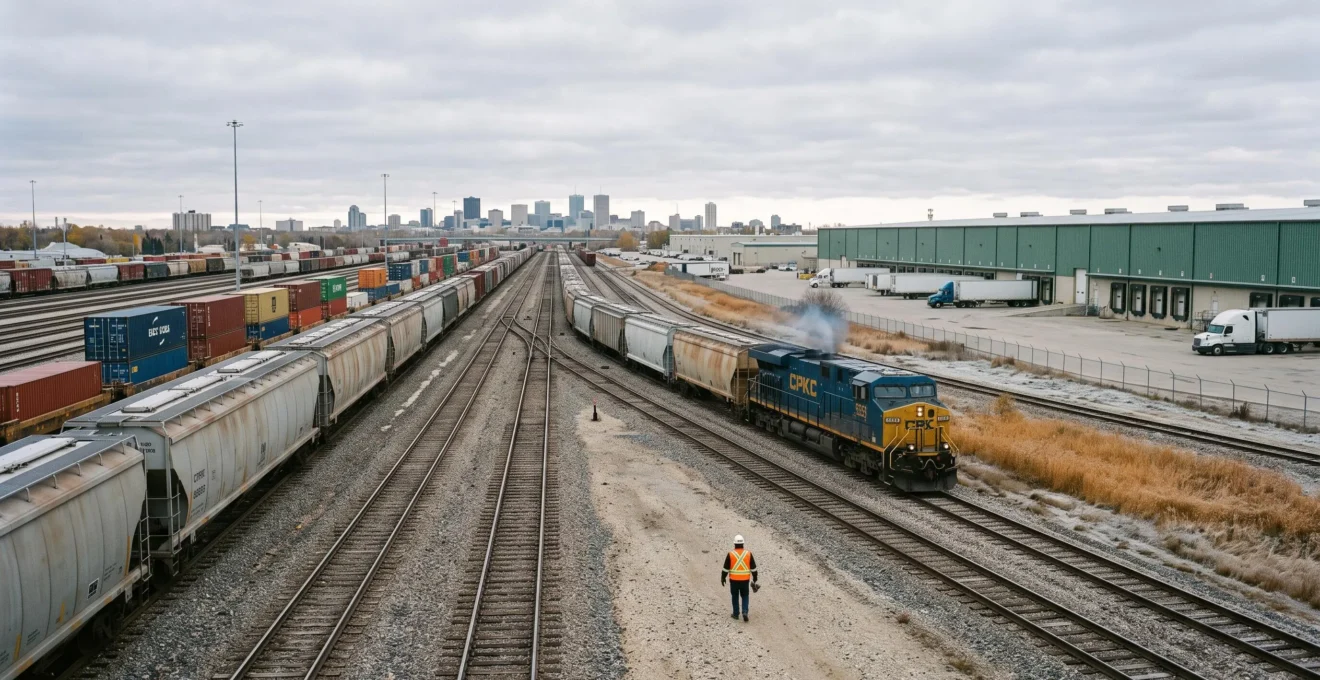
Winnipeg’s economy draws its strength from a combination of public institutions, manufacturing, transportation, agriculture-linked industries and a broad service sector. Rather than depending on a single resource or dominant employer, Manitoba’s capital generates employment and investment through activities with different customers, financing requirements and economic cycles.
That diversity helps explain why Winnipeg can remain comparatively steady when particular industries weaken. Public services continue operating during manufacturing downturns, freight companies serve markets beyond the city, and food processors connect regional agricultural production with larger supply chains. Nevertheless, economic stability does not guarantee rapid growth, rising wages or protection from higher borrowing costs.
Understanding Winnipeg’s economic outlook requires looking beyond national headlines. Local employment patterns, construction activity, business investment, infrastructure and small-business conditions provide a more useful picture of how prosperity is distributed and where vulnerabilities remain.
Winnipeg’s economy at a glance
- Diversification supports resilience: Public institutions, manufacturing, transportation and services reduce dependence on any one industry’s performance.
- Local indicators matter: Employment composition, building permits, commercial property conditions and business activity reveal trends that national figures can obscure.
- Connections drive growth: Freight infrastructure, regional agriculture and small-business supply networks link Winnipeg to markets extending beyond Manitoba.
- Why Does Winnipeg’s Diverse Industry Mix Matter During Economic Slowdowns?
- How Can You Tell Whether Winnipeg’s Economy Is Strengthening or Slowing?
- Goods-Producing or Service Sectors: Which Shape Winnipeg’s Economy More?
- Economic Signals That Can Give a Misleading Picture of Winnipeg’s Economy
- When Do Wider Canadian Economic Shifts Reach Winnipeg Households and Businesses?
- Why Do Winnipeg SMEs Matter Beyond the Jobs They Directly Create?
- Why Does Winnipeg’s Location Matter So Much for Canadian Freight Distribution?
- How Do Small and Medium-Sized Enterprises Strengthen Winnipeg’s Economy?
Why Does Winnipeg’s Diverse Industry Mix Matter During Economic Slowdowns?
Winnipeg’s diverse industry mix helps protect employment when individual sectors contract because the city’s major activities do not all respond to the same economic pressures. Manufacturing, transportation, public administration, health care, education and financial services face different demand cycles. This diversification can limit the spread of a sector-specific downturn, although it cannot eliminate city-wide economic weakness.
Consider an agricultural downturn caused by weaker crop prices. Farm-related transportation, equipment suppliers and food-processing businesses may experience reduced demand or tighter margins. However, hospitals, schools and many government services continue operating because their funding and service requirements follow different mechanisms.
Similarly, declining manufacturing orders do not automatically reduce demand for every professional service, health care provider or educational institution. Different sources of employment and income can therefore soften the immediate effects of economic disruption.
Institutional employment provides an additional stabilizing influence. Provincial administration, universities, health services and Crown corporations operate according to public responsibilities and longer-term budgets. Their staffing decisions are generally less directly tied to commodity prices than those of resource-dependent businesses.
Yet public employment is not recession-proof. Budget restrictions, fiscal pressures and policy changes can affect hiring, capital spending and staffing even when demand for essential services remains strong.
Diversification also creates a distinction between employment resilience and economic growth. Winnipeg might avoid widespread layoffs while businesses delay expansion, wages increase slowly or new investment remains limited. During an industry-specific boom, a more specialized city may grow faster, while Winnipeg’s varied economy can produce a steadier but less spectacular expansion.
The practical question is not whether diversification prevents recessions, but which activities are sustaining employment, investment and household income at a particular moment.
How Can You Tell Whether Winnipeg’s Economy Is Strengthening or Slowing?
Winnipeg’s economic direction is best assessed by comparing several local indicators over multiple reporting periods. Employment by industry, building permit activity, commercial property conditions and significant investment decisions offer different perspectives. Consistent improvement across these measures suggests strengthening conditions, while sustained weakness across several indicators deserves closer investigation.
No single statistic provides a complete economic diagnosis. A construction boom can coincide with stagnant retail sales, while rising employment may conceal reduced working hours or weaker conditions in particular industries.
A useful local dashboard combines the following measures:
| Indicator | Potential strength signal | Potential warning signal |
|---|---|---|
| Building permits | Sustained growth in project volume and inflation-adjusted values | Persistent decline in planned development activity |
| Employment by industry | Job growth across several sectors | Concentrated layoffs or declining employment across industries |
| Commercial vacancy | Declining vacancies alongside healthy leasing demand | Extended vacancies and weak tenant demand |
| Major investments | Projects reaching financing, construction or operation | Repeated postponements or cancellations |
| Labour-force participation | Stable or rising participation with employment growth | Falling participation masking labour-market weakness |
The City of Winnipeg building and development permit statistics offer a starting point for tracking local construction intentions. Monthly reports identify permit activity, values and projects. However, an issued permit does not establish that construction has been completed or that equivalent investment has occurred.
Statistics Canada‘s Labour Force Survey provides employment and unemployment information, including Winnipeg census metropolitan area estimates. Commercial property conditions can be assessed using market reports, while project announcements require checking whether financing, construction and operational milestones have actually occurred.
Geographic precision is essential. The City of Winnipeg and the Winnipeg census metropolitan area do not represent identical boundaries, while Manitoba-wide figures include economic activity outside the metropolitan region.
Build a five-step Winnipeg economic monitoring dashboard
- Define the geography: Record whether each series covers the city, Winnipeg CMA or Manitoba. Deliverable: a source inventory with geographic labels.
- Collect construction data: Record municipal building permit values and counts for several reporting periods. Deliverable: a dated permit trend table.
- Track employment: Compare available labour-market indicators and industry-level employment data at their published geographic resolution. Deliverable: a sector employment summary.
- Check business conditions: Record comparable commercial vacancy observations and the verified status of major projects. Deliverable: a project and property-market register.
- Identify recurring signals: Compare changes over multiple quarters, separating local movements from interest-rate effects and statistical volatility. Deliverable: a short assessment identifying improving, weakening and inconclusive indicators.
Quarterly comparisons, supported by longer historical context, help distinguish genuine changes in local conditions from temporary fluctuations or revised estimates.
Goods-Producing or Service Sectors: Which Shape Winnipeg’s Economy More?
Service industries account for the majority of Winnipeg’s employment, while goods-producing activities have an important influence on manufacturing investment, exports, supply chains and economic volatility. Neither group fully explains the city’s performance independently. Winnipeg’s economic structure depends on the interaction between producers, transportation providers, institutions, retailers and specialized business services.
Goods-producing industries include manufacturing, construction and utilities, alongside agriculture-related production in the wider regional economy. Their activity often depends on physical inputs, equipment, financing and demand from customers outside Winnipeg.
Service industries include health care, education, public administration, retail, finance, professional services, transportation and warehousing. Their economic cycles differ considerably: health care demand follows institutional and demographic factors, whereas retail depends more directly on household spending.
The major contrasts are useful for understanding risk.
| Economic factor | Goods-producing industries | Service industries |
|---|---|---|
| Main economic role | Production, infrastructure and tangible investment | Employment, distribution and essential or commercial services |
| Interest-rate exposure | Often significant for equipment and construction financing | Varies from highly sensitive retail activities to less directly exposed institutions |
| Exchange-rate exposure | Important for exporters and imported production inputs | Important for some transport, tourism and internationally traded services |
| Demand drivers | Domestic and international orders, construction demand and input conditions | Household demand, government budgets and business purchasing |
These categories are economically connected. A food processor purchases agricultural inputs, relies on transportation companies, hires accountants and technicians, and sells through wholesalers or retailers. A manufacturing expansion can therefore generate additional activity across several service industries.
Conversely, weaker goods production can reduce freight volumes, equipment maintenance contracts and demand for professional services. Sector classifications distinguish activities statistically, but they do not separate the relationships through which income and employment circulate.
For workers, the distinction helps identify occupational exposure. A manufacturing technician may face more direct sensitivity to export orders, while an institutional health care position may depend more heavily on staffing budgets. For business owners, the relevant question is whether customers are exposed to commodity markets, household spending, public funding or industrial investment.
A stronger assessment considers not only how many people work in each sector, but also which industries generate investment, purchase from local suppliers and connect Winnipeg with external markets.
Economic Signals That Can Give a Misleading Picture of Winnipeg’s Economy
Winnipeg’s economic indicators can mislead when headline averages conceal industry-level weakness, geographic boundaries are confused or short-term fluctuations are mistaken for lasting trends. A low unemployment rate, strong permit values or a prominent investment announcement may appear encouraging without demonstrating broad-based improvement in employment, incomes and business conditions.
One common error is interpreting city-wide employment growth as evidence that every industry is healthy. Expanding health services could offset weaker manufacturing employment in an aggregate measure, even though affected workers face substantial difficulties finding comparable positions.
Unemployment figures also require context. The unemployment rate measures unemployed people as a proportion of the labour force, not the entire working-age population. If participation falls, the headline rate can improve without a corresponding increase in employment.
Other measures can similarly create incomplete impressions:
- GDP growth: A concentrated increase in one industry can lift overall output without benefiting every household or business.
- Building permit values: A few large projects can raise monthly totals without indicating broad construction expansion.
- Job creation: Additional positions may be part-time or temporary, leaving total hours and earnings weaker than the headline suggests.
- Investment announcements: Proposed expenditure is not equivalent to completed investment or permanent employment.
- Housing activity: Changes may primarily reflect borrowing costs or financing conditions rather than shifts in local incomes.
Statistical volatility introduces another risk. Winnipeg’s metropolitan labour-market sample is smaller than Canada’s national sample, so month-to-month estimates deserve particular caution. Sampling variation, seasonal factors and subsequent data revisions can complicate interpretations of apparently sharp changes.
National media narratives create a further challenge. A Canadian housing boom driven by activity in larger metropolitan markets does not establish comparable Winnipeg conditions. Likewise, strong national employment may coincide with weakness in particular Manitoba industries.
Before using a figure to guide hiring, investment or household spending decisions, identify its geographic coverage, reference period, measurement method and whether it is seasonally adjusted. Where possible, compare it with at least one independent economic indicator.
Reliable local interpretation depends on examining how an indicator was produced and what it actually measures, rather than relying on whether its headline appears positive or negative.
When Do Wider Canadian Economic Shifts Reach Winnipeg Households and Businesses?
Canadian economic changes reach Winnipeg through several channels operating at different speeds. Interest-rate decisions influence financing costs and some housing decisions relatively quickly, while mortgage renewals, employment changes and business investment may respond later. Commodity prices, trade disruptions and government spending decisions can affect exposed local industries on different schedules.
The Bank of Canada‘s policy rate is an important transmission mechanism because commercial borrowing conditions influence household purchases and business financing throughout Canada.
The Bank of Canada’s explanation of monetary policy transmission describes how interest-rate changes influence borrowing, investment, consumer demand, exchange rates and wider economic activity. It also emphasizes that economic effects unfold over time.
For a Winnipeg household with a variable-rate mortgage, borrowing costs may change according to the mortgage contract and lender. A fixed-rate borrower may not experience comparable payment changes until renewal. Businesses refinancing equipment loans or considering new premises face their own schedules.
Higher financing costs can discourage residential development, capital-intensive expansion and discretionary spending. Employment effects may emerge later if businesses experience weaker sales and reduce hiring or investment plans.
Winnipeg’s diversified industrial and institutional base can influence the local response to national shocks, but it does not establish a measurable delay relative to Toronto or Vancouver. Housing affordability, financing structures and sector exposure must be examined before making such comparisons.
Other shocks follow different channels. Agricultural commodity prices can affect regional producers and their suppliers, while freight disruptions can affect transportation schedules and related businesses. Federal infrastructure spending or changes in government funding can influence local contractors and institutions, depending on the projects and programs involved.
A practical way to anticipate these developments is to match each financial exposure with its most relevant signal:
- Households approaching mortgage renewal can track lending rates and their actual contract terms.
- Manufacturers can monitor orders, exchange rates and important input costs.
- Agri-food firms can follow crop conditions, commodity markets and transportation disruptions.
- Construction businesses can examine financing conditions, permits and committed project pipelines.
- Public-sector suppliers can track confirmed budgets, procurement opportunities and contract renewals.
The most useful leading indicator is often the one connected directly to a household’s debt obligations or a business’s customers, suppliers and financing requirements.
Why Do Winnipeg SMEs Matter Beyond the Jobs They Directly Create?
Winnipeg’s small and medium-sized enterprises contribute more than direct employment because they supply larger organizations, support neighbourhood commercial activity, serve specialized markets and create additional purchasing relationships within the local economy. Their contribution depends on ownership, sourcing patterns and financial stability, so business counts alone cannot establish the size of their wider economic impact.
A small industrial maintenance company, for example, may serve multiple manufacturers and logistics facilities. Its role extends beyond its own employees: timely maintenance can help customers maintain operations, while purchases from equipment suppliers create further commercial activity.
Neighbourhood businesses operate through another mechanism. Retailers, repair services and restaurants can support local commercial streets by attracting visitors, occupying premises and creating opportunities for nearby businesses. Their effects on surrounding property values or commercial demand vary with location and market conditions.
Local ownership can influence how business income circulates. Firms purchasing from nearby suppliers and employing local residents generate opportunities for further spending within Winnipeg. However, local ownership does not automatically guarantee a larger economic multiplier. Supply-chain choices, profits, wages and purchasing patterns determine where income ultimately flows.
Smaller enterprises also contribute specialized capabilities. Food-production services, advanced manufacturing support, professional consulting and Indigenous-owned businesses can serve distinct customer needs that larger providers may not address in the same way.
34,107
Small and medium-sized employer businesses in Manitoba in December 2024, comprising 33,513 small and 594 medium-sized enterprises. These are provincial totals, not Winnipeg-specific counts, and exclude most businesses without paid employees.
Innovation, Science and Economic Development Canada’s Key Small Business Statistics 2025
Federal business-size definitions classify small employer businesses as having 1–99 paid employees and medium-sized businesses as having 100–499. The Manitoba figures illustrate the breadth of smaller enterprises in the provincial economy but do not quantify their specific contribution within Winnipeg.
SMEs can also reveal economic weakness early. Firms with limited cash reserves and concentrated customer bases may respond quickly to reduced orders, higher financing costs or delayed payments. Business closures, formation patterns and hiring plans are therefore useful supplementary signals, provided that geographically appropriate data are available.
These wider relationships make business diversity valuable, while also highlighting why the financial health and customer concentration of smaller firms deserve attention.
Why Does Winnipeg’s Location Matter So Much for Canadian Freight Distribution?
Winnipeg’s location supports freight distribution because it connects major east-west transportation routes with road, rail and air infrastructure serving regional, national and international markets. This network creates opportunities for warehousing, distribution and cargo transfers. Its economic value comes from transport connectivity and logistics facilities, not simply from Winnipeg’s position on a map.
Located in central Canada, Winnipeg forms part of transportation corridors linking the Prairies with western ports, central Canadian markets and cross-border trade routes. Rail connections, highway infrastructure and an international airport provide multiple ways to move goods through the region.
The relationship between location and investment is illustrated by CentrePort Canada, an inland port associated with multimodal transportation infrastructure.
CentrePort Canada Way: a documented freight infrastructure investment
A federal government announcement dated November 22, 2013, documented completion of CentrePort Canada Way, a 9.1-kilometre four-lane divided roadway connecting the inland port with the national highway system. The announcement also identified nearby rail connections, trucking infrastructure and Winnipeg’s international airport.
The project demonstrates public investment in freight connectivity. However, the historical announcement does not establish current freight volumes, present-day employment totals or the economic return subsequently generated by the project.
Those connections support several potential logistics activities, including distribution centres, warehousing, temperature-controlled food storage and the movement of agricultural and manufactured goods between transport modes.
Importantly, the demand supporting a distribution facility need not originate within Winnipeg. A warehouse serving several provinces may depend more on regional freight patterns and customer contracts than on local retail sales. This expands the range of markets connected to Winnipeg’s employment base.
Transportation and warehousing can consequently connect the city’s industrial, agricultural and service economies. Freight operators require technicians, property services, administrative support and equipment, creating opportunities for other businesses.
Nevertheless, the sector is exposed to external risks. Rail interruptions, border restrictions, difficult Prairie weather and changes in trade routes can disrupt operations. Competition from other distribution locations also influences where companies place facilities and investment.
Maintaining that advantage depends on infrastructure reliability, competitive operating conditions and the ability of logistics providers to adapt as supply chains change.
Key takeaways for Winnipeg business decisions
- Look for connected demand: Business opportunities serving transportation, manufacturing and institutions may draw customers from wider economic networks.
- Evaluate financial resilience: Customer concentration, financing costs and cash reserves matter as much as the attractiveness of an industry.
- Measure relationships: A firm’s contribution to local resilience depends on the customers it serves, the suppliers it supports and its capacity to remain operational during downturns.
How Do Small and Medium-Sized Enterprises Strengthen Winnipeg’s Economy?
Small and medium-sized enterprises strengthen Winnipeg’s economy by spreading employment across many businesses, serving specialized customer needs and supporting larger industrial and institutional networks. They create opportunities for entrepreneurship and workforce participation while helping diversify local supply chains. Their benefits are strongest when businesses have sustainable demand, manageable financing and limited dependence on individual customers.
A diversified SME community reduces reliance on a small number of large employers. When one business contracts, others may continue operating because they serve different industries or customer groups. This dispersion of activity can support economic resilience, although widespread financing or demand shocks can still affect many firms simultaneously.
Smaller businesses can respond to narrowly defined market opportunities. An independent logistics service provider might specialize in a particular freight requirement, while a technical contractor could develop expertise in maintaining food-processing equipment. Such businesses can complement larger employers rather than competing directly with them.
Supplier capability can also influence business-location decisions. A manufacturer considering investment in Winnipeg may value access to maintenance providers, transportation services and professional expertise. A developed local supplier network can reduce coordination difficulties and make the location more practical for certain operations.
For entrepreneurs evaluating the market, Winnipeg’s structural economic connections provide a useful framework. Opportunities may come from business-to-business demand in freight distribution, food processing, construction and institutional services, rather than exclusively from local consumer spending.
However, market relevance does not guarantee commercial viability. Before launching or expanding, a prospective business should examine:
- Customer demand: Whether potential buyers have recurring, demonstrable purchasing requirements.
- Revenue concentration: The financial consequences of losing a major customer or contract.
- Working capital: The capacity to pay operating expenses while waiting for customer payments.
- Financing exposure: Whether borrowing costs could undermine an otherwise viable business model.
- Market diversification: Opportunities to serve multiple Winnipeg industries or customers elsewhere in Manitoba and Canada.
Business support and public policy can help address some barriers through access to information, training, financing opportunities and procurement processes. The effectiveness of any specific program, however, requires examination of its eligibility conditions and documented results.
Ultimately, Winnipeg’s SME contribution is not measured solely by new business registrations. Sustained employment, reliable supplier relationships, productive investment and the survival of viable firms are more meaningful indicators of whether entrepreneurship strengthens the city’s economic structure.
For a practical next step, identify the industries supporting a proposed job or business opportunity, verify local demand with relevant economic indicators, and assess the financial risks that could affect its long-term sustainability.
Is Winnipeg’s economy dependent on agriculture?
No. Agriculture and related food-processing and transportation activities are important connections between Winnipeg and the wider Manitoba economy, but the city also depends on public administration, health care, education, manufacturing, financial services and other service industries. Agricultural conditions influence several local supply chains without determining the entire city’s economic performance.
Does a low unemployment rate mean Winnipeg’s economy is healthy?
Not necessarily. A low unemployment rate may coexist with declining labour-force participation, fewer working hours or weakness in particular industries. Employment levels, participation, earnings and sector-level changes should be examined together over several reporting periods before drawing a broader conclusion.
Where can residents find reliable Winnipeg economic data?
Statistics Canada provides labour-market information, while the City of Winnipeg publishes municipal building and development permit statistics. Federal business statistics offer additional national and provincial context. Readers should distinguish Winnipeg census metropolitan area data from City of Winnipeg and Manitoba-wide figures, particularly when comparing employment and business activity.
How do Bank of Canada interest rates affect Winnipeg businesses?
Interest-rate changes influence borrowing costs, business investment and household spending. Businesses financing equipment or construction may feel changes through loan pricing, while customer demand may adjust more gradually. The impact depends on existing financing agreements, industry exposure and the timing of borrowing or refinancing decisions.
Can Winnipeg’s geographic location protect it from economic downturns?
Winnipeg’s transportation connections provide access to regional and national markets, helping logistics businesses serve demand beyond the city’s population. However, geography does not eliminate risks associated with declining freight volumes, infrastructure disruptions, trade restrictions or changes in supply-chain organization. Connectivity creates opportunities rather than guaranteed protection.