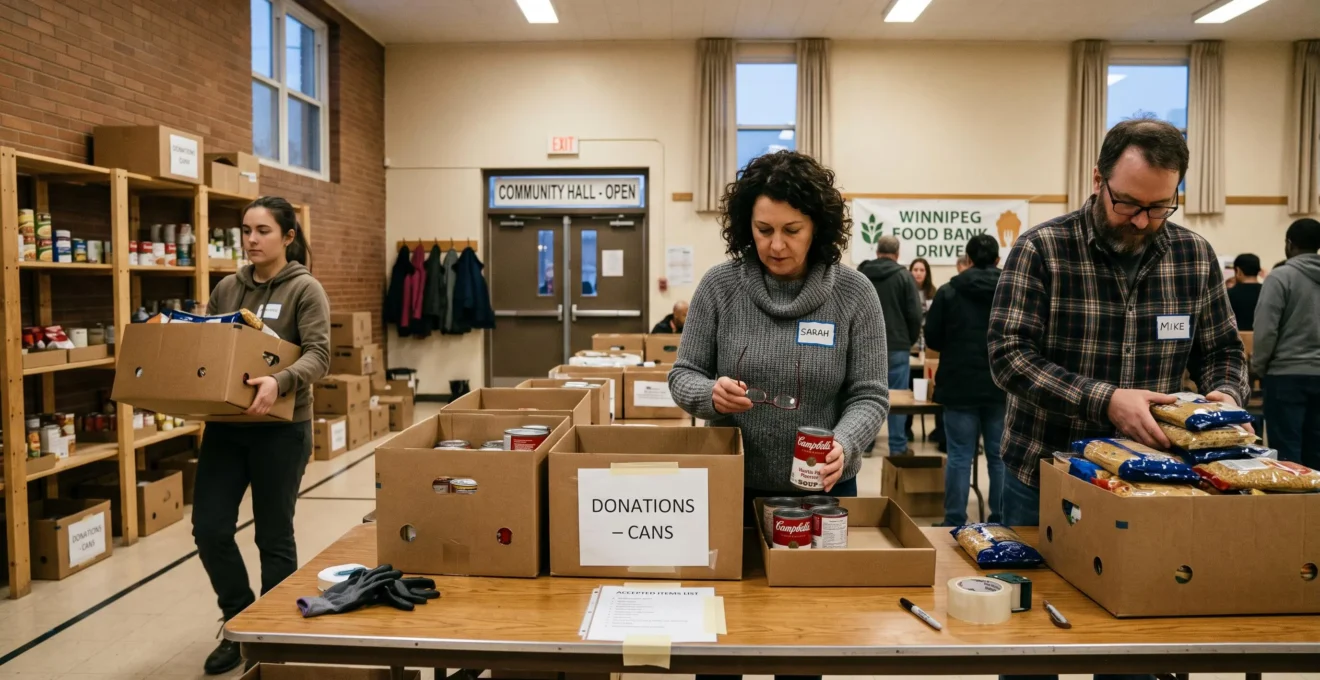
A Winnipeg food drive delivers more useful community support when donations match what local food assistance organizations need and when volunteers have the capacity to move those donations safely and efficiently. Collecting more food is not necessarily the same as helping more households. The condition, suitability, timing and destination of every contribution matter.
For neighbourhood associations, schools, workplaces and community groups, the most effective starting point is a conversation with the receiving organization. Ask which foods are needed, which donations can be accepted and how collection, storage and transportation should work. Then build a campaign that makes participation straightforward without creating an unexpected sorting or delivery burden.
Harvest Manitoba, a Winnipeg-based food assistance organization, provides practical guidance for food and fund drives, including registration, food priorities and collection arrangements. Its recommendations offer a useful starting point, although individual community organizations may have different requirements.
Meaningful support also extends beyond donation day. Local businesses, recreation networks and neighbourhood information channels can help turn a single collection campaign into a continuing community effort.
Winnipeg food drives: what matters most
- Prioritize accepted, nutritious and useful food over the total number of donated items.
- Match collection goals to volunteer capacity, available storage and confirmed delivery arrangements.
- Combine food and financial contributions, coordinate with local partners and choose dates based on actual community needs.
- Why Are Some Food Drive Donations More Helpful Than Others?
- How Can You Organize a Winnipeg Food Drive Without Overwhelming Volunteers?
- Food Donations or Cash Contributions: Which Helps a Local Drive More?
- Food Drive Donation Mistakes That Create Extra Work for Winnipeg Organizers
- When Should Winnipeg Groups Launch a Food Drive for the Greatest Local Impact?
- How Can Winnipeg Residents Get Involved in Community Sports Without Joining a Team?
- Why Does Local Spending Matter to Winnipeg Neighbourhood Businesses?
- How Can Winnipeg Residents Follow Local Developments Without Missing Important Updates?
Why Are Some Food Drive Donations More Helpful Than Others?
Some food drive donations are more helpful because they can be distributed with minimal additional handling and meet needs that the receiving organization has actually identified. Unopened, suitable products with appropriate shelf lives are generally easier to manage than items requiring inspection, repackaging or special storage. Food that reflects recipients’ dietary preferences can also be more useful.
Donation usefulness begins before an item reaches the collection box. A sealed package of an explicitly requested food may require little intervention. An unlabelled package, damaged container or unsuitable refrigerated item may instead require additional assessment or rejection. This consumes volunteer attention that could otherwise support distribution.
Harvest Manitoba recommends nutritious, non-perishable foods, particularly protein-rich products. Its published priority list includes canned tuna, peanut butter, canned vegetables, canned fruit, soups or stews, pasta, pasta sauce, rice, instant oatmeal, and baby formula or food. Organizers can consult Harvest Manitoba’s food and fund drive instructions when preparing an accepted-items list.
These priorities illustrate an important distinction: a donor’s favourite pantry staples are not necessarily the foods a receiving organization currently needs. Before collecting, ask whether particular products are in short supply or whether donation guidelines have changed.
Practical example: two hypothetical donation boxes
Box A contains sealed, clearly labelled items from a receiving organization’s current priority list. Box B contains a mixture of unlabelled packages, damaged containers and foods requiring refrigeration. Even if both boxes have the same weight, Box A is more likely to move through a non-refrigerated collection process with less intervention.
This example illustrates operational usefulness, not a measured comparison of Winnipeg food drives.
Before donating, apply a three-question test:
- Would this be suitable to hand directly to a neighbour? Check the packaging, labelling, condition and product-specific date requirements.
- Does the item require checking or repackaging? Avoid transferring avoidable processing work to the receiving team.
- Can the drive store it safely? Confirm whether the collection site is equipped for the product.
Food usefulness also depends on the households receiving it. Winnipeg communities include people with different cultural food traditions, dietary requirements and preparation preferences. Asking a partner organization about appropriate staples is more respectful and effective than assuming one standard food basket suits everyone.
Harvest Manitoba says it attempts to accommodate individual dietary requirements, although actual availability depends on contributions and supplies. This makes communication about specific community needs especially valuable.
A smaller quantity of appropriate food may offer greater practical value than a larger collection that requires extensive inspection or cannot be distributed. The next challenge is ensuring volunteers can manage everything that arrives.
How Can You Organize a Winnipeg Food Drive Without Overwhelming Volunteers?
Organize a Winnipeg food drive around the work volunteers can realistically complete, rather than an ambitious collection target alone. Separate collection, transportation, sorting, storage and delivery into distinct responsibilities. Set clear collection dates, allocate people to each stage and confirm logistics with the receiving organization before announcing the campaign publicly.
The visible part of a food drive is often the easiest to recruit for: placing donation bins in a school lobby, workplace entrance or community centre. But boxes must later be moved, checked, sorted and delivered. A campaign can attract enthusiastic donors while still placing too much work on a small processing team.
A simple workload map makes these hidden responsibilities visible:
| Stage | Responsibility | Capacity question |
|---|---|---|
| Collection | Monitor bins and accept donations | Who checks each location and how often? |
| Transport | Move donations between sites | Which vehicles and drivers are available? |
| Sorting | Check and organize accepted items | How many volunteers can process incoming boxes? |
| Storage | Keep food secure and suitable | Where can donations remain until delivery? |
| Delivery | Transfer items to the recipient | Who confirms and completes the handover? |
For example, a hypothetical workplace drive with several collection stations but only two sorting volunteers should not assume the processing work will take care of itself. Organizers can reduce pressure by limiting collection periods, arranging intermediate pickups or adjusting the number of donation locations.
Staggered drop-off slots are another sensible planning technique. They may spread inspection and transport work across several manageable periods instead of leaving everything until the final afternoon. This is a practical workflow recommendation, not a documented guarantee of volunteer-hour savings.
Working with an established food assistance organization can simplify planning. Harvest Manitoba, for instance, provides collection bins and offers pickup services for large donations. That does not mean every drive automatically qualifies for pickup: organizers should confirm the arrangement and any conditions directly.
Before promising that a partner will receive everything collected, establish its storage capacity, accepted food types, delivery schedule and any restrictions concerning refrigerated products.
Five steps to prepare a manageable food drive
- Contact the intended receiving organization and confirm its current needs and acceptance requirements. Deliverable: a written list of accepted donations.
- Map collection, transport, sorting, storage and delivery responsibilities. Deliverable: a five-stage workload plan.
- Assign responsible volunteers and backups to each stage. Deliverable: a named responsibility roster.
- Set collection dates, sorting sessions and a confirmed transfer arrangement. Deliverable: a shared campaign schedule.
- Prepare donor instructions and confirm how completed donations will be reported. Deliverable: a ready-to-publish campaign notice.
Once the operational limits are understood, organizers can make a more informed decision about whether physical food, financial contributions or a mixture of both will create the most useful support.
Food Donations or Cash Contributions: Which Helps a Local Drive More?
Cash contributions often give a food assistance organization more flexibility because it can purchase products that are currently needed and use its own purchasing arrangements. Physical food donations can encourage visible participation and deliver requested staples directly. The better option depends on the recipient’s needs, the campaign’s volunteer capacity and the opportunities available to donors.
Harvest Manitoba specifically explains that its purchasing power allows financial contributions to buy food at lower cost. Money can therefore support purchasing decisions informed by what the organization needs, rather than relying entirely on the assortment donors happen to select.
For a workplace or school, however, collecting food has a different kind of value. Participants can see the campaign developing, contribute tangible items and involve colleagues or classmates without needing a financial transaction.
Comparing both formats against the same operational criteria helps organizers choose.
| Criterion | Food donations | Cash contributions |
|---|---|---|
| Purchasing flexibility | Limited to donated products | Allows the recipient to target identified shortages |
| Storage | Requires physical collection space | No donation-bin storage required |
| Volunteer workload | May require collection, sorting and transportation | Usually reduces physical collection work |
| Waste risk | Depends on product condition and suitability | Avoids unsuitable donated goods, though purchased food still requires proper handling |
| Community participation | Tangible and visible for group campaigns | Accessible remotely and potentially easier to coordinate |
| Responding to shortages | Depends on whether donors follow the current request list | Supports more targeted purchasing decisions |
The comparison does not establish that cash always delivers a larger measured benefit. Purchasing arrangements differ, and a carefully targeted food collection can be valuable when the recipient confirms that particular products are urgently needed.
A hybrid food and fund drive offers a practical compromise. A school might collect specifically requested non-perishable items while sharing the receiving organization’s official financial donation channel with families who prefer to give money. A workplace could place a small number of collection bins alongside a verified donation option.
“Our buying power means that your donated dollar stretches further and that we can buy more food at a lower cost.”
Transparency matters particularly when participants cannot see the results of their contributions. An after-drive summary can report accepted food collected, financial contributions received, any purchases confirmed by the receiving organization and the destination of donations. Report only figures that have actually been verified.
Whichever format is selected, clear acceptance instructions remain essential. Preventing unsuitable donations is generally easier than asking volunteers to resolve avoidable problems after collection.
Food Drive Donation Mistakes That Create Extra Work for Winnipeg Organizers
The donation mistakes that create the most avoidable work involve unsuitable packaging, unclear product dates, unexpected storage requirements and deliveries outside the agreed collection period. These problems force organizers to inspect, separate, redirect or decline items. Clear donor instructions, labelled collection bins and a firm handover schedule can help prevent them.
One important distinction concerns best-before dates versus expiry dates. They do not mean the same thing. Best-before dates generally relate to product quality, while certain products have expiry dates that require different treatment.
According to Harvest Manitoba’s food assistance and shelf-life guidance, the organization accepts some food within one year of its best-before date, subject to its food safety guidelines. It does not accept expired food. Its guidance also identifies products such as infant formula and certain nutritional supplements as having expiry dates.
Organizers should therefore avoid announcing a blanket rule that every item past its best-before date is unsafe, while also avoiding any promise that such an item will be accepted. The receiving organization’s current policy is the deciding reference.
Other potential sources of unnecessary work include:
- Opened or repackaged products: missing original packaging or information can complicate safe acceptance and identification.
- Glass containers: they may introduce breakage and handling concerns where the receiving organization restricts them.
- Refrigerated or frozen food: these products require suitable temperature-controlled handling and should not be collected without an agreed process.
- Oversized bulk packages: they can be difficult to distribute in smaller allocations if the receiving organization cannot divide them appropriately.
- Unclear or missing product labels: they can prevent volunteers from identifying the item or assessing whether it meets donation requirements.
These are screening considerations, not universal prohibitions for every Winnipeg food assistance organization. Confirm which items your particular partner accepts before printing a rejection list.
Donation-bin signage is another important design decision. A single container labelled simply “Food Donations” provides limited guidance. If the receiving organization requests specific categories, separate labels such as “Canned Protein,” “Grains” and “Canned Vegetables” can help donors identify where items belong.
This approach may reduce subsequent sorting, but there is no verified universal estimate of how many volunteer hours it saves. The best bin categories should reflect the recipient’s actual priorities, not an arbitrary classification chosen by organizers.
Before the drive begins, schools and workplaces should receive a short communication containing accepted items, items requiring prior approval, collection locations, collection dates and a contact person. Plain language is preferable to a lengthy policy document.
Timing instructions also need precision. A box left at a reception desk after the scheduled pickup may require an additional journey or remain unattended. Providing a clear cutoff time and an agreed procedure for late donations prevents confusion.
Better donation instructions protect volunteer capacity as well as food quality. They also make it easier to run campaigns at the times when receiving organizations can put the contributions to greatest use.
When Should Winnipeg Groups Launch a Food Drive for the Greatest Local Impact?
The most useful time to launch a Winnipeg food drive is when a receiving organization identifies a shortage that the campaign can realistically address. Rather than automatically choosing a holiday or awareness event, ask about seasonal donation patterns, current food priorities and operational capacity. Then select dates that work for both the recipient and participating volunteers.
Holiday campaigns can attract considerable community attention. Yet visibility alone does not establish that the holiday period is when an additional collection will be most useful. A well-timed drive can instead help address a gap in the recipient’s usual donation flow.
Harvest Manitoba states that it typically receives fewer food donations during the summer months. This is a documented seasonal consideration, although it does not mean late summer is always the ideal period for every Winnipeg organization.
Back-to-school season may deserve consideration because it provides an organizing opportunity for families, schools and neighbourhood groups. Changes in school-linked routines or support programs could also affect community needs, but the scale and timing of such effects must be confirmed locally rather than assumed.
To choose a date, ask the receiving organization three operational questions:
- During which months or weeks are donations most difficult to maintain?
- Which categories of food are most needed during those periods?
- When can the organization reliably receive and process a community collection?
Then compare the answers with volunteer availability, school calendars, workplace schedules, community events and practical transportation conditions. In Winnipeg, winter weather can complicate travel, so contingency plans are particularly sensible for campaigns involving multiple collection points.
Hypothetical scheduling decision
A neighbourhood group considers running a food drive in December or late August. Its receiving organization confirms that summer donations are relatively low but can only accept a major delivery during a particular week. The group checks volunteer availability and schedules a shorter collection immediately before that agreed delivery window.
The useful decision is not simply choosing August over December. It is aligning a confirmed need, the recipient’s capacity and the volunteers’ schedule.
A campaign may also be more manageable when it complements an existing local activity, provided it does not compete for the same limited volunteer resources. A school welcome event or community centre gathering could offer a convenient collection opportunity, subject to organizer approval.
Timing becomes easier when organizers already have relationships with community groups. Sports programs and recreation networks offer additional ways to build those relationships beyond a single donation campaign.
How Can Winnipeg Residents Get Involved in Community Sports Without Joining a Team?
Winnipeg residents can participate in community sports without joining a competitive team by volunteering at events, supporting recreation programs, helping with administration or taking part in suitable drop-in activities. These roles create opportunities to meet neighbours, contribute useful skills and build relationships that can also support food drives and other local initiatives.
Community involvement is not limited to playing. Someone who helps prepare a recreation event, manage registrations or maintain a facility contributes to the neighbourhood’s ability to offer activities.
The General Council of Winnipeg Community Centres describes a range of volunteer responsibilities, including coaching, event planning, administration and maintenance. Residents interested in contributing can explore General Council of Winnipeg Community Centres volunteering opportunities and contact their local centre.
These responsibilities overlap with useful food-drive skills. Event organizers understand scheduling, communication and volunteer coordination. People who help maintain community facilities may know how to prepare usable spaces and coordinate access. Administrative volunteers may be comfortable managing registrations and responsibilities.
That overlap creates potential partnerships, not a guarantee that recreation volunteers will also participate in food drives.
Residents can choose an involvement format based on the time and commitment they can offer:
| Availability | Suitable involvement | Possible community contribution |
|---|---|---|
| Occasional | Help at an event or tournament | Event setup, visitor guidance or logistics |
| Flexible recurring time | Support community centre activities | Program assistance and coordination |
| Regular commitment | Volunteer in administration or facility support | Scheduling, maintenance or organization |
The City of Winnipeg also publishes recreation programming that includes drop-in and registered activities, with some free options. Its Fall 2026/Winter 2027 recreation information provides a starting point for exploring activities without committing to a team. Residents should check the conditions of each individual program before attending.
For those who want to connect recreation with food support, a practical starting point is asking a community centre whether it is interested in hosting an approved collection point or sharing an existing organization’s donation request. Permission and logistics should be agreed upon before publicity begins.
Those relationships become particularly useful when community initiatives involve local businesses, which may have premises, resources or established connections that help a well-planned drive operate sustainably.
Why Does Local Spending Matter to Winnipeg Neighbourhood Businesses?
Local spending matters because neighbourhood businesses provide jobs, purchase supplies and have opportunities to reinvest in their communities. For Winnipeg food drives, established relationships between residents and local businesses can also create possibilities for collection points, logistical assistance and community sponsorship. Such support works best when expectations and benefits are clear to both sides.
When customers buy from neighbourhood businesses, part of that spending can support wages, operations and purchases from other suppliers. The extent to which money remains in the local economy depends on each business’s expenses and sourcing arrangements, so local spending should not be treated as a guarantee that every dollar circulates within Winnipeg.
What matters for community organizing is the potential for continuing relationships. A business whose staff regularly interact with residents may be well placed to communicate a verified donation request or connect organizers with other neighbourhood partners.
A practical partnership might involve a shop displaying a small donation bin, a workplace sharing an official fundraising channel or a business offering suitable storage space. These possibilities should be discussed individually, rather than assumed to be available.
Businesses may also contribute through financial sponsorship or in-kind assistance. For example, providing approved packing materials or a suitable collection location could address a real operational requirement without introducing unwanted food inventory.
Organizers should structure partnership requests around mutual clarity:
- Specify what the receiving food assistance organization needs.
- Describe the requested business contribution and its expected duration.
- Confirm who is responsible for monitoring, transporting and securing donations.
- Agree on appropriate public recognition without implying an endorsement that has not been given.
- Provide a short, verified outcome report when the campaign concludes.
Public recognition can make participation attractive for a neighbourhood business, but it should not turn a community campaign into an unsupported promotional claim. Acknowledging a confirmed contribution is more credible than promising increased sales or guaranteed customer traffic.
Neighbourhood partnerships may also reduce travel needs when collection points and receiving facilities are geographically close. However, local collection does not automatically mean local distribution. Harvest Manitoba, for example, operates a broader food assistance network, and organizers should ask their receiving partner how donated food will be allocated.
These partnerships are most valuable when residents know they exist and can respond at the right time. Reliable neighbourhood information is therefore another practical part of sustaining community support.
Key takeaways for lasting community support
- Coordinate food drives around the receiving organization’s confirmed needs rather than publicity alone.
- Build relationships with community centres and local businesses before requesting logistical help.
- Keep donation opportunities, deadlines and results accessible through more than one reliable communication channel.
How Can Winnipeg Residents Follow Local Developments Without Missing Important Updates?
Winnipeg residents can stay informed about local food drives and community initiatives by combining dependable recurring information sources with direct announcements from organizations they want to support. Checking community updates regularly, subscribing to relevant notices and verifying event deadlines helps residents respond while donations or volunteer assistance are still needed.
A single social media feed is not always a dependable way to discover opportunities. Posts can be missed, event announcements may reach different audiences and urgent requests can have short response periods. Using two complementary information channels reduces dependence on any one source.
The most practical approach is to distinguish routine updates from time-sensitive notices.
| Information type | Where to look | Recommended approach |
|---|---|---|
| Recurring community updates | Community centre notices and neighbourhood newsletters | Set aside a regular weekly check-in |
| Municipal recreation activities | City of Winnipeg recreation information | Review relevant programs and subscription options |
| Food donation requests | Official announcements from receiving organizations | Check accepted items and deadlines before contributing |
| Volunteer opportunities | Community organizations and event coordinators | Verify responsibilities and availability directly |
The City of Winnipeg’s recreation information includes the leisureNEWS subscription for recreation updates. This can be useful for following leisure programming, but it is not a comprehensive alert service for food drives or every local development.
Residents particularly interested in food security should follow their chosen food assistance organization directly. Community centre announcements, workplace communication channels and neighbourhood association notices can provide additional context where those groups participate in local initiatives.
A manageable weekly routine might involve reviewing neighbourhood notices, checking upcoming local activities and identifying one opportunity for practical participation. Time-sensitive appeals should receive separate attention so that pickup deadlines and volunteer registration windows are not missed.
Before sharing a donation announcement, verify that it identifies an actual organizer, an accepted donation channel and a current collection period. Outdated appeals can lead residents to deliver items after the campaign has ended or to use locations no longer accepting donations.
The broader value of staying informed is continuity. Someone who supports neighbourhood businesses, participates in community activities, follows local announcements and responds to documented needs can contribute in different ways throughout the year. No individual has to participate in every initiative to be useful.
Choose one trusted local food assistance organization, confirm its current priorities and share a verified opportunity with a school, workplace or neighbourhood group. That small, informed action is a practical starting point for community support that goes beyond filling a donation box.
Do Winnipeg food drives need to register with a food bank?
Registration requirements depend on the receiving organization. Harvest Manitoba asks groups to register food and fund drives before launching and provides planning resources. Contact the intended recipient before advertising a collection to confirm its arrangements and requirements.
Can a Winnipeg food drive accept food past its best-before date?
Acceptance depends on the product and receiving organization’s food safety policy. Harvest Manitoba says it accepts some food within one year of its best-before date under its guidelines, while it does not accept expired food. Donors should distinguish these date types and confirm acceptance before delivering products.
Can a small workplace organize a useful food drive without a storage room?
Yes, if the collection plan fits its available space and the receiving organization agrees to the arrangements. A workplace could organize a short collection window, coordinate an approved transfer or promote an official financial donation channel. Physical items should not be collected without suitable temporary storage and a confirmed delivery plan.
Should Winnipeg food drives accept fresh or refrigerated products?
Only when the receiving organization explicitly agrees and appropriate handling arrangements are available. Food assistance organizations may distribute fresh products through established supply systems, but that does not mean an ordinary community donation bin can safely accept products requiring refrigeration.
How can organizers show that their food drive made a useful contribution?
Ask the receiving organization to confirm what was accepted and report verified outcomes, such as the amount of food received, financial contributions collected or specific requested categories supplied. Explain the campaign’s destination and acknowledge volunteers and partners accurately. Avoid claiming a particular number of households helped unless the recipient provides reliable supporting information.