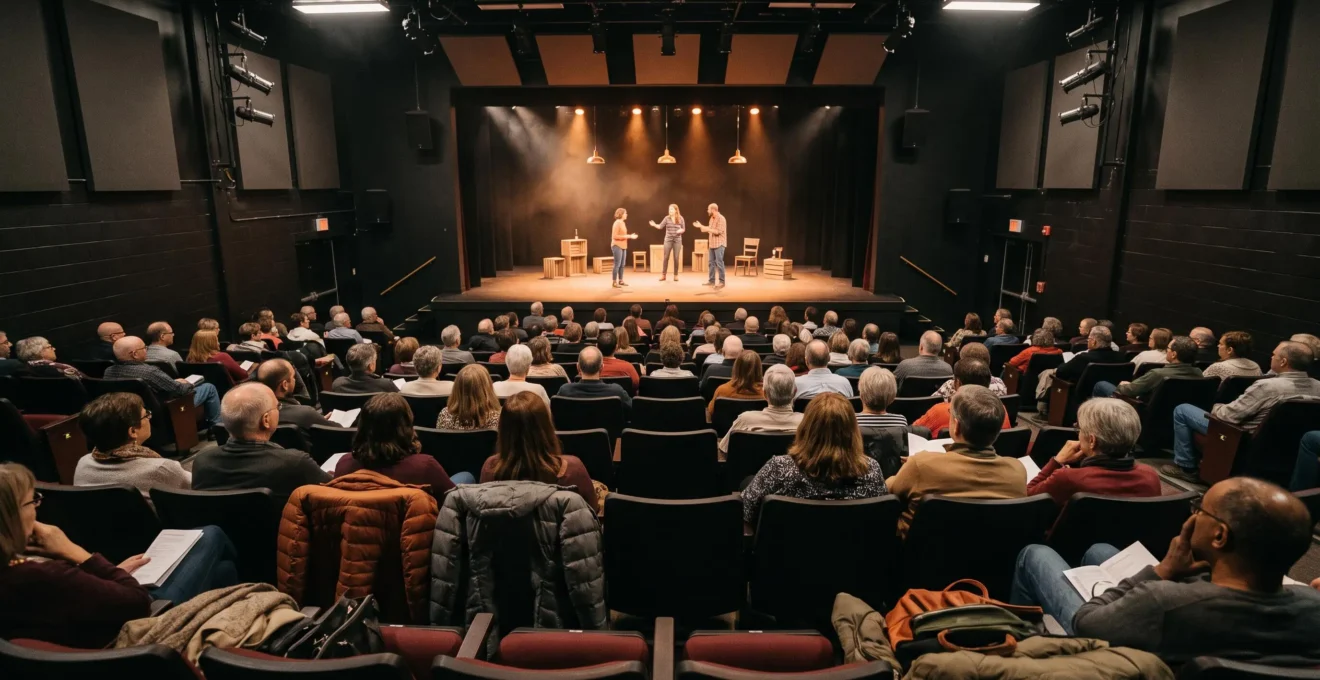
Winnipeg’s theatre scene offers considerably more than a choice between established stages and occasional community productions. Professional companies, independent artists, youth-focused organizations and festival performers collectively create opportunities for audiences to encounter different stories, theatrical traditions and performance styles.
That variety matters because accessible theatre is not simply inexpensive theatre. Affordability, physical accessibility, language, cultural representation, performance format and opportunities for artistic participation all influence who feels welcome in an auditorium.
Organizations such as Royal Manitoba Theatre Centre, Prairie Theatre Exchange and Manitoba Theatre for Young People approach these challenges through different programming and audience services. Meanwhile, the Winnipeg Fringe Theatre Festival provides a platform for independent productions that may not fit conventional theatrical seasons.
Understanding these differences helps residents find performances suited to their interests, budgets and accessibility needs. It also reveals how attending productions across the city’s theatrical ecosystem contributes to a more varied and sustainable cultural life.
Winnipeg theatre at a glance
- Established companies, independent productions and festivals offer distinct theatrical experiences rather than competing versions of the same format.
- Accessibility includes ticket affordability, accessible performance formats, welcoming venues and opportunities for different communities to tell their stories.
- Audiences can explore more of Winnipeg’s theatre scene by combining major productions, smaller events and festival performances throughout the year.
- Why Do Local Theatre Companies Matter to Winnipeg’s Cultural Scene?
- How Can First-Time Theatre-Goers Choose a Winnipeg Production They Will Enjoy?
- Major Company or Independent Production: Which Winnipeg Theatre Experience Fits You?
- First-Time Theatre Mistakes Winnipeg Audiences Can Easily Avoid
- When Should You Book Tickets for Popular Winnipeg Theatre Performances?
- How Can New Artists Connect With Winnipeg’s Creative Communities?
- Major Festival or Small Local Event: Which Winnipeg Experience Fits You Better?
- How Can You Make the Most of Winnipeg’s Year-Round Cultural Calendar?
Why Do Local Theatre Companies Matter to Winnipeg’s Cultural Scene?
Local theatre companies matter because they give Winnipeg audiences access to different forms of storytelling while creating opportunities for performers, directors, playwrights and technicians. Established institutions provide recurring professional productions, smaller organizations support experimentation, and community-based initiatives can create space for voices and audiences that conventional programming might otherwise overlook.
Winnipeg’s theatre ecosystem is best understood as a collection of connected but distinct organizations. Royal Manitoba Theatre Centre presents professional productions within an established institutional framework. Prairie Theatre Exchange contributes another professional perspective, while Manitoba Theatre for Young People focuses on theatrical experiences for young audiences and families.
Independent performers and smaller companies operate alongside these organizations, often using intimate venues, shorter production runs and collaborative creative teams. Their work can provide an alternative to the larger-scale productions typically associated with major theatres.
This mixture matters for artistic development. An emerging actor might gain experience in an independent performance, participate in a workshop and later audition for a professional production. Similarly, playwrights and directors can develop work through smaller projects before pursuing more substantial staging opportunities. Such pathways are possible rather than guaranteed, and their availability depends on each organization and production.
Cultural representation is another dimension of theatrical diversity. Winnipeg’s artistic community includes Indigenous, Métis, First Nations and newcomer perspectives. Productions developed by artists from these communities can bring different languages, histories and experiences to the stage. Meaningful representation, however, requires more than programming diverse subject matter: it also depends on who creates, directs and controls the artistic work.
The Winnipeg Fringe Theatre Festival illustrates one mechanism for widening participation. According to its official history and festival philosophy, participating companies are selected through a non-juried lottery, retain artistic control over their productions and receive the ticket revenue generated by their performances.
100%
The Winnipeg Fringe states that the full ticket price goes directly to participating performing companies. This describes the festival’s stated model, not the financial arrangements of other Winnipeg theatres.
Winnipeg Fringe Theatre Festival, official About Us information.
Accessibility also has a practical side. Smaller venues may experiment with flexible pricing, while established companies can offer designated accessible performances, assistive technologies and structured audience services. These arrangements vary by organization and cannot be assumed to apply everywhere.
Consider a hypothetical neighbourhood production offering pay-what-you-can tickets. Someone reluctant to purchase a full-price seat might decide to attend, discover a new playwright and return for another performance. The flexible price creates an opportunity for participation, although the effect on actual attendance would need to be measured rather than assumed.
The important distinction is that a local theatre company does not have to reproduce the scale or business model of a major institution. It can serve a particular audience, artistic community or creative purpose while contributing to Winnipeg’s wider theatrical environment.
For audiences, the practical advantage is choice. The next step is identifying which kind of production offers the most enjoyable introduction to that variety.
How Can First-Time Theatre-Goers Choose a Winnipeg Production They Will Enjoy?
First-time theatre-goers in Winnipeg should choose a production by considering the story’s tone, the time required and the style of performance. A familiar comedy in a conventional auditorium offers a different experience from an experimental production in an intimate space. Reading the synopsis, venue information and audience guidance before booking reduces surprises.
Theatre listings become easier to interpret when three questions guide the decision:
- What mood suits the evening? A comedy may offer a relaxed introduction, while a drama, musical or experimental performance may demand a different level of attention.
- How much time is available? Check the advertised running time, whether an intermission is included and how much travel the venue requires.
- What performance environment feels comfortable? Traditional seated theatre, interactive performance and site-specific productions can involve very different audience expectations.
Venue size offers another useful clue. A small black-box theatre may place the audience close enough to observe subtle expressions and movements. A larger proscenium auditorium can accommodate more elaborate sets, lighting arrangements and stage compositions.
Neither arrangement guarantees a better production. The difference concerns the relationship between performers, staging and spectators.
Production descriptions also contain signals worth noticing. A world premiere introduces a newly staged work, while a familiar title can provide reassurance about the story or subject. A touring production may have an established staging history, whereas a locally developed project may offer a perspective closely connected to Winnipeg.
Preview performances can be worth considering when offered. They sometimes provide a less expensive opportunity to attend a production close to its official opening, although pricing and the possibility of artistic adjustments depend on the company.
For families, Manitoba Theatre for Young People is a useful starting point because its programming centres on younger audiences. Its published ticket information for the 2026/27 season also gives visitors a concrete way to explore multiple productions.
According to MTYP box-office and ticket information, purchasing two or more shows qualifies a patron as a subscriber. The organization lists subscription packages starting at 44 $ for that season, with a 15% subscriber discount. Exchanges to another performance of the same production may be possible, subject to availability, but refunds are not offered.
These policies demonstrate why checking an individual theatre’s booking conditions is more useful than assuming every company follows the same rules.
A five-step checklist for choosing your first Winnipeg theatre show
- Choose a preferred genre: Write down one or two acceptable options, such as comedy or contemporary drama.
- Identify suitable productions: Shortlist two shows and record their titles, venues and performance dates.
- Confirm the format: Note each show’s running time, intermission arrangements and whether audience participation is expected.
- Check accessibility and ticket conditions: Record the relevant seating, access services, total ticket price and exchange policy.
- Select and plan the outing: Keep the booking confirmation, venue address and intended arrival time together.
Once the production style is clear, the next consideration is whether an established company or an independent performance better matches the desired experience.
Major Company or Independent Production: Which Winnipeg Theatre Experience Fits You?
Major theatre companies generally suit audiences seeking established facilities, structured performance schedules and larger production resources. Independent shows often appeal to people interested in intimate staging, emerging artists and unusual theatrical ideas. Neither is inherently superior: the most satisfying choice depends on budget, comfort requirements, scheduling flexibility and artistic curiosity.
In Winnipeg, the distinction can be understood through the experiences offered by established professional companies and smaller independent or Fringe-style productions.
| Consideration | Major theatre company | Independent production |
|---|---|---|
| Production scale | Often has greater resources for sets, technical design and larger casts. | May favour minimal staging, flexible formats and smaller creative teams. |
| Audience atmosphere | Usually provides a more conventional auditorium experience. | Can offer closer contact with performers and unconventional staging. |
| Ticket prices | May provide subscription packages, discounts and designated accessible performances. | Prices vary; some productions use flexible or lower-cost admission. |
| Availability | Often publishes a planned season with multiple performance dates. | May have short runs and limited opportunities to attend. |
| Venue facilities | Can provide documented accessibility services and established visitor arrangements. | Facilities vary substantially, particularly in temporary spaces. |
| Artistic approach | May combine established works with new productions. | Can provide opportunities for experimental and artist-led work. |
These are tendencies rather than fixed categories. Major companies can present challenging contemporary work, while independent artists can create highly polished productions. Ticket prices and production quality cannot be reliably inferred from company size alone.
Accessibility deserves particular attention when comparing venues. For its 2026/27 season, Royal Manitoba Theatre Centre lists designated open-captioned, relaxed, live audio-described and ASL-interpreted performances.
The company’s accessible performances information explains how these formats address different audience needs. Open captions display dialogue and sound information, while audio description communicates visual elements through equipment provided for the performance. Relaxed performances permit a more flexible audience environment.
These arrangements are available on designated dates rather than necessarily throughout every production’s run.
An independent venue might offer an appealing experimental performance but have less comprehensive access information. Before purchasing, visitors should check the entrance, washrooms, seating configuration, assistive services and whether the production requires movement between spaces.
The distinction between major and independent theatre also becomes less rigid when considering the artists themselves. Actors, directors, designers and playwrights may participate in both forms of production over the course of their careers.
Watching performances from both sides can therefore reveal different aspects of the same local artistic community. A large-stage production may showcase technical design and ensemble work, while a small-stage performance may foreground writing, physical expression or direct audience engagement.
A balanced approach allows audiences to appreciate professional production resources without overlooking the distinctive creative opportunities available in smaller venues.
First-Time Theatre Mistakes Winnipeg Audiences Can Easily Avoid
Common first-time theatre mistakes include arriving too late, overlooking accessibility information, misunderstanding experimental performance formats and paying full price without checking available discounts. Winnipeg’s winter conditions and the varied arrangements of independent venues make practical preparation especially valuable. Confirming a few details before departure can prevent avoidable disappointment.
The most immediate mistake is assuming that tickets will always be available at the door. A production with limited seating or a short run may sell out even when it has received little publicity. Advance booking becomes particularly useful when the preferred performance date cannot be changed.
Arrival time matters as well. Some theatres may delay seating latecomers until an appropriate break, while particular productions may restrict late entry more firmly. Checking the venue’s policy and planning to arrive before the advertised start avoids disrupting the performance.
Winter introduces another consideration. Snow, slippery sidewalks, parking conditions and traffic can affect travel across Winnipeg. An itinerary that leaves almost no time between arriving at the venue and curtain time is unnecessarily fragile.
Another frequent misunderstanding concerns production labels. An immersive performance may invite the audience to move, interact or experience scenes outside a conventional auditorium. A site-specific performance may take place in a building or environment not originally designed as a theatre.
These formats can be rewarding, but visitors should confirm whether standing, walking or participation is expected. Accessibility arrangements may also differ from those at purpose-built venues.
For parents, a theatre’s age recommendations deserve attention. A production suitable for teenagers may contain themes or a running time that make it less appropriate for younger children. Family-oriented programming is helpful, but individual shows still require review.
Cost is another source of unnecessary frustration. Before purchasing standard admission, look for the following possibilities where offered:
- Preview performances or special-price dates.
- Student, senior, youth or group discounts.
- Pay-what-you-can performances.
- Rush tickets or last-release availability.
- Subscription arrangements for multiple productions.
Not every theatre provides these options, and eligibility may be restricted. Checking the official box office is more reliable than assuming a discount applies automatically.
Audience etiquette matters especially in smaller spaces. Phone screens, conversations and movement during a quiet scene may be noticeable to performers and other spectators. Silence devices, follow photography restrictions and leave the performance area only when necessary.
Accessible and relaxed performances may intentionally adopt different expectations about audience movement and noise. The relevant guidance for that particular performance should take precedence over generic theatre etiquette.
With these practical considerations settled, visitors can focus on the performance itself and make ticket-booking decisions with greater confidence.
When Should You Book Tickets for Popular Winnipeg Theatre Performances?
The best time to book Winnipeg theatre tickets depends on the production’s popularity, available seating and length of its run. High-demand family shows, prominent premieres and performances with limited dates justify earlier reservations. Midweek productions or shows offering special-price admissions may allow more flexibility, but availability should always be verified directly.
Winnipeg’s theatre calendar operates through several overlapping booking patterns. Established companies typically announce seasonal programming and provide opportunities to purchase subscriptions or individual tickets. Festival performances operate within shorter, concentrated schedules, while independent productions may be announced closer to their performance dates.
Understanding these differences is more useful than following a single rule about how many weeks in advance to buy tickets.
| Production type | Suggested approach | Main consideration |
|---|---|---|
| Popular family production | Book once preferred dates and seats become available. | Family schedules and suitable seating may limit flexibility. |
| High-profile premiere | Monitor the company’s ticket-release announcements. | Demand is uncertain and desirable dates may fill. |
| Independent short run | Reserve when the performance date is confirmed. | There may be few alternative showings. |
| Festival performance | Build a shortlist when the festival schedule is published. | Multiple venues and overlapping shows require coordination. |
| Midweek performance | Compare dates and check current availability. | Some performances may provide more seating choices. |
Subscription purchases can provide an alternative to booking each event separately. They may be especially useful for residents who already expect to attend multiple productions by the same organization.
However, a subscription should not automatically be treated as the cheapest option. Its value depends on the number of shows attended, discount conditions, available dates and whether the subscriber wants the included productions.
Booking early protects choice, not necessarily the lowest price. Some performances may later offer rush admission or promotional tickets, but such opportunities are uncertain and may have limited availability.
For performances described as sold out, check whether the organizer operates a legitimate waiting list, cancellation process or additional ticket release. Avoid assuming that a sold-out notice means no further admission can ever become available.
Conversely, postponing a purchase solely in anticipation of discounts is risky when travel, childcare or group coordination depends on a specific date.
For festival visits, scheduling becomes particularly important. A programme containing several appealing performances may involve different venues, travel intervals and simultaneous start times. Booking each show without considering the overall itinerary can create conflicts even when individual tickets remain available.
Careful booking supports audience access, while the next part of Winnipeg’s theatre ecosystem concerns the artists working to create those performances.
How Can New Artists Connect With Winnipeg’s Creative Communities?
Emerging artists can connect with Winnipeg’s theatre community through auditions, workshops, volunteering, independent productions and collaborative projects. Attending performances and meeting local practitioners can also help newcomers understand how opportunities arise. The strongest starting point is usually a specific contribution—such as assisting a production, joining a rehearsal project or developing a short performance.
Auditions are only one entry point. A performer may first encounter a company through a workshop, while an aspiring stage manager might begin by helping with an event or gaining front-of-house experience.
Creative participation can take several forms:
- Independent productions: Smaller projects may provide opportunities to develop acting, directing, writing or technical experience.
- Festival participation: Festival structures can give artists opportunities to present work and engage with audiences.
- Training and workshops: Practical sessions offer a setting for improving skills and meeting collaborators.
- Volunteering: Front-of-house and event support can introduce newcomers to organizations and production processes.
- Play development: Readings and collaborative writing sessions can help artists test material before staging it.
The Winnipeg Fringe is particularly relevant to artists exploring independent work. Its published non-juried lottery model and artistic-control principles distinguish participation from a conventional process in which an artistic director chooses every production.
However, the existence of a lottery does not mean every applicant receives a performance opportunity. Artists must consult the applicable festival participation conditions, deadlines and available categories.
Winnipeg’s overlapping professional and independent communities can make repeated encounters with other practitioners valuable. Someone who participates in a reading may later meet the same collaborators at a festival, workshop or separate production.
Nevertheless, personal visibility does not guarantee employment. Paid professional opportunities depend on available projects, casting requirements, experience, funding and the decisions of individual producers.
Support infrastructure also matters. Artists can investigate the Manitoba Arts Council, the Winnipeg Arts Council and relevant arts service organizations to understand potential funding, professional development and project-support opportunities. Eligibility, available programmes and application conditions should be checked individually.
Indigenous-led artistic networks and newcomer-focused cultural initiatives may provide more relevant creative environments for artists whose work involves particular community experiences or storytelling traditions. Collaboration should respect the authority, priorities and participation requirements of those communities rather than treating them as generic networking opportunities.
A practical alternative to waiting for a formal audition is to prepare a modest proposal: a staged reading, introductory workshop or short collaborative performance. Contacting a suitable organization with a clear concept, realistic resource needs and an explanation of its audience relevance gives the conversation a useful starting point.
Independent proposals still require agreement on budgets, venue conditions, artistic responsibilities and compensation where applicable.
These individual connections strengthen the wider environment in which festivals, independent events and established companies can continue presenting different artistic perspectives.
Major Festival or Small Local Event: Which Winnipeg Experience Fits You Better?
Major festivals suit audiences who want to discover several performance styles within a concentrated programme, while smaller local events offer opportunities for deeper engagement with individual artists or community projects. Festivals encourage variety and spontaneous discoveries; neighbourhood and independent events often provide more intimate experiences. The better choice depends on whether breadth or personal connection matters most.
The Winnipeg Fringe Theatre Festival illustrates the attraction of concentrated programming. Its model accommodates numerous participating companies and gives audiences opportunities to explore work from artists with different theatrical approaches.
For someone curious about unfamiliar performance styles, the festival environment can reduce the pressure to choose a single definitive theatre experience. A programme may contain comedy, drama, solo performance and unconventional staging, depending on the participating productions.
That variety also brings uncertainty. Not every show will match an individual’s preferences, and independent artistic experimentation may produce experiences that are challenging, unfamiliar or uneven in execution.
Smaller local events work differently. A staged reading, community production or one-night performance may revolve around a particular artistic collaboration or neighbourhood audience.
Its value may come less from elaborate technical production than from the immediacy of the performers’ work and the opportunity to encounter a specific creative perspective.
| Your priority | Major festival | Small local event |
|---|---|---|
| Discovering multiple styles | Well suited to sampling varied productions. | Usually focuses on fewer artistic approaches. |
| Meeting artists | Offers encounters across a broader creative community. | May allow more personal conversations around one project. |
| Planning | Requires coordination when viewing several shows. | Often simpler for a single outing. |
| Production format | Varies considerably between participating companies. | May be intimate, experimental or community-oriented. |
| Supporting local work | Can directly support participating independent artists. | Can contribute to a specific small organization or project. |
Neither format is automatically cheaper. Festival admission depends on the individual performance and ticket arrangements, while smaller events may range from free participation to standard paid admission.
The important difference is how audiences distribute their attention. A festival visit may involve discovering several artists in one day. Attending a small event may involve investing an entire evening in one emerging company or creative experiment.
Regular attendance can matter particularly to smaller organizations, although a single ticket purchase cannot be assumed to determine an event’s financial survival. Audience support is one contribution among many, alongside production funding, partnerships and operational resources.
For residents interested in Winnipeg’s cultural diversity, the two formats complement one another. A festival helps identify unfamiliar artists; a later independent performance provides an opportunity to follow their work more closely.
The strongest cultural calendar can therefore include both the excitement of concentrated festival programming and the quieter rewards of recurring local participation.
Key takeaways for planning a year of Winnipeg theatre
- Choose one established theatre organization as a reliable starting point, while leaving room to discover independent companies.
- Use festival programmes to explore unfamiliar artistic styles, but plan carefully when venues and performance times overlap.
- Spread spending throughout the year and check accessible performance dates rather than concentrating every outing around major productions.
How Can You Make the Most of Winnipeg’s Year-Round Cultural Calendar?
Making the most of Winnipeg’s cultural calendar means combining predictable professional theatre seasons with festival performances and smaller independent events. Planning several months ahead helps distribute costs, preserve flexibility and identify accessible dates. Attending different kinds of productions throughout the year also supports the variety of artistic work available across the city.
A useful starting point is Winnipeg’s seasonal rhythm. Established theatre organizations commonly schedule much of their programming between autumn and spring, while festival activity creates additional opportunities during the warmer months.
Winter can be a particularly appealing time for indoor cultural activities. Rather than treating colder weather as an obstacle to attending theatre, audiences can prepare travel arrangements and use scheduled performances as regular social outings.
However, weather still affects accessibility. Anyone travelling across Winnipeg during winter should consider transit options, walking conditions and the possibility of delays when choosing performance dates.
A practical annual calendar can be built around three complementary commitments.
- Choose an established theatre anchor. Select a company whose programming consistently suits personal interests, then consider whether a subscription or a few individual tickets provide better value.
- Reserve space for a festival. Identify a festival period and select performances that offer artistic variety without creating an unmanageable schedule.
- Leave room for independent discovery. Keep several evenings available for smaller productions, staged readings or community-based events announced throughout the year.
This arrangement balances advance planning with spontaneity. It also prevents an entire theatre budget from being committed before new productions have been announced.
Accessibility considerations can be integrated into the same calendar. Prairie Theatre Exchange, for example, documents facility accessibility, assistive listening equipment and designated relaxed, ASL-interpreted and audio-described performances.
According to Prairie Theatre Exchange accessibility information, qualifying bookings for certain accessible performances can receive a special $25 ticket price along with a complimentary companion seat. These conditions apply to specified accessible-performance arrangements, not every ticket.
That example shows why an annual cultural plan should consider more than advertised ticket prices. Accessible performance dates, companion arrangements and the suitability of a venue can determine whether an outing is practical.
A modest theatre budget can also become more effective when decisions are made across several months. Comparing subscriptions, preview performances, eligible discounts and free or low-cost community opportunities may create additional possibilities without assuming any specific discount will always be available.
Example: Building a balanced Winnipeg theatre calendar
Consider a hypothetical resident who wants to attend more live performances without committing to a full season of unfamiliar productions. They choose two performances by an established company, set aside one festival outing and reserve two additional evenings for independent work announced later.
Before purchasing, they compare ticket conditions, note any accessible performance requirements and record the dates in a personal calendar. The resulting plan provides a mix of familiar programming and artistic discovery without depending on an assumed annual cost or guaranteed ticket discount.
The most valuable part of this approach is its flexibility. A disappointing performance does not define an entire season, while an unexpected discovery can lead to further visits or engagement with a particular artist.
Regular attendance across professional stages, independent venues, festivals and community initiatives creates opportunities for audiences to encounter different voices. It also provides ticket revenue and audience engagement that can help organizations understand the interests of the people attending their work.
To get started, select one upcoming production at an established theatre, identify an independent or festival performance that sparks curiosity, and check the official ticket and accessibility details for both. Two thoughtfully chosen outings can provide a useful introduction to the breadth of Winnipeg’s live theatre.
Are there accessible theatre performances for people with hearing or vision disabilities in Winnipeg?
Yes. Royal Manitoba Theatre Centre lists designated open-captioned, ASL-interpreted and live audio-described performances for its 2026/27 season. Prairie Theatre Exchange also documents accessible performance formats and assistive listening arrangements. Services vary by production and date, so visitors should confirm the specific performance before booking.
Can you attend Winnipeg theatre without purchasing a full-season subscription?
Yes. Audiences can explore individual performances, independent productions and festival shows without automatically committing to a full theatre season. Subscription packages are optional purchasing arrangements offered by particular organizations, and their financial value depends on how many productions a person intends to attend.
Do Winnipeg independent theatre productions always take place in traditional theatres?
No. Independent productions may use conventional performance spaces, black-box theatres or non-traditional venues. Seating, washrooms, entrances, audience participation and mobility requirements can differ substantially. The venue description and organizer’s accessibility information should be checked before purchasing tickets.
Can performers participate in the Winnipeg Fringe without being selected by an artistic jury?
The Winnipeg Fringe describes its selection model as non-juried and lottery-based, with participating companies retaining artistic control. However, selection is not guaranteed, and prospective participants must check the applicable entry categories, eligibility requirements and application deadlines.
What should someone with a limited theatre budget check before booking?
Compare individual admission prices with any available preview rates, student or senior discounts, subscriptions and pay-what-you-can opportunities. Check whether eligibility conditions or service charges apply. For audiences with access requirements, designated accessible-performance arrangements and companion policies may also affect the total cost.