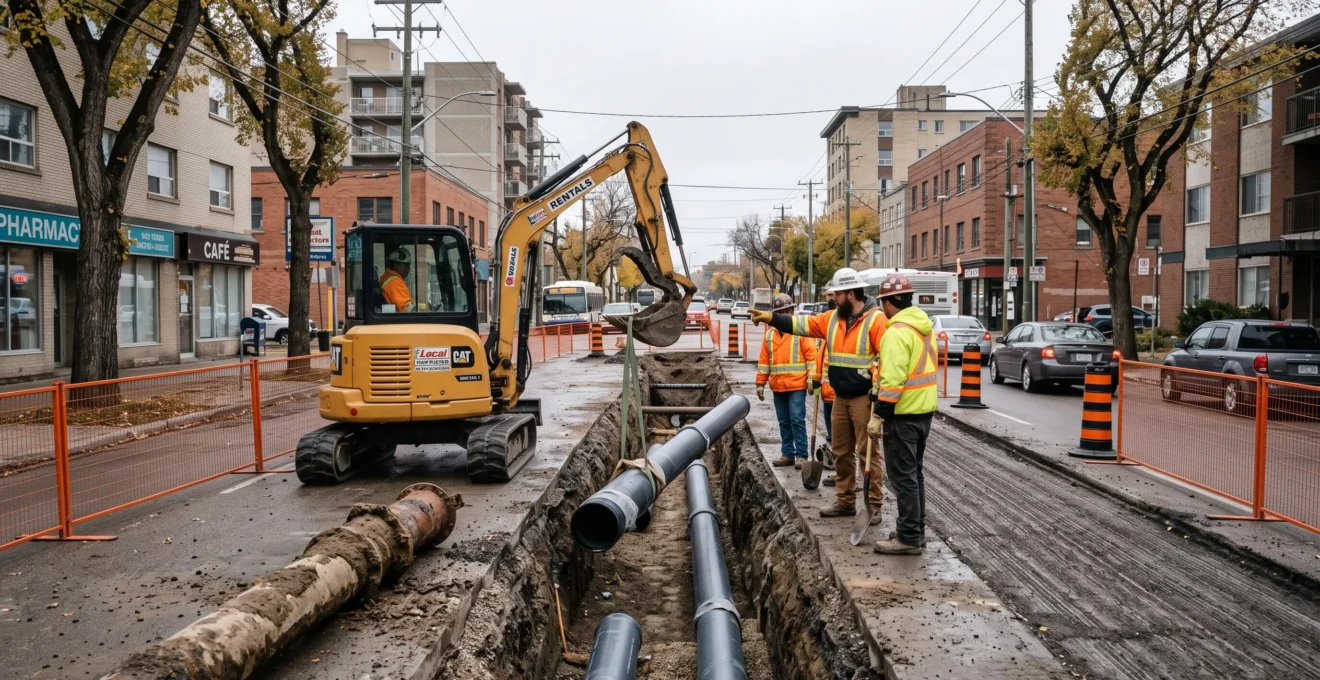
Winnipeg cannot prepare for future growth simply by expanding roads, adding transit capacity or constructing new facilities. The city must also maintain thousands of existing infrastructure assets, many of which will require substantial investment before they reach the end of their useful lives. When renewal is delayed, deterioration can increase costs, disrupt essential services and compete with funding intended for new development.
Long-term infrastructure planning addresses this challenge by identifying future asset needs, assessing failure risks and coordinating investment across multiple budget cycles. Rather than waiting for a bridge, water main or roadway to become unusable, municipal planners can evaluate when intervention will provide the greatest long-term benefit.
The financial challenge is significant. Winnipeg’s 2024 Infrastructure Plan identified approximately CAD 12.8 billion in forecasted and unfunded capital needs for 2024–2033, including about CAD 8.0 billion without identified funding at the time of publication. These historical projections illustrate why careful prioritization matters: infrastructure requirements extend well beyond what any single annual budget can deliver.
Key points about Winnipeg’s long-term infrastructure planning
- Planning ahead helps Winnipeg address deteriorating assets before failures require more disruptive and potentially expensive interventions.
- Capital priorities should reflect asset condition, public safety, service continuity, future demand and opportunities to coordinate construction.
- Residents can distinguish planned investment from actual delivery by examining capital budgets, project oversight reports and construction milestones.
- How Does Public Sector Investment Shape Winnipeg’s Long-Term Development?
- Why Can Delayed Infrastructure Renewal Become More Expensive for Winnipeg?
- How Can Winnipeg Prioritize Infrastructure When Every Project Cannot Be Funded at Once?
- Repair or Replace: Which Strategy Fits Aging Winnipeg Infrastructure?
- Infrastructure Planning Mistakes That Can Create Bigger Problems for Winnipeg Later
- When Should Winnipeg Begin Planning the Replacement of Aging Infrastructure?
- How Can You Track Whether Winnipeg Public Investment Actually Reaches a Project?
- Pothole Repair or Resurfacing: Which Fix Does a Winnipeg Road Need?
How Does Public Sector Investment Shape Winnipeg’s Long-Term Development?
Public sector investment shapes Winnipeg’s long-term development by determining which infrastructure assets are maintained, where service capacity can expand and which areas can accommodate additional activity. Capital planning connects roads, transit, water and wastewater systems with housing and employment objectives. However, the availability of municipal infrastructure is only one factor influencing whether private development occurs.
Infrastructure investment is not distributed uniformly across municipal services. Transportation networks, underground utilities, public buildings, parks and recreational facilities have different renewal requirements and funding arrangements. Their relative allocations depend on approved budgets, project readiness, infrastructure condition and available financing.
This distribution has practical consequences. A growth area may require water and wastewater capacity before substantial residential development can proceed. A planned employment corridor may need transportation improvements to support additional traffic. An established neighbourhood may need underground utility renewal even when it is not expected to experience major population growth.
The sequence of investment can influence development opportunities. When infrastructure capacity is available, proposed development may become easier to service. Conversely, insufficient capacity can delay projects or require developers and governments to address additional servicing requirements. This relationship is conditional: land-use approvals, market demand, financing and other regulatory requirements also affect development.
It is equally important to distinguish two categories of municipal expenditure:
- Operating spending supports ongoing service delivery, routine maintenance, inspections and many day-to-day repairs.
- Capital spending finances significant infrastructure renewal, replacement, upgrades and new construction.
Both matter. A new facility creates future operating and maintenance obligations, while inadequate maintenance can shorten the useful life of existing capital assets. Long-term development therefore depends on coordinating capital investment with affordable service delivery over the asset’s life.
CAD 12.8 billion
Combined forecasted and unfunded capital needs identified in Winnipeg’s 2024 Infrastructure Plan for 2024–2033, including approximately CAD 4.8 billion in forecasted investments and CAD 8.0 billion in unfunded requirements. These are historical planning estimates, not verified October 2026 balances.
City of Winnipeg — City of Winnipeg’s 2024 Infrastructure Plan.
The City’s ten-year infrastructure outlook also distinguishes long-term needs from formally approved capital budgets. Its investment classifications and planning map help connect asset renewal with broader strategies, including OurWinnipeg 2045 and Complete Communities 2.0.
A coherent investment strategy does more than select projects for the next construction season. It prepares the city to balance existing service obligations with the capacity required for future development.
Why Can Delayed Infrastructure Renewal Become More Expensive for Winnipeg?
Delayed infrastructure renewal can become more expensive when deterioration spreads beyond defects that could have been addressed through planned maintenance or rehabilitation. An intervention that was once relatively limited may eventually require extensive reconstruction. Unexpected failures can also create emergency costs, service interruptions and repeated excavation, although the financial consequences depend on the asset’s condition and failure characteristics.
Infrastructure deterioration does not always produce a predictable increase in costs. Nevertheless, the available intervention options often change as damage becomes more severe.
For example, an asphalt surface with localized defects might initially qualify for patching or resurfacing. If water infiltration, traffic loads and environmental exposure contribute to significant structural deterioration, restoring the roadway may require deeper reconstruction. In that situation, the intervention addresses much more than the visible pavement surface.
Deferred renewal can also create costs beyond the deteriorating asset itself. Roads, sidewalks, water mains and sewer infrastructure frequently occupy the same corridor. If each system is planned independently, construction may need to revisit areas that were recently restored.
Consider a hypothetical Winnipeg street scheduled for resurfacing while a buried water main is approaching replacement. Resurfacing first could improve the roadway in the short term. If the water main must be excavated soon afterward, the city may face additional traffic disruption, excavation and pavement restoration. Coordinating the two interventions could avoid some duplicated work, provided their schedules and technical requirements are compatible.
Emergency failures introduce another concern. An unplanned water main break may require rapid mobilization, immediate traffic management and urgent service restoration. These circumstances can reduce opportunities to coordinate nearby projects or schedule work under favourable conditions. They do not automatically make every emergency repair more expensive, but they introduce costs and constraints that planned work may avoid.
Winnipeg’s asset management approach supports evaluating physical condition, remaining service life and funding requirements together. The City’s 2018 assessment, described in Winnipeg’s City Asset Management Plan, examined infrastructure conditions across municipal departments rather than treating age as the sole indicator of replacement needs.
This approach recognizes that two assets installed at similar times can deteriorate differently because of usage, materials, environmental exposure and maintenance history.
Deferring a project can sometimes be reasonable, especially when condition assessments show that an asset remains serviceable or when coordination will improve project economics. The important distinction is between a documented, risk-based deferral and postponement driven only by an immediate budget constraint.
Once those consequences are assessed, the next challenge is deciding which investments deserve priority when the city cannot address every identified requirement at the same time.
How Can Winnipeg Prioritize Infrastructure When Every Project Cannot Be Funded at Once?
Winnipeg can prioritize infrastructure through a multi-year capital planning process that compares condition, failure probability, service consequences, project dependencies and future demand. Projects with serious safety or service risks generally warrant particular attention, but the worst-looking asset is not automatically the highest priority. Funding decisions must also consider equity, readiness and opportunities to coordinate work efficiently.
A multi-year capital forecast allows the city to organize projects beyond a single fiscal year. Winnipeg’s documented capital framework uses a budget year accompanied by a five-year forecast, while its broader infrastructure planning examines a ten-year outlook. These different horizons support both near-term funding decisions and longer-term investment identification.
Prioritization requires comparing infrastructure assets that serve very different purposes. A deteriorating local road, a critical water supply connection and an aging recreational facility cannot be evaluated meaningfully through appearance or age alone.
A practical decision framework considers several dimensions:
- Asset condition and failure probability: How likely is the asset to stop performing its intended function?
- Consequences of failure: Would failure threaten safety, interrupt essential services or isolate important transportation connections?
- Construction dependencies: Can renewal be coordinated with underground utilities, nearby roads or planned transit improvements?
- Future demand: Will the investment support anticipated population growth, development or changing service requirements?
- Distributional effects: Which communities experience the benefits, disruptions or consequences of continued deferral?
These criteria produce competing priorities rather than a universally correct ranking. Funding only the assets in the worst physical condition may leave a major service corridor exposed to significant consequences if it fails. Concentrating investment on critical corridors, however, may leave lower-risk neighbourhood assets waiting for improvements.
Decision-makers must therefore distinguish engineering risk from the broader public-policy judgement about how benefits and burdens should be distributed.
Coordination can also change the financial ranking of projects. Suppose two adjacent infrastructure systems will require renewal within the same planning horizon. Combining design, excavation and site restoration may reduce duplicated work compared with separate construction programs.
However, bundling is not automatically the lowest-cost choice. Delaying an unstable asset to match another project’s schedule could increase risk. A coordinated investment should be supported by condition evidence, realistic construction timing and a comparison of the costs of acting together versus separately.
Hypothetical example: choosing between two renewal projects
Project A involves a visibly deteriorated residential street that remains operational. Project B involves a moderately deteriorated underground pipe supplying an essential service corridor.
If engineering assessments identify a substantially greater consequence of failure for Project B, the underground renewal might receive priority despite Project A’s more visible damage. Conversely, verified low failure probability and an imminent coordinated construction opportunity could justify scheduling Project B later. The outcome depends on documented risks, not visibility alone.
Transparent project selection should therefore explain both the chosen investment and the reason other projects were deferred. A ranked list without its underlying assumptions provides little insight into how public money is being allocated.
After establishing priority, planners must still choose the intervention itself. An asset that deserves attention may require a relatively small repair, substantial rehabilitation or complete replacement.
Repair or Replace: Which Strategy Fits Aging Winnipeg Infrastructure?
Repair is generally appropriate when an asset remains structurally sound and a targeted intervention can restore acceptable performance for a reasonable period. Replacement becomes more compelling when deterioration is widespread, repeated failures undermine reliability or continued repairs no longer offer good long-term value. The decision should compare whole-life costs and service risks, not just the initial construction price.
Repair and replacement are not interchangeable responses to infrastructure deterioration. Each changes future expenditures, expected reliability, construction disruption and remaining service life in different ways.
For a municipal road, localized surface damage may justify patching. A structurally sound roadway with widespread surface wear might qualify for resurfacing. Major base deterioration may require reconstruction. For a buried pipe, an isolated defect may be repairable, while recurring failures across a deteriorated section could support replacement.
The following comparison provides a useful starting point for evaluation.
| Decision factor | Repair or rehabilitation | Full replacement |
|---|---|---|
| Physical condition | Localized or manageable deterioration | Systemic deterioration or unacceptable structural condition |
| Initial investment | Generally lower for limited interventions | Generally higher because more components are renewed |
| Expected service life | Extends remaining service life, often without resetting it | Establishes a new design-life expectation |
| Failure history | More suitable where failures are isolated | More attractive where recurring failures indicate broader problems |
| Future requirements | May preserve existing capacity and configuration | Can accommodate updated capacity, accessibility or resilience requirements |
| Construction impacts | Often more limited, depending on the intervention | May require extensive excavation, closures and coordination |
Repeated repairs can create a repair trap. A low-cost intervention may appear economical when considered separately, but several repairs over a short period can consume funds without providing a comparable extension of reliable service.
A simple preliminary screening calculation divides intervention cost by the additional service life expected from that intervention. However, this is not a complete lifecycle assessment. A robust comparison also considers future maintenance, failure probability, service disruption, replacement timing, residual value and the time value of money.
For example, in a hypothetical comparison, planners could model one substantial rehabilitation followed by replacement against immediate reconstruction. Both alternatives would be assessed over a common evaluation period using consistent assumptions. Sensitivity analysis would test how the preferred option changes if deterioration occurs faster than expected.
Winnipeg’s climate further reinforces the importance of site-specific evaluation. Freeze-thaw cycles allow water entering pavement cracks or underlying layers to contribute to deterioration. Surface repairs made under difficult seasonal conditions may therefore have different performance expectations from interventions carried out under favourable construction conditions.
These conditions do not justify a universal rule favouring replacement. Structural assessments, material performance and exposure determine whether a particular asset will benefit more from rehabilitation or reconstruction.
Even a technically sound intervention can produce poor results when its timing, construction dependencies or future maintenance requirements are overlooked during planning.
Infrastructure Planning Mistakes That Can Create Bigger Problems for Winnipeg Later
Infrastructure planning mistakes become costly when short-term decisions conflict with the long service lives of municipal assets. Common risks include delaying less-visible underground renewal, planning roads and utilities separately, rebuilding assets without accounting for future demand and constructing facilities without sufficient maintenance funding. These problems can undermine investments long after the original budget has been approved.
One recurring risk is allowing short political or budget horizons to dominate asset management. Municipal infrastructure often remains in service across several decades, while budgets and elected councils operate over much shorter periods.
Projects that provide immediate, visible improvements may attract attention, but underground pipes, drainage systems and structural components also require planned investment. A strategy focused primarily on visible deterioration may fail to address significant service risks.
Planning isolated assets instead of connected networks creates another problem. A street is not merely pavement; its corridor may accommodate water distribution, wastewater collection, sidewalks, drainage infrastructure and transit operations. Renewing one component without considering the others can lead to avoidable construction conflicts.
Future demand presents a different type of planning risk. Reconstructing an asset to its original capacity may be insufficient if development patterns, population distribution or service expectations are changing.
That does not mean every renewal project should automatically increase capacity. Oversizing infrastructure can create unnecessary capital and operating costs. The better approach is to test expected demand, uncertainty and adaptation options before committing to a design.
Climate resilience also belongs in this evaluation. Drainage performance, extreme-weather exposure and long-term material durability may influence infrastructure design. The appropriate response must be proportional to documented risks rather than based on an assumption that every asset requires the same upgrade.
A final planning mistake is separating construction approval from future operational affordability. A new community facility, expanded road network or additional transit asset creates obligations for inspection, maintenance, eventual renewal and daily service delivery.
An approved capital project is therefore not automatically a financially sustainable investment. Its business case should account for the ongoing resources needed to preserve intended service levels.
A useful quality check is to ask whether a proposed investment has a documented condition assessment, a coordinated construction schedule, an assessment of future demand and a credible maintenance strategy. Missing elements do not necessarily invalidate a project, but they identify issues requiring further review.
That systems perspective also influences when replacement planning should begin, since substantial projects can require years of preparation before construction becomes practical.
When Should Winnipeg Begin Planning the Replacement of Aging Infrastructure?
Winnipeg should begin replacement planning while an aging asset is still operating reliably enough to allow orderly assessment, design and funding preparation. The appropriate starting point depends on remaining service life, condition trends, failure consequences and project complexity. A major underground utility or facility replacement may need substantially more preparation than a localized road repair.
Replacement planning is not the same as authorizing immediate construction. Early planning can involve inspections, engineering investigations, options analysis, preliminary design, coordination with other projects and development of funding alternatives.
Condition-based triggers are more informative than age alone. An older asset with acceptable performance and low failure exposure may remain serviceable. A younger asset experiencing repeated failures or significant structural deterioration could require earlier intervention.
Planners can examine several triggers together:
- A declining physical condition rating or evidence of accelerating deterioration.
- Repeated breakdowns, rising repair frequency or increasing maintenance costs.
- A reduction in remaining useful life relative to the time needed to prepare a replacement.
- Changes in service demand that exceed the asset’s intended capacity.
- Upcoming infrastructure work that creates an opportunity for coordinated replacement.
These are decision factors, not fixed Winnipeg-wide thresholds. The municipal planning sources do not establish a single percentage of expected service life at which every asset must enter replacement planning.
Preparation times vary considerably. A surface repair may need limited design and can sometimes be scheduled relatively quickly. Replacing a major buried utility may require geotechnical investigations, utility coordination, construction staging and traffic management. Large facilities may also involve property, environmental or procurement considerations.
Financial timing adds another dependency. Capital projects may rely on municipal budget approvals, borrowing decisions, utility financing or external grant programs. If planning is incomplete when a funding opportunity becomes available, the project may not be ready to proceed.
Conversely, preparing a project without confirmed construction funding can preserve future options while avoiding the inaccurate impression that implementation has already been authorized.
Early preparation creates opportunities, but accountability also requires tracking whether planned investments progress into approved budgets, actual spending and completed infrastructure work.
How Can You Track Whether Winnipeg Public Investment Actually Reaches a Project?
Residents can track Winnipeg infrastructure investment by comparing approved capital allocations with subsequent financial reporting and construction milestones. Inclusion in a budget demonstrates a funding decision or forecast, not necessarily completed work. A stronger assessment follows the same project through budget amendments, reported expenditures, procurement activity and documented construction progress.
The City provides several relevant transparency mechanisms. Its capital projects oversight page explains monitoring arrangements and links to tools for examining municipal capital projects.
Two resources are especially useful. The Open Budget tool distinguishes adopted budgets, amended budgets and actual costs. The Open Capital Projects Dashboard reports progress on open capital projects with budgets of CAD 5 million or more.
These tools serve related but different purposes. Budget information helps readers identify financial authorization and expenditure, while project progress reporting adds information about implementation. Neither should be interpreted as proof that every project was completed exactly as originally planned.
For the 2024–2027 budget cycle, Winnipeg defined major capital projects as those valued from CAD 25 million to less than CAD 500 million. The City’s oversight framework provides for quarterly reporting on major projects unless otherwise approved.
On December 18, 2025, Council adopted a governance framework for mega capital projects, generally those valued at CAD 500 million or more, with monthly reporting requirements. These classifications concern oversight arrangements and should not be confused with the dashboard’s CAD 5 million reporting threshold.
Residents should also distinguish a project’s movement between forecast years from an actual cancellation. Scheduling changes may reflect design readiness, construction dependencies, budget adjustments or other circumstances. Repeated deferrals warrant investigation, but they do not independently establish financial mismanagement.
Five steps to verify an infrastructure project’s progress
- Identify the project. Locate its official name, relevant department and budget entry; record the project identifier or title for future comparison.
- Establish its funding position. Record the adopted budget, subsequent amendments and any reported actual expenditures in a simple tracking sheet.
- Check the oversight information. Where the project is covered by the capital dashboard or relevant committee reports, record its latest reported stage, schedule and budget status.
- Look for delivery milestones. Review published procurement, construction notices or project updates and compile a dated list of verifiable activities.
- Compare successive reporting periods. Create a short status summary showing what changed, what remains uncertain and which official documents support each observation.
This process is particularly useful for projects that appear in successive capital forecasts. Tracking the same project over time can reveal whether it is progressing through design and construction or remaining at a preliminary planning stage.
It also helps distinguish completed construction from expenditures on design, engineering or other preparatory activities. All can be legitimate project costs, but they represent different forms of progress.
Infrastructure transparency becomes especially tangible at street level, where residents frequently encounter the difference between temporary repairs and investments intended to restore a road for many years.
Key takeaways before assessing road repairs
- A visible road defect does not necessarily reveal the condition of the underlying pavement structure or buried utilities.
- The appropriate intervention depends on whether deterioration is localized, widespread at the surface or structural.
- Short-term safety work can be justified while a more extensive renewal project is evaluated and scheduled.
Pothole Repair or Resurfacing: Which Fix Does a Winnipeg Road Need?
A Winnipeg road generally needs pothole patching when damage is localized, resurfacing when surface deterioration is widespread but the underlying pavement remains sound, and reconstruction when structural failure makes surface treatment insufficient. The correct choice depends on engineering assessment, drainage, traffic loading and recurring damage. A temporary winter patch should not be mistaken for a permanent renewal strategy.
These three treatments address different levels of deterioration.
Pothole patching repairs a specific damaged area so the road can remain usable and safer for traffic. It does not necessarily address the processes causing deterioration across the surrounding pavement.
Resurfacing typically removes or treats a worn upper pavement layer and places a new surface. It can restore riding quality when the underlying roadway retains sufficient structural capacity. Where deeper defects exist, resurfacing alone may allow damage to return.
Reconstruction involves more extensive renewal, potentially including underlying pavement layers, road base, drainage elements and coordination with buried utilities. It generally requires greater investment and disruption but may be necessary when the roadway structure is no longer adequate.
Winnipeg’s climate makes the distinction particularly important. Water can enter pavement cracks and underlying layers. When temperatures fluctuate around freezing, expansion and repeated movement contribute to pavement damage. Traffic then places additional pressure on weakened areas.
The City’s Public Works guidance describes cold-mix asphalt as a short-term repair option for cold or wet conditions. It also identifies pressurized-emulsion patching as a medium-term treatment and hot-mix asphalt as a longer-term repair under suitable dry conditions.
According to the City’s published technical guidance, pressurized-emulsion patches have an approximate service duration of six to eight months. That figure applies specifically to this repair method; it should not be generalized to cold-mix, hot-mix or all pavement repairs.
Seasonal repairs therefore have an important role. A temporary intervention may reduce an immediate hazard when weather or construction conditions do not support more extensive work. Repeated patching does not, by itself, prove that a road requires reconstruction, but recurring defects should prompt examination of their underlying causes.
For example, potholes scattered across an otherwise structurally sound surface may support localized repairs or resurfacing. Repeated failures accompanied by significant cracking, deformation or drainage problems may call for a deeper assessment before the municipality selects its next intervention.
The city-wide planning lesson is the same as the street-level engineering decision: investment should respond to actual asset condition and consequences of failure. Complaint volume can identify locations needing inspection, but it cannot replace technical evidence about structural integrity and remaining useful life.
Residents assessing a repeatedly damaged street can document its condition, review available renewal plans and compare published project status with the work performed. This provides a practical basis for asking whether continued maintenance remains appropriate or whether a more comprehensive renewal assessment is warranted.
Does Winnipeg’s infrastructure plan guarantee that identified projects will be built?
No. The City’s ten-year infrastructure plan identifies projected investment needs and planning priorities but is not the same as an approved capital budget. A project may appear in long-term planning documents without having all the funding, approvals or preparation necessary for construction.
Why might a relatively new infrastructure asset require attention before an older one?
Infrastructure age is only one measure of performance. Construction quality, materials, traffic loading, exposure, maintenance history and changing service requirements can affect deterioration. A newer asset with serious defects or high failure consequences may justify earlier intervention than an older asset that remains in acceptable condition.
Can Winnipeg use its infrastructure budget to fund every identified renewal need?
Identified needs can exceed available capital funding. Winnipeg’s 2024 Infrastructure Plan estimated approximately CAD 8.0 billion in unfunded requirements for 2024–2033. This historical estimate demonstrates the scale of the planning challenge, but it does not establish the unfunded balance in October 2026. Available funding, project timing and investment requirements can change.
Why can infrastructure construction be delayed after funding has been approved?
Approved funding does not eliminate design, procurement, coordination or construction requirements. A project may still need technical investigations, utility arrangements, permits, contractor selection or appropriate weather conditions. Financial reports and construction updates are therefore necessary to distinguish budget approval from physical delivery.
How does infrastructure renewal affect Winnipeg businesses?
Infrastructure renewal can affect businesses through construction access, traffic changes, utility interruptions and changes in service reliability. Well-coordinated projects may reduce repeated disruption and improve long-term infrastructure performance. The actual impact depends on the affected corridor, project schedule, available access arrangements and nature of the business.