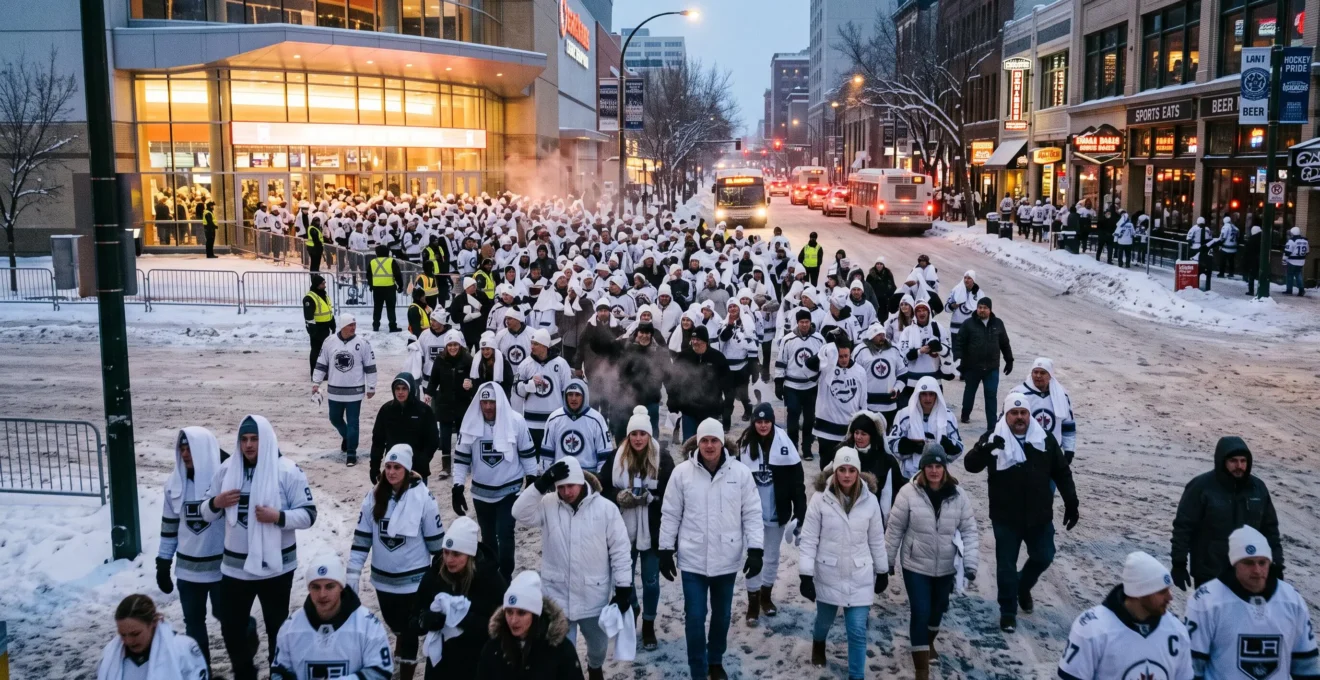
In Winnipeg, professional sports are more than a Saturday-night distraction or a reason to wear a team jersey. The Winnipeg Jets and Winnipeg Blue Bombers give residents shared traditions, recognizable gathering places, and stories that connect generations. Their influence reaches beyond the scoreboard into neighbourhood conversations, downtown businesses, family routines, and the way people describe their city.
The Jets represent both Winnipeg’s attachment to major-league hockey and the emotional significance of losing and regaining an NHL team. The Blue Bombers connect residents to a longer Canadian football tradition, including championship seasons and an enduring rivalry with Saskatchewan. Together, the franchises create different but complementary forms of civic belonging.
Neither team represents every Winnipeg resident, and sporting success alone cannot define a city’s identity. Yet their histories help explain why a playoff crowd, a football rivalry, or even an ordinary game night can become part of Winnipeg’s collective experience.
How professional sports influence Winnipeg’s identity
- Shared history: The Jets’ departure and return, alongside the Blue Bombers’ championship legacy, give residents common reference points for civic pride and resilience.
- Community participation: Games, neighbourhood viewing gatherings, and fan traditions help longtime residents and newcomers connect.
- City life: Sports bring people into public spaces and support event-night activity, although lasting downtown vitality requires more than game-day crowds.
- Why Do Winnipeg’s Pro Sports Teams Inspire Such Strong Local Loyalty?
- How Can a New Winnipeg Resident Experience Local Pro Sports Culture?
- Hockey or Football: Which Winnipeg Game-Day Experience Fits You Better?
- First-Time Winnipeg Pro Sports Game Mistakes That Can Spoil the Experience
- When Should You Plan for a Popular Winnipeg Hockey or Football Game?
- Major Festival or Small Local Event: Which Winnipeg Experience Fits You Better?
- Why Does Downtown Winnipeg Need Everyday Activity, Not Just Physical Upgrades?
- How Can You Make the Most of Winnipeg’s Year-Round Cultural Calendar?
Why Do Winnipeg’s Pro Sports Teams Inspire Such Strong Local Loyalty?
Winnipeg’s professional teams inspire strong loyalty because they connect sporting competition with local history, regional identity, and a sense of collective recognition. The Jets’ departure in 1996 and return in 2011 gave hockey supporters a particularly powerful story of loss and renewal. Meanwhile, the Blue Bombers’ championship history provides a longer-running tradition that families and communities can share.
Winnipeg is a relatively geographically isolated Canadian city compared with the country’s largest metropolitan centres. Having recognizable professional franchises gives residents a shared presence in national sporting conversations. A Jets game places Winnipeg alongside major NHL markets, while the Bombers’ CFL history reinforces the city’s standing within Canadian football.
The Jets’ story is especially distinctive. Winnipeg’s original NHL era ended after the 1995–96 season, followed by the return of NHL hockey in 2011–12. In September 2026, the club and league announced a consolidation of the Jets’ statistical history that brings the original Winnipeg NHL era, the Atlanta Thrashers era, and the modern Winnipeg era into a shared historical record. The Winnipeg Jets and NHL announcement on the franchise’s consolidated history illustrates how institutional records help preserve connections between sporting eras.
The Blue Bombers offer a different historical perspective. Rather than a departure-and-return narrative, their civic significance rests partly on continuity, championship memories, and decades of participation in the Canadian Football League.
12 championships
The Blue Bombers’ championship total cited in their July 2026 Hall of Fame announcement. The club also selected its 1988 and 1990 Grey Cup championship teams for recognition in the 2026 Hall of Fame class.
Winnipeg Blue Bombers, announcement of the 2026 Hall of Fame class.
These histories create two overlapping kinds of loyalty. Inherited loyalty develops when relatives pass along team stories, memorable games, and familiar traditions. Adopted loyalty emerges when newcomers begin following a team through friends, coworkers, or community events. Both can make professional sport a source of belonging without requiring everyone to have the same background.
Winnipeg’s sporting successes can also encourage a city-of-champions narrative, while difficult periods provide stories of persistence. Yet this emotional investment has a drawback: playoff losses, disappointing seasons, and relocation concerns can take on meaning far beyond the immediate results.
It would be difficult to prove that Winnipeg’s residents are more loyal than supporters in larger cities without comparative research. What the city’s documented sports history establishes is a particularly recognizable combination of continuity, disruption, and renewal.
That shared history also creates an accessible starting point for residents who are still getting to know the city.
How Can a New Winnipeg Resident Experience Local Pro Sports Culture?
A new Winnipeg resident can experience local professional sports culture by starting with familiar public traditions, attending a game with someone who knows the teams, and gradually joining recurring social activities. Following the Jets or Blue Bombers does not require immediately purchasing season tickets. A neighbourhood viewing gathering, casual conversation, or single well-chosen game can provide an effective introduction.
The easiest approach is progressive rather than all-or-nothing. Learning a few local customs before attending a match makes conversations easier, while experiencing those customs alongside other supporters gives them context.
- Observe: Follow several Jets or Blue Bombers games, learn basic rules, and notice the traditions supporters discuss. For hockey, become familiar with the Winnipeg Whiteout and its playoff significance.
- Participate: Choose a game that fits your budget and availability, ideally with a Winnipeg resident who can explain the atmosphere, rivalries, and practical arrangements.
- Make it your own: Find a comfortable recurring setting, such as a neighbourhood pub, community viewing group, or occasional live-game outing.
Sports culture also exists outside stadium seating. Around Canada Life Centre, downtown restaurants and gathering places give fans opportunities to connect before and after Jets games. Around the Blue Bombers’ stadium, the surrounding university-area setting provides a different game-day environment.
The Whiteout offers a particularly visible example. During qualifying Jets home playoff games, organized street parties have taken place on Donald Street beside Canada Life Centre, bringing supporters together outside the arena. The official Winnipeg Jets Whiteout information describes events with outdoor screens, food vendors, and community fundraising. Because these are playoff-related events, newcomers should not assume the same arrangements apply during the regular season or every future postseason.
Hockey may appeal to newcomers who enjoy concentrated arena excitement and highly recognizable fan rituals. CFL football may appeal to those who prefer a more relaxed outdoor outing, particularly when attending with family or friends. These are useful starting distinctions, not rigid descriptions of everyone in either fanbase.
The calendar matters, too. Someone arriving during the NHL offseason can begin learning about hockey but may need to wait for autumn to experience regular-season arena culture. Football provides another entry point during the warmer months.
The objective is not to demonstrate instant team loyalty. It is to find an enjoyable way to participate in the community and decide whether that connection grows over time.
Hockey or Football: Which Winnipeg Game-Day Experience Fits You Better?
Choose a Winnipeg Jets game if you prefer fast-paced indoor competition, a concentrated arena atmosphere, and a downtown evening out. Choose a Winnipeg Blue Bombers game if you prefer outdoor sport, a longer social gathering, and the traditions of Canadian football. Neither experience has a universally lower price or better atmosphere; the right choice depends on the particular game, season, and group attending.
Although both franchises attract passionate supporters, their venues create distinctly different outings. Hockey places spectators close to a fast-moving playing surface in an enclosed downtown arena. Football spreads the experience across a larger outdoor setting, where weather, field position, and group arrangements have a stronger influence on comfort.
| Consideration | Winnipeg Jets | Winnipeg Blue Bombers |
|---|---|---|
| Sport and league | NHL ice hockey | CFL Canadian football |
| Venue | Canada Life Centre, downtown | Football stadium at the University of Manitoba |
| Typical season | Autumn through spring | Summer through autumn |
| Environment | Indoor, climate-controlled seating | Outdoor seating exposed to weather |
| Atmosphere | Intense arena action and prominent playoff rituals | Outdoor crowd participation and established CFL rivalries |
| Social outing | Convenient for combining a downtown restaurant visit with a game | Well suited to a longer group outing, with pre-game gatherings where permitted |
| Budget | Varies by opponent, date, demand, and seat | Varies by opponent, date, demand, and seat |
| Comfort considerations | Indoor seating, plus downtown travel conditions | Weather protection, seating location, and transport arrangements |
The Jets offer an urban event experience: spectators can combine a game with downtown dining, and major playoff occasions may extend into the surrounding streets. The Bombers offer an outdoor community gathering, where conversations, pre-game activities, and a longer event window can be part of the attraction.
Pre-game tailgating is worth considering for football supporters, but parking-lot activities should never be assumed to be permitted at every location. Visitors should check the club’s current game-day guidance before planning one.
For someone with an intermediate budget, the most useful comparison is between actual available tickets for ordinary games, not the least expensive football promotion and the most expensive hockey playoff matchup. Add transportation, food, potential parking, and weather-related necessities before deciding.
For families, consider the preferences and attention spans of the people attending. For visitors interested in the city’s history, either franchise offers a meaningful introduction, but football highlights long-standing CFL traditions while hockey foregrounds Winnipeg’s NHL story.
Once the game is selected, preparation becomes the next priority: Winnipeg’s climate and event logistics can have a greater impact on enjoyment than first-time spectators expect.
First-Time Winnipeg Pro Sports Game Mistakes That Can Spoil the Experience
The most common avoidable mistakes at a first Winnipeg professional sports game involve overlooking weather, travel arrangements, seating conditions, and local fan traditions. Late ticket purchases can also increase uncertainty for high-demand events. A successful first visit requires more than securing admission: it means choosing a suitable game, understanding the venue, and planning the full journey.
Winnipeg’s climate creates different challenges for the two teams. The Jets play indoors, but supporters attending winter games still face outdoor conditions while travelling, parking, or walking between downtown destinations. At late-season Blue Bombers games, spectators may spend several hours outside in cold and potentially windy conditions.
Another mistake is assuming that tickets determine the entire cost. Parking, transportation, food, and potential last-minute purchases can change the economics of a supposedly inexpensive outing. A ticket that appears affordable may also be less appealing once its location, sightlines, or exposure to the weather are considered.
Fans can miss the cultural experience by treating the game as an isolated sporting contest. Understanding basic hockey or CFL rules, recognizing familiar crowd routines, and knowing the significance of the Whiteout or Winnipeg–Saskatchewan rivalry can make the atmosphere more meaningful.
However, visitors should distinguish between ordinary game-day behaviour and special events. Wearing white is strongly associated with Jets playoff Whiteout traditions, but a first-time spectator should not assume that every regular-season hockey game follows the same expectations.
Five checks before your first Winnipeg pro sports game
- Confirm your event: Record the date, venue, opponent, and scheduled start time in a calendar entry.
- Review the seat: Check the seating map and save your chosen section, row, and seat details.
- Prepare for conditions: Check the forecast and produce a short clothing or weather-protection checklist appropriate to the venue.
- Choose your route: Identify your transport option, arrival point, and return plan; save them in a trip note.
- Learn one local tradition: Read about a relevant rivalry or fan custom and note what to expect at your selected game.
Trying to experience every famous tradition in one visit can also lead to disappointment. A regular-season game, playoff matchup, and rivalry event serve different purposes. Choosing one that suits the people attending often provides a better introduction than chasing the most heavily advertised occasion.
Good preparation begins with timing, especially when a popular opponent or significant sporting tradition is involved.
When Should You Plan for a Popular Winnipeg Hockey or Football Game?
Plan early when a Winnipeg Jets or Blue Bombers game involves a major rivalry, an opening celebration, a special event, or a particularly popular date. Ordinary regular-season games may provide more flexibility, but availability and prices are never guaranteed. The best approach is to compare demand, travel requirements, and weather exposure before committing to a date.
The two franchises operate on different seasonal rhythms. The NHL regular season typically begins in autumn and runs into spring, with playoff opportunities extending the hockey calendar. The CFL season begins during the warmer months and continues through autumn, making late-season football an increasingly weather-sensitive activity.
For the Jets, games against popular Canadian opponents and significant playoff matchups may attract particularly strong interest. Opening-night events and other special occasions can add to the appeal, although demand depends on the specific schedule.
For the Blue Bombers, the Saskatchewan Roughriders rivalry provides a recognizable date to watch. Labour Day weekend is especially important in CFL culture, but there is one logistical distinction visitors should understand: the traditional Winnipeg–Saskatchewan Labour Day matchup is generally hosted in Regina, not Winnipeg.
The CFL game notes on the Winnipeg–Saskatchewan Labour Day rivalry document the longstanding series and its place in league tradition.
60 meetings
Winnipeg–Saskatchewan Labour Day weekend games recorded by the CFL through 2024 under its stated counting convention. The historical total should not be treated as an updated 2026 figure.
Canadian Football League, 2025 game notes for Winnipeg at Saskatchewan.
For anyone hoping to experience that rivalry in Winnipeg, the scheduled home meeting rather than the Labour Day game itself may be the more practical choice.
A simple planning method is to classify the intended match:
- High-demand occasion: Check tickets and transport arrangements as soon as the relevant schedule and sales information become available.
- Ordinary regular-season game: Compare several dates and seating options before purchasing.
- Outdoor late-season event: Review weather exposure and travel contingencies before choosing seats.
- Special community celebration: Allow additional time for crowds and check whether separate event admission or procedures apply.
Waiting until the last minute can occasionally leave viable ticket options, but it is not a reliable savings strategy. Conversely, buying early is not proof that a particular ticket represents good value. Comparing actual inventory and the full outing cost remains essential.
Sports are only one part of Winnipeg’s event calendar, and many of the same decisions apply when choosing between major cultural festivals and smaller community activities.
Major Festival or Small Local Event: Which Winnipeg Experience Fits You Better?
A major Winnipeg festival is usually the better fit for someone seeking a concentrated introduction to the city’s cultural traditions, while a smaller recurring local event can offer more opportunities to build lasting social connections. Both support civic identity in different ways. The best option depends on how much time, money, and ongoing participation a visitor or resident wants to invest.
Large festivals play a role comparable to prominent sporting occasions. Folklorama and Festival du Voyageur create recognizable cultural moments that residents can anticipate and discuss. Like a major Jets game, a festival can gather participants around an experience strongly associated with Winnipeg.
Smaller neighbourhood events operate differently. Their value often comes from accessibility, repetition, and familiarity. A resident who regularly attends community concerts, local markets, or neighbourhood celebrations may encounter the same people over time, creating relationships that one high-profile event cannot guarantee.
| Priority | Major festival | Small local event |
|---|---|---|
| Short visit | Concentrated cultural programming | More focused community experience |
| New-resident integration | Introduction to widely recognized local traditions | Potential for repeat visits and familiar faces |
| Planning | May require advance tickets or scheduling | May allow more spontaneous participation |
| Budget | Depends on individual programming and admission | Free or low-cost options may be available |
| Social experience | Large, varied crowds | Potentially more conversational and recurring |
The sports comparison is instructive: a major Whiteout celebration can offer an extraordinary sense of collective participation, while watching an ordinary game with familiar neighbours may create stronger ongoing personal relationships. These outcomes are different rather than mutually exclusive.
Seasonality also matters. Winnipeg’s winter cultural programming provides alternatives to outdoor summer activities, while festivals and sports can overlap rather than occupying entirely separate seasons. Checking dates helps avoid missing an appealing event simply because another activity dominates local attention.
For residents working within a modest entertainment budget, several smaller free or low-cost activities may offer more opportunities to participate than one expensive outing. Still, a major festival may be worthwhile when its particular traditions match personal interests.
Whether attendance is measured in tens, hundreds, or thousands, these gatherings also raise an important urban question: how can occasional events contribute to a more active city every day?
Why Does Downtown Winnipeg Need Everyday Activity, Not Just Physical Upgrades?
Downtown Winnipeg needs consistent everyday activity because buildings, streetscape improvements, and occasional major events cannot by themselves sustain a lively urban district. Jets games bring recurring waves of visitors to Canada Life Centre and nearby businesses, demonstrating the value of organized activity. Yet lasting downtown vitality also depends on residents, workers, services, and cultural destinations attracting people outside event hours.
Professional hockey provides a useful illustration of how activity and physical infrastructure interact. Canada Life Centre acts as a recognizable destination, while restaurants and other downtown venues can benefit from the movement of spectators around scheduled games.
The distinction is between event-driven foot traffic and structural everyday activity. Event-driven traffic appears when crowds arrive for a specific occasion. Structural activity exists when people have multiple reasons to spend time downtown regardless of the sports schedule.
Renovated sidewalks, improved public spaces, and attractive buildings can make a district easier or more pleasant to use. However, such investments do not automatically generate continuous demand for nearby businesses. The surrounding area also needs destinations, routines, and services that people choose repeatedly.
Consider a hypothetical downtown restaurant that attracts a large number of customers before Jets games but experiences much quieter periods on other evenings. The establishment might benefit from hockey attendance while still needing regular customers from nearby offices, residences, entertainment venues, and other sources. This example illustrates a business-planning challenge; it is not a claim about any particular Winnipeg restaurant.
There are limits to an event-centred downtown strategy. Attendance changes with the calendar, and interruptions or fluctuations in sporting activity can reduce the regularity of visitor flows. An urban economy dependent on large crowds arriving at particular hours is more exposed to those variations.
A more resilient approach combines major attractions with housing, employment, accessible public spaces, everyday retail, and cultural programming. Sports events can introduce people to downtown places they later decide to revisit, but that conversion depends on having appealing reasons to return.
For residents, this offers a practical perspective: supporting downtown life need not begin and end with attending a Jets game. Meeting friends, visiting local businesses, and attending smaller cultural activities on non-game days can be equally relevant forms of participation.
Once sport is understood as part of a wider network of city activities, Winnipeg’s annual cultural calendar becomes a practical tool for participation and connection.
Key takeaways for getting involved in Winnipeg
- Choose one major sporting or cultural event as an introduction, then look for smaller activities that encourage repeat participation.
- Plan around the different seasons: indoor hockey, outdoor football, winter festivals, and summer celebrations each offer distinct experiences.
- Build familiar places and recurring habits into your calendar instead of relying entirely on major games or festivals.
How Can You Make the Most of Winnipeg’s Year-Round Cultural Calendar?
Make the most of Winnipeg’s year-round cultural calendar by combining major sporting events, seasonal festivals, and recurring neighbourhood activities into a flexible annual plan. Reserve important dates early when demand may be high, but leave room for spontaneous experiences. For newcomers especially, this approach turns occasional entertainment into repeated opportunities to understand the city’s traditions and meet people.
Winnipeg’s sports and festival seasons offer several natural opportunities to participate. The NHL schedule anchors much of the colder part of the year, while CFL football provides outdoor events from summer into autumn. Cultural festivals add different forms of community gathering throughout the calendar.
Rather than trying to attend every major occasion, choose a combination that fits personal interests and practical constraints.
| Season | Potential activities | Planning approach |
|---|---|---|
| Winter | Jets hockey, Festival du Voyageur, and indoor community events | Plan cold-weather travel and check festival or game dates |
| Spring | Late-season hockey, possible NHL playoffs, and local cultural programming | Monitor confirmed schedules and allow flexibility for playoff-dependent events |
| Summer | Blue Bombers football, Folklorama, and neighbourhood activities | Compare major events while leaving time for smaller outdoor gatherings |
| Autumn | Blue Bombers football, the return of Jets hockey, and community events | Balance overlapping sports dates and prepare for changing weather |
This is a seasonal planning framework, not a fixed annual events schedule. Exact dates, programming, playoff participation, and availability should be checked for the year in question.
A useful approach resembles maintaining a small portfolio of experiences. Select one or two high-priority events that justify advance planning. Add recurring activities that can fit ordinary weekends or evenings, and leave some time uncommitted for invitations and local discoveries.
For a hypothetical new Winnipeg resident, the first year might include watching a Jets game with coworkers in winter, visiting Festival du Voyageur, attending a Blue Bombers game during summer, and exploring a neighbourhood event in autumn. The next year could involve returning to whichever gathering felt most welcoming.
The important change is from isolated attendance to recognizable community participation. Repeated experiences can create familiarity with local places and customs, while shared sports memories give people topics of conversation across generations and backgrounds.
Sport is not the only route into Winnipeg’s civic life. Arts, volunteering, neighbourhood initiatives, and cultural organizations also contribute to belonging. The Jets and Blue Bombers are especially visible examples of how public occasions can bring people together, but their value is strongest when understood as part of the city’s broader social fabric.
Start by choosing one sporting event and one neighbourhood or cultural activity for the coming season. Check the confirmed dates, invite someone to participate, and make time afterward to explore the surrounding community. That simple habit offers a practical way to experience Winnipeg not only as a spectator, but as a participant in city life.
Why was the Winnipeg Jets’ return so significant to the city?
The return of NHL hockey for the 2011–12 season restored a major professional sporting presence after Winnipeg’s original NHL team had departed in 1996. That interruption and return provide a distinctive historical backdrop for understanding local hockey loyalty. The official franchise history documents the sporting timeline, although the emotional impact on residents cannot be measured from those records alone.
Can you experience the Winnipeg Whiteout without attending a Jets game?
Yes, when officially organized public Whiteout events are operating. The Jets have staged street parties beside Canada Life Centre during home playoff games, with outdoor viewing screens and food vendors. These events are associated with postseason hockey, and visitors should verify the current arrangements, access requirements, and availability before attending.
Is the Winnipeg–Saskatchewan Labour Day Classic played in Winnipeg?
Traditionally, the Labour Day matchup between the Blue Bombers and Saskatchewan Roughriders is hosted in Regina. Winnipeg supporters looking for a home-game rivalry experience should identify the appropriate Winnipeg-hosted fixture on the current CFL schedule rather than assuming the Labour Day game takes place locally.
Do you need to understand hockey or Canadian football before attending a game?
No. Basic familiarity with the scoring system, game flow, and a few local traditions can make the experience easier to follow, but expert knowledge is unnecessary. Attending with someone who understands the sport or watching a televised game beforehand can help a newcomer feel more comfortable.
How can people participate in Winnipeg sports culture on a limited budget?
Following games through available broadcasts, gathering with friends, exploring community viewing opportunities, and comparing regular-season ticket options can offer alternatives to expensive marquee events. Official public celebrations may provide additional opportunities when scheduled, though admission conditions and related costs vary. Participation in the city’s sporting conversations does not require frequent stadium attendance.