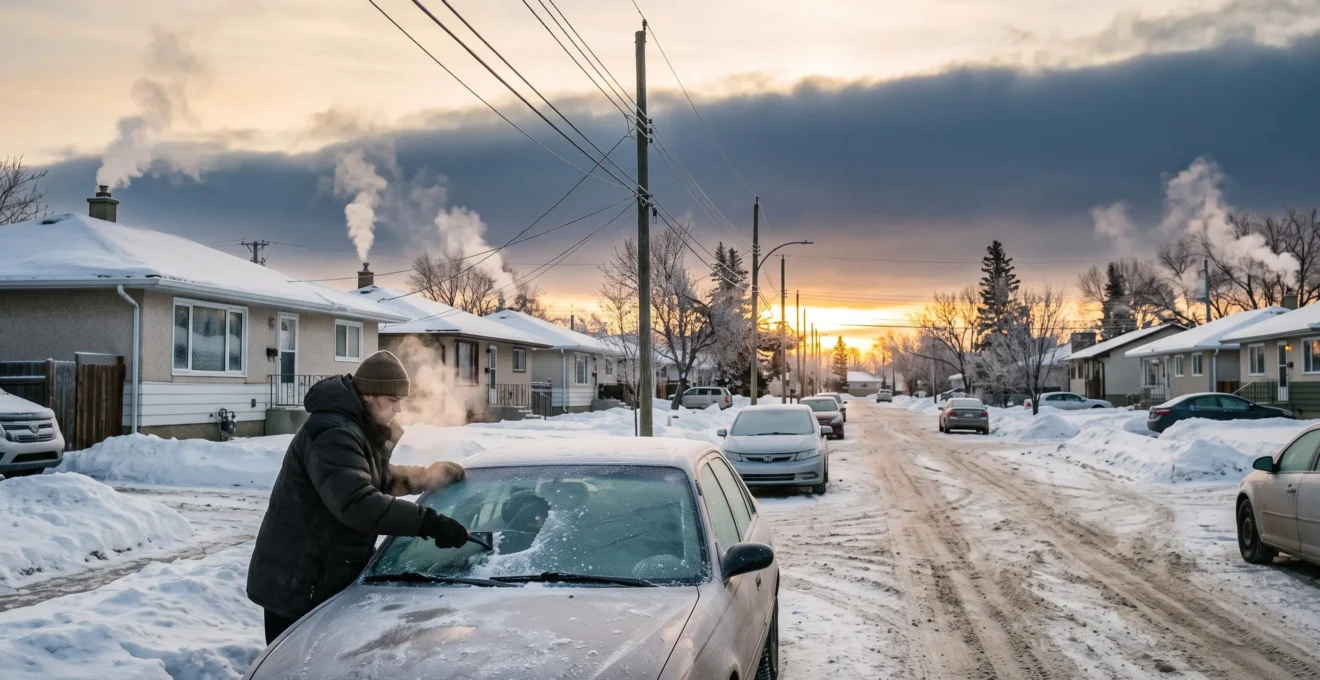
Winnipeg residents can prepare for extreme temperature swings by monitoring when conditions will change, protecting vulnerable household systems, adjusting clothing for wind exposure and reconsidering travel whenever roads may freeze or visibility deteriorates. The most important preparation often happens before a forecast cold front arrives, not after the temperature reaches its lowest point.
The city’s location on the Canadian Prairies exposes neighbourhoods to sharply contrasting air masses. A comparatively mild afternoon can give way to biting winds, freezing conditions and icy surfaces. In another season, a sudden warm-up can create melting snow, drainage problems and slippery pathways when temperatures fall again.
Effective preparedness therefore involves more than choosing a winter coat. Furnace performance, exposed plumbing, vehicle reliability, school routines and the condition of local roads all influence how disruptive a temperature change becomes. A practical plan accounts for both the expected temperature difference and the timing of its arrival.
Winnipeg temperature swing preparedness at a glance
- Monitor hourly forecasts, wind chill and the timing of approaching fronts rather than relying only on daily high and low temperatures.
- Protect household heating and plumbing, keep essential winter supplies accessible and inspect your vehicle before abrupt cold spells.
- Reassess driving, walking and cycling routes during freeze-thaw periods, especially after snow or rain has refrozen.
- Why Can Winnipeg Temperatures Change So Dramatically in a Short Time?
- How Can Winnipeg Households Prepare for a Rapid Temperature Drop?
- Air Temperature or Wind Chill: Which Matters More for Winnipeg Outdoor Plans?
- Temperature Swing Mistakes That Can Leave Winnipeg Residents Unprepared
- When Should a Winnipeg Temperature Swing Change Your Daily Plans?
- How Can You Prepare Your Winnipeg Home and Vehicle Before Heavy Snow?
- When Should Winnipeg Cyclists and Walkers Change Their Usual Route?
- How Can Winnipeg Households Prepare for Heavy Snowfall Before Travel Becomes Difficult?
Why Can Winnipeg Temperatures Change So Dramatically in a Short Time?
Winnipeg experiences rapid temperature changes because its inland Prairie location allows contrasting air masses to move across the region without an ocean moderating their influence. Arctic air can produce sudden cold spells, while warmer air arriving from the south can quickly change conditions. Strong weather fronts make these transitions particularly noticeable.
Manitoba’s southern plains provide relatively open pathways for large-scale air movement. When a cold front advances, dense, colder air replaces a warmer air mass. A warm front produces the opposite transition, although surface temperatures may respond more gradually depending on cloud cover, snow conditions and wind patterns.
The term chinook-style warming is sometimes used informally to describe a sudden winter warm-up, but Winnipeg’s rapid warming events should not automatically be classified as true Rocky Mountain chinooks. Changes in air-mass origin, wind direction and atmospheric mixing can produce substantial warming without the same mountain-driven mechanism.
Several observable signals can accompany an approaching front:
- A shift in prevailing wind direction, indicating changing air-mass influence.
- Increasing or changing cloud cover as frontal weather approaches.
- Atmospheric pressure changes associated with an advancing weather system.
- Forecast hourly temperatures moving sharply upward or downward.
These signals are useful context, but they do not reliably establish the arrival time on their own. Frontal speed varies, and the hourly forecast is more useful than assuming every front moves through at a predictable rate.
Air temperature is only one part of the impact. Winter winds accelerate heat loss from exposed skin, while warm-season humidity can make heat more difficult to tolerate. A comparatively modest change in the thermometer reading may therefore produce a substantial change in outdoor comfort or safety.
Infrastructure faces different challenges. Thawing snow can flow across pavement and refreeze into ice. Repeated freezing and thawing can contribute to pavement deterioration and ground movement. Vehicles also experience changing traction and battery performance as temperatures fall.
The practical lesson is to track the approaching transition as closely as the forecast extreme. That distinction becomes important when deciding how early to protect a home against an overnight cold spell.
How Can Winnipeg Households Prepare for a Rapid Temperature Drop?
Winnipeg households should prepare for a rapid temperature drop by checking heating equipment, protecting pipes exposed to cold, assembling basic outage supplies and identifying the hours when outdoor conditions will deteriorate. The most effective household plan prioritizes heating continuity and water protection before less urgent comfort adjustments.
Approximately 48 hours before a forecast drop, begin with the systems that would be difficult to repair during severe cold. Check whether the furnace operates normally, inspect the filter according to the manufacturer’s recommendations and confirm that heating vents are unobstructed.
If a thermostat relies on replaceable batteries, check them before the cold spell. Households should also know whom to contact if heating fails and where occupants could safely relocate if indoor temperatures become unsafe.
Plumbing deserves particular attention. The City of Winnipeg identifies numerous factors associated with frozen pipes, including frost depth, insulation, building characteristics and pipe placement. Its frozen-pipe prevention guidance recommends insulating vulnerable plumbing, sealing air leaks and locating the main water shut-off valve.
For overnight periods and times when residents are away, the City advises keeping the thermostat at no lower than 12°C (55°F). This is a municipal prevention recommendation, not a guarantee that every vulnerable pipe will remain unfrozen.
Preparation should also reflect the speed of the forecast change. Consider two hypothetical situations: one in which the temperature falls by 20°C overnight, and another in which the same decline occurs across three days. The first leaves less time to adjust clothing, travel and exposed household systems, even if the eventual minimum temperature is identical.
The transition hours are easy to overlook. Someone leaving home during a mild morning may be inadequately dressed for an afternoon cold front. Checking when the change begins helps determine whether additional gloves, an insulated layer or a warmer coat should accompany the day’s activities.
Five household checks before the next cold front
- Verify heating readiness: confirm that the furnace operates correctly and record any fault requiring professional attention.
- Identify vulnerable pipes: inspect exterior-wall and unheated-space plumbing and make a written list of areas needing insulation or sealing.
- Locate the water shut-off: identify the main valve and ensure responsible household members know its location.
- Stage emergency supplies: prepare a visible kit containing a flashlight, suitable batteries, drinking water and essential communication equipment.
- Review the hourly forecast: identify the expected transition period and save a short household schedule showing when outdoor tasks should be completed.
After a thaw, inspect areas where meltwater may collect around foundations, drains and sump systems. Frost on windows or blocked exterior vents also warrants attention. Persistent drainage problems, suspected frozen plumbing or a malfunctioning furnace call for qualified professional assistance rather than improvised repairs.
A household that maintains its heating, protects vulnerable water lines and plans for the arrival time of a cold spell is better positioned to handle the next challenge: deciding how long people can safely remain outdoors.
Air Temperature or Wind Chill: Which Matters More for Winnipeg Outdoor Plans?
For Winnipeg outdoor plans, air temperature and wind chill serve different purposes. Air temperature helps assess environmental conditions affecting vehicles, pipes and equipment, while wind chill describes how wind increases heat loss from exposed skin. When planning time outdoors in winter, wind chill is particularly important for evaluating frostbite risk.
Wind moves away the relatively warmer air surrounding exposed skin, increasing heat transfer. This can make the same air temperature feel substantially colder on an open, windy street than in a sheltered location.
However, wind chill does not mean that a parked vehicle or a water pipe becomes colder than the actual surrounding air temperature solely because of wind. Wind can accelerate cooling toward ambient temperature, but it does not establish a lower final temperature.
Environment and Climate Change Canada publishes wind chill risk categories that residents can use for practical cold-weather decisions. Its wind chill and frostbite guidance distinguishes progressively more hazardous exposure conditions.
| Wind chill value | Risk category | Published frostbite guidance |
|---|---|---|
| -10 to -27 | Moderate | Cold exposure requires appropriate protection. |
| -28 to -39 | High | Exposed skin may freeze in 10–30 minutes. |
| -40 to -47 | Very high | Exposed skin may freeze in 5–10 minutes. |
| -48 to -54 | Very high to extreme | Exposed skin may freeze in 2–5 minutes. |
| -55 or colder | Extreme | Exposed skin may freeze in under 2 minutes. |
These are published risk estimates, not safe exposure allowances or precise individual predictions. Frostbite can occur faster under certain conditions, including sustained winds above 50 km/h. Personal vulnerability, inadequate protection and unexpected exposure can make outdoor situations more dangerous.
For practical planning, use the actual temperature when assessing whether equipment or plumbing may freeze. Use the wind chill forecast when deciding how to cover exposed skin and whether to shorten, relocate or postpone outdoor activities.
The reverse situation also deserves caution. During a spring warm-up, sunshine and shelter from wind may make a location feel comfortable even though shaded streets remain cold. Removing too many layers during a short outing can leave a person exposed if clouds develop or the wind increases.
Outdoor planning becomes more reliable when forecasts are interpreted according to the actual activity, the time spent exposed and the conditions expected along the route.
Temperature Swing Mistakes That Can Leave Winnipeg Residents Unprepared
The most common temperature swing mistakes involve relying on seasonal averages, overlooking the timing of a cold front, neglecting vehicle readiness and storing protective clothing too early. Winnipeg residents can reduce these problems by preparing for the forecast range and the conditions that follow a weather transition rather than only its expected daytime temperature.
Seasonal averages describe broader climate patterns, but they cannot indicate the conditions that will occur during a particular afternoon or overnight period. A comparatively mild forecast high offers little protection if temperatures drop sharply before an evening commute.
One recurring vehicle mistake is assuming that a car which started normally yesterday will behave identically after a substantial temperature decline. Cold weather can expose weaknesses in an aging battery and place additional demands on the starting system.
Tyre pressure also changes with temperature. Drivers should check inflation against vehicle manufacturer specifications when tyres are cold, rather than assuming that a recent pressure reading remains valid after a major weather change.
Another avoidable error is failing to prepare adequate fuel or vehicle charging before severe weather. A vehicle may need to remain stationary for an extended period during a disruption, and winter travel delays can be longer than expected.
The clothing rotation problem appears particularly during spring and autumn. Residents may put away insulated gloves, heavier footwear or winter coats after several mild days, only to need them again when colder air returns.
A practical solution is to maintain a seasonal transition kit near the entrance or in an appropriate travel bag. Gloves, a warm layer and footwear traction aids can remain accessible until local conditions have become consistently suitable for lighter clothing.
Finally, formal alerts should not be the only signal for action. A forecast temperature drop may disrupt routine travel or create icy surfaces even without triggering an official warning. Personal planning triggers can supplement official alerts without replacing them.
For example, a household might decide to review travel whenever the forecast shows a substantial overnight decline following melting conditions. This is a household planning rule, not a government-defined warning threshold.
Once equipment and clothing are prepared, the remaining question is whether the forecast change is serious enough to alter an activity rather than simply require additional precautions.
When Should a Winnipeg Temperature Swing Change Your Daily Plans?
A Winnipeg temperature swing should change daily plans when expected wind exposure, icy surfaces, poor visibility or the duration of an outdoor activity creates risks that ordinary precautions cannot adequately control. Decisions should account for the hour conditions change, the vulnerability of those involved and whether the activity is essential or can be postponed.
Instead of relying on one temperature threshold for every activity, assess three variables: the speed of the approaching change, the conditions expected during the activity and the amount of time spent outdoors.
The following decision grid provides practical examples. It is a planning framework rather than an official weather-warning classification.
| Activity | Forecast concern | Practical response |
|---|---|---|
| School run | Strong wind chill or worsening conditions during travel | Confirm transportation arrangements, minimize exposure and check school communications. |
| Groceries or errands | Freezing precipitation or a rapidly cooling afternoon | Complete non-essential trips before deterioration or postpone them. |
| Outdoor employment | Extended exposure to severe cold or strong winds | Review workplace safety procedures, protective equipment and warming arrangements. |
| Walking or exercise | Refrozen pavement, poor visibility or dangerous wind chill | Shorten, relocate or cancel the session depending on conditions. |
| Essential appointment | Unsafe roads or limited transportation options | Contact the provider, assess alternatives and allow additional travel flexibility. |
Timing can be more informative than the daily forecast high. If a hypothetical cold front is expected shortly before the evening commute, moving a flexible errand to the morning may reduce exposure. If slippery conditions are expected to persist after the front, delaying only an hour may offer little benefit.
The same forecast requires more conservative decisions for young children, older adults and people with certain health conditions. These groups may be more vulnerable to cold exposure, and individual medical guidance should take priority over personal assumptions about tolerance.
Pets also require appropriate protection. Outdoor duration, shelter and exposure should reflect the animal’s needs and actual weather conditions rather than the owner’s comfort.
Not every plan needs to be cancelled. The objective is to distinguish conditions that can be managed with preparation from circumstances where travel, outdoor work or exercise becomes unnecessarily hazardous.
When a sharp temperature transition coincides with an approaching snowfall, household and vehicle preparation become even more important because mobility may remain restricted after the front has passed.
How Can You Prepare Your Winnipeg Home and Vehicle Before Heavy Snow?
Before heavy snow reaches Winnipeg, homeowners should confirm that heating and ventilation systems are safe, prepare drainage and snow-clearing equipment, and check their vehicles for winter reliability. Drivers also need appropriate tyres, working visibility systems and emergency supplies because accumulating snow can make otherwise routine trips difficult or unsafe.
Begin with the home exterior. Inspect accessible eavestroughs and downspouts for existing blockages, assess visible roof or drainage concerns and check that melting water can move away from the foundation. Roof work in slippery or hazardous conditions should be handled by qualified professionals.
Seal obvious drafts where appropriate, confirm that exterior vents are unobstructed and check that carbon monoxide alarms are functioning. Fuel-burning heating equipment requires proper ventilation, particularly when drifting snow may obstruct exhaust outlets.
Vehicle preparation should focus on traction, visibility and the possibility of becoming delayed away from home. Suitable winter tyres help maintain grip in cold-weather driving conditions, although no tyre eliminates the need for lower speeds and longer stopping distances.
Inspect windscreen wipers, washer fluid, exterior lights, the battery and tyre condition before snowfall begins. Clear all essential vehicle surfaces of accumulated snow and ice before driving.
The Manitoba winter-driving guidance provides an important reminder about changing traction: compared with summer conditions, stopping distances may be approximately twice as long on slush, three times as long on loose snow, four times as long on packed snow and up to 12 times as long on ice-covered surfaces.
Up to 12 times
The stopping-distance multiplier identified in Manitoba’s general winter-driving guidance for ice-covered roads compared with summer conditions. Actual distances depend on the vehicle, speed, tyres and road surface.
Manitoba Transportation and Infrastructure, Winter Driving — What You Should Know.
Carry an accessible emergency kit appropriate for winter travel, including insulating clothing, a blanket, a flashlight and essential personal supplies. Maintain adequate fuel or charge for the trip and potential delays. A well-fuelled vehicle can provide additional operational flexibility, but fuel level should never substitute for proper emergency planning.
Snowfall followed by warming and renewed freezing creates a second hazard period. Compacted snow can turn into irregular ice, while melting snow may refreeze across driveways, steps and pedestrian approaches.
Keep snow-clearing tools and suitable traction materials available. When shovelling, work at a manageable pace, avoid attempting heavy loads and take particular care if physical exertion poses a health risk.
Municipal restrictions matter as well. Before leaving a vehicle parked during winter operations, verify Winnipeg’s current snow-clearing notifications and applicable parking bans. The timing and activation of those restrictions may change with municipal operations.
These preparations are especially useful for households that depend on walking, cycling or frequent short vehicle trips, where a familiar route may quickly become a different kind of hazard.
When Should Winnipeg Cyclists and Walkers Change Their Usual Route?
Winnipeg cyclists and walkers should reconsider their usual routes when melting snow refreezes, snowbanks reduce usable space, visibility deteriorates or road conditions force closer interaction with vehicles. A route that was safe during a mild afternoon may become hazardous overnight, particularly at shaded crossings, bridge decks and poorly drained sections.
Freeze-thaw conditions are particularly deceptive. Meltwater can travel across a sidewalk or cycling path during the day, then form a thin ice layer after sunset. Some areas may look clear while retaining slippery patches that are difficult to identify in low light.
Before leaving, assess the sections of a familiar route most likely to be affected:
- Shaded sidewalks and paths that receive limited direct sunlight.
- Bridge decks and exposed crossings where surface conditions may differ from nearby pavement.
- Underpasses, depressions and poorly drained areas where water accumulates.
- Riverbank paths and waterfront approaches where remaining ice can be difficult to detect.
- Intersections where snowbanks obstruct sightlines or reduce available pedestrian space.
Changing equipment may solve some problems without requiring a new route. Footwear traction aids can improve pedestrian grip in suitable conditions, while appropriate bicycle tyres and reliable lights may help experienced winter cyclists manage certain surfaces.
Equipment does not make every route acceptable, however. Continuous glare ice, severely narrowed cycling space or visibility restrictions may justify choosing a cleared alternative or another transportation option.
Post-swing conditions deserve their own assessment. An afternoon above freezing does not establish that every sheltered path has thawed. Likewise, a dry-looking road may contain isolated ice near drainage crossings or compacted snowbanks.
Build some flexibility into departure time. Walking or cycling after daylight has improved may make surface hazards easier to identify, provided weather and traffic conditions are otherwise suitable.
When no reasonably safe route is available, delaying a non-essential journey is preferable to relying on familiarity with a hazardous path.
The same approach of preparing for conditions after a weather change applies to households facing a larger snowfall, especially when transportation disruptions may affect multiple days.
Key takeaways before a major snowfall
- Complete essential errands, replenish medications and check household supplies before worsening travel conditions reduce flexibility.
- Confirm current road information and municipal snow-clearing restrictions rather than assuming every road will be accessible immediately after snowfall.
- Plan for the recovery period as well as the storm itself, including delayed services, blocked approaches and refrozen surfaces.
How Can Winnipeg Households Prepare for Heavy Snowfall Before Travel Becomes Difficult?
Winnipeg households should prepare for heavy snowfall in stages: secure essential supplies several days beforehand, finalize vehicle and parking arrangements before the storm, and limit travel when conditions become unsafe. Preparation should continue after snowfall ends because blocked roads, delayed snow clearing and subsequent refreezing may disrupt routines for longer than the storm itself.
A staged household plan avoids leaving every task until conditions begin deteriorating. It also helps residents distinguish preparations that can be completed early from decisions that depend on the latest forecast and transportation information.
Several days before a possible storm, review medication needs, grocery supplies, household heating readiness and the availability of essential communication devices. Ensure that important phones and portable batteries can be charged, and arrange a way to contact family members if travel plans change.
During the final day before snowfall, review the expected arrival time and confirm that vehicles are parked legally and accessibly. Clear important approaches when safe, inspect snow-clearing equipment and reconsider appointments that would require travel during the worst conditions.
Use current road-condition information, including Manitoba 511 where applicable, before deciding whether to travel on provincial highways. Road reports are useful decision aids, but rapidly changing weather means actual conditions may differ from the latest posted information.
If travel is not recommended, postpone non-essential trips. Essential journeys require a more cautious assessment of road closures, visibility, route conditions and potential alternatives. If conditions worsen while driving, turning back or stopping somewhere safe may be necessary rather than continuing toward the original destination.
Household continuity also depends on school schedules, local services and family communication. Decide how children will be supervised if school arrangements change, identify any critical appointments and ensure that household members know how to report a delay or change in destination.
After the snowfall, avoid assuming that roads and pathways become fully usable as soon as precipitation stops. Plowing follows operational priorities, while residential streets, driveways and parked vehicles may still require attention. Newly cleared surfaces can also become slippery following renewed freezing.
Winnipeg residents should consult current City information about winter parking bans and snow-clearing operations before relocating vehicles or planning access. Do not assume that a previous storm’s parking arrangements remain applicable.
A useful recovery plan assigns responsibility for checking entrances, ensuring vents remain clear, monitoring changing road conditions and following up with household members who must travel. These checks can be repeated until routines become practical again.
Before the next significant forecast change, review one household readiness list, check when the temperature and wind are expected to shift, and decide which trips can safely wait. A small set of preparations completed early provides a more dependable response than trying to solve every problem after travel becomes difficult.
Can water pipes freeze even when a Winnipeg home is heated?
Yes. Plumbing near poorly insulated exterior walls, exposed drafts or unheated spaces may be vulnerable despite a functioning heating system. The City of Winnipeg recommends insulating vulnerable pipes, sealing air leaks and maintaining indoor heating. Keeping the thermostat at or above its recommended minimum does not eliminate every building-specific freezing risk.
Does a sudden temperature increase immediately make Winnipeg roads safer?
No. Warming can melt snow and ice, but the resulting water may refreeze when surface temperatures fall again. Shaded streets, bridges and drainage areas can remain slippery even when exposed pavement appears clear. Road conditions should be evaluated independently of the current air temperature.
Should a parked car’s cold-weather preparation be based on wind chill?
Vehicle preparation should primarily reflect actual air temperature, expected weather and driving conditions. Wind can accelerate cooling, but wind chill does not lower a vehicle’s temperature below the surrounding air temperature on its own. Battery condition, winter-appropriate fluids, tyre condition and road traction remain important considerations.
What should residents do if the forecast changes while they are already travelling?
Reassess the remaining route, current visibility and road conditions before continuing. Where conditions are deteriorating, Manitoba’s winter-driving advice supports turning back or stopping safely until travel becomes more manageable. Do not stop in an unsafe location or rely solely on an earlier forecast.
How can households prepare for temperature swings without constantly monitoring the weather?
Establish a short forecast-checking routine before commuting and before overnight cold spells. Review the hourly temperature trend, wind chill, precipitation and relevant warnings. Keep basic household supplies, winter clothing and vehicle equipment ready so that each approaching front requires a few decisions rather than an entirely new preparation process.