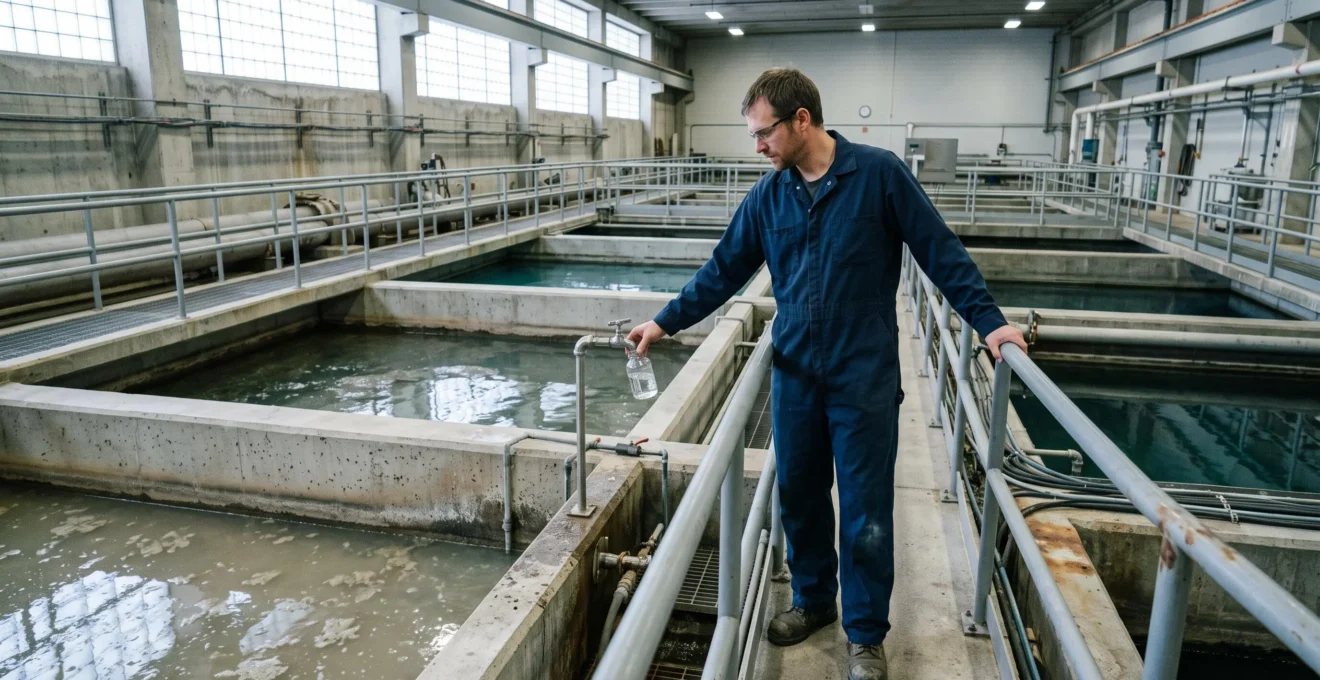
Winnipeg’s drinking water begins its journey at Shoal Lake and undergoes several treatment processes before reaching household taps. At the Deacon Reservoir treatment facility, operators use particle removal, ozonation, biological filtration, chlorine and ultraviolet disinfection to address different water quality concerns. Chlorine remaining in the distributed water provides an additional safeguard as it travels through municipal pipes.
The system is designed around multiple treatment barriers rather than relying on a single technology. Each stage has a specific purpose, from reducing organic material to controlling microorganisms that can cause illness. The City of Winnipeg monitors water quality and provides public information when residents need to take precautions.
Understanding this process also helps households respond appropriately to cloudy water, unusual odours, pressure changes or a drinking water advisory. Not every visible change indicates contamination, but some situations require immediate attention. The important distinction is whether a concern originates in treatment, the distribution network or plumbing inside a property.
Winnipeg drinking water: essential facts
- Winnipeg treats Shoal Lake water at Deacon Reservoir using several complementary physical, chemical and disinfection processes.
- Residual chlorine helps protect treated water as it moves through the distribution network to customer taps.
- Residents should investigate unexpected water changes and follow official municipal instructions whenever a drinking water advisory applies.
- Why Does Winnipeg Drinking Water Need Multiple Treatment Steps?
- How Should You Respond if Winnipeg Tap Water Suddenly Looks, Smells, or Tastes Different?
- Water Treatment or Water Mains: Which System Affects a Winnipeg Tap Water Problem?
- Common Winnipeg Tap Water Myths That Can Lead to Poor Household Decisions
- When Should Winnipeg Residents Change How They Use Tap Water?
- River Flooding or Local Water Buildup: Which Risk Is Affecting Your Winnipeg Area?
- Municipal Service Problems Winnipeg Residents Should Not Ignore
- Which Winnipeg Municipal Services Matter Most in Everyday City Life?
Why Does Winnipeg Drinking Water Need Multiple Treatment Steps?
Winnipeg uses multiple water treatment steps because particles, dissolved organic matter, bacteria, viruses and parasites do not all respond to the same treatment method. The Deacon Reservoir facility combines coagulation, dissolved air flotation, ozonation, biologically activated carbon filtration, chlorine and ultraviolet disinfection. Together, these processes provide protection that no single treatment stage can deliver across every type of water quality concern.
Raw water travels from Shoal Lake through Winnipeg’s water supply infrastructure. Although the source has historically provided relatively good-quality water, natural water can still contain microorganisms and organic substances requiring treatment before household use.
The City’s treatment sequence includes these distinct operations:
City of Winnipeg
- Coagulation and flocculation: ferric sulphate helps smaller organic particles aggregate into larger clusters.
- Dissolved air flotation: tiny air bubbles carry aggregated material to the surface, where it is removed. Winnipeg uses this process rather than a conventional sedimentation stage.
- Ozonation: ozone contributes to disinfection, improves subsequent filtration and addresses taste and odour concerns.
- Biologically activated carbon filtration: the filters remove remaining particles and reduce dissolved organic substances.
- Chlorine disinfection: chlorine helps control bacteria and viruses and provides a disinfectant residual.
- Ultraviolet disinfection: UV treatment inactivates remaining waterborne microorganisms, including parasites such as Giardia and Cryptosporidium.
These operations are described in the City of Winnipeg’s water treatment plant process description. The Deacon facility began supplying treated drinking water on December 9, 2009, and has a stated treatment capacity of 400 million litres per day.
The system also illustrates the difference between treatment at the plant and protection during distribution. Ozone and ultraviolet treatment act within the facility, while chlorine remaining in the water continues serving a protective function as water moves toward consumers.
400 million litres per day
Stated treatment capacity of Winnipeg’s Deacon Reservoir water treatment plant. This represents facility capacity, not daily water consumption or a verified 2026 production volume.
City of Winnipeg, Water treatment program, updated May 9, 2024.
Multiple barriers improve protection against different hazards, although individual processes are not interchangeable and cannot compensate for every possible failure elsewhere in the system. Canadian drinking water safety lessons, including the Walkerton contamination tragedy, reinforce the importance of sound operations, monitoring and safeguards at successive stages.
Even after treatment, the appearance and taste of water can change in household plumbing or distribution pipes. Recognizing those changes is the next practical part of understanding municipal drinking water safety.
How Should You Respond if Winnipeg Tap Water Suddenly Looks, Smells, or Tastes Different?
If Winnipeg tap water suddenly changes colour, smell or taste, first determine whether the issue affects one faucet or several, hot water or cold water, and neighbouring properties. Some changes result from air bubbles, chlorine or disturbed pipe sediment. Persistent discolouration, unusual symptoms or a published advisory require more caution and may justify contacting Winnipeg’s 311 service.
Begin with a glass of cold water from the affected tap. Note whether it looks cloudy, contains visible particles or has an unexpected odour. If cloudiness disappears after the water stands for a few minutes, trapped air may explain it. Cloudiness that persists should not automatically be dismissed as harmless.
A chlorine smell can vary across the distribution system. A change in water flow caused by a main break, firefighting or water main maintenance can also disturb accumulated sediment. Winnipeg explains these possibilities in the City of Winnipeg’s drinking water quality FAQ.
Compare the following observations before deciding what to do:
| Observation | Possible explanation | First response |
|---|---|---|
| Cloudiness that clears after standing | Air bubbles | Observe whether the water becomes clear |
| Temporary brown or yellow appearance | Disturbed sediment in the distribution system | Avoid consuming visibly discoloured water and check municipal information |
| Chlorine odour without other changes | Residual disinfectant | Check whether there are other symptoms or official notices |
| Change affecting hot water only | Possible water heater or hot-water plumbing issue | Investigate the household hot-water system |
| Persistent, unexplained change | Cause not established | Contact 311 for guidance |
Check the City’s drinking water notices when an issue is widespread or follows a service interruption. A precautionary advisory does not, by itself, prove that contamination has been confirmed, but its instructions must still be followed. Residents should not assume that boiling solves discolouration, chemical contamination or plumbing-metal concerns.
A household filter should likewise address a known problem, not merely an unexplained change. Excessive flushing without understanding the cause can waste water and may not resolve sediment entering from disturbed mains.
When the problem continues or affects other properties, identifying the responsible part of the water system helps determine whether municipal staff or a plumbing professional should investigate.
Water Treatment or Water Mains: Which System Affects a Winnipeg Tap Water Problem?
A Winnipeg tap water problem may originate at the treatment plant, within municipal distribution mains, along a service connection or inside household plumbing. A widespread change affecting many properties may indicate a system-level concern, while localized discolouration or pressure loss can be associated with distribution work. A problem isolated to one fixture more often warrants investigating the property’s plumbing.
Winnipeg’s water travels from its source through an aqueduct and treatment infrastructure before entering large transmission pipes, neighbourhood distribution mains, property service connections and interior plumbing. Each component serves a different function, so symptoms at the tap are clues rather than definitive evidence of where a problem began.
The comparison below provides a starting point for investigation, not a diagnosis.
| Possible location | Typical pattern | Appropriate contact |
|---|---|---|
| Treatment or broader supply system | Similar water quality concerns reported across a substantial area | City of Winnipeg through official notices or 311 |
| Municipal distribution main | Neighbouring properties experience changes following a break or maintenance | 311 |
| Property service connection | Problems concentrated at one address | 311 to clarify responsibilities; qualified plumber where appropriate |
| Interior household plumbing | One fixture or only hot water affected | Property owner or qualified plumbing professional |
Water main breaks can change flow conditions and mobilize sediment, while household hot-water issues may point toward the water heater rather than the municipal treatment process. Pressure loss can have several causes and should be treated cautiously, especially if it occurs suddenly.
Some older Winnipeg properties may contain plumbing materials that warrant additional investigation. Residents concerned about lead or other plumbing metals should establish the materials actually present and consult the City about available service-line information. Building age alone does not establish whether a particular service contains lead.
Responsibility for repairs depends on the exact infrastructure involved. Public distribution mains are municipal assets, while interior plumbing is generally the owner’s responsibility. Service-line responsibilities can be divided differently depending on the component and applicable municipal rules, so a property-line assumption should not replace official confirmation.
Documenting whether neighbours share the problem makes it easier to differentiate an individual plumbing defect from a distribution concern. Water testing may be appropriate when material-specific or persistent water quality concerns remain unresolved.
Once the likely source has been narrowed down, household decisions should rely on evidence rather than common assumptions about how treated drinking water behaves.
Common Winnipeg Tap Water Myths That Can Lead to Poor Household Decisions
Several common beliefs about Winnipeg tap water can lead residents to spend unnecessarily on bottled water, filters or plumbing repairs. Treated water normally retains some disinfectant, temporary cloudiness can come from air bubbles, and bottled water is not automatically safer. The useful question is whether a specific observation indicates a health concern, a plumbing issue or an ordinary feature of municipal treatment.
Myth: Properly treated water should contain no chlorine. Winnipeg maintains residual chlorine at customer taps because disinfectant protection remains important after water leaves the plant. The smell can be noticeable without demonstrating that the water is unsafe. Residents bothered by the taste can refrigerate drinking water in a suitable container, as described in municipal guidance.
Myth: Cloudy water always means contamination. Tiny air bubbles can temporarily make water appear milky. When the air escapes, the water clears. Persistent cloudiness, particles or unusual colour require a different assessment and should not be attributed to air without supporting observations.
Myth: Winnipeg does not fluoridate its water. The City’s documented policy includes fluoridation. Municipal information identifies 1956 as the year fluoridation began and describes an optimal concentration of 0.7 parts per million. That policy description should not be mistaken for a verified current measurement at a particular Winnipeg tap.
Myth: Bottled water is necessarily safer. Bottled drinking water and municipal tap water operate under different regulatory frameworks. Packaging does not establish that one is universally safer than the other. The reason for choosing bottled water matters: an official drinking water advisory creates a different situation from an ordinary preference for taste.
Household filters also deserve careful evaluation. A certified device may improve a particular water quality characteristic, but the certification must match the substance of concern. Filters require maintenance, and removing chlorine for taste does not eliminate the need to keep plumbing and filter equipment hygienic.
For most households, understanding the actual water quality concern is more useful than adopting a permanent treatment device without testing. Neither a visual inspection nor a pleasant taste can rule out every possible contaminant.
The circumstances that genuinely require changing water use are more specific, particularly official advisories and disturbances affecting the water entering a home.
When Should Winnipeg Residents Change How They Use Tap Water?
Winnipeg residents should change their tap water use when an official drinking water advisory applies or when an unresolved water quality concern makes normal use uncertain. A boil water advisory requires particular precautions for drinking and food preparation. Main repairs, sediment disturbance and plumbing renovations may require different actions, so residents should follow instructions specific to the event rather than treating every problem alike.
During a boil water advisory, Winnipeg instructs affected residents to bring tap water to a rolling boil for at least one minute before using it for drinking, making ice, preparing beverages, cooking, brushing teeth or preparing infant formula. The requirement also applies to water that has passed through an in-home filtration system.
These measures appear in the City of Winnipeg’s boil water advisory instructions. The official page should be checked for the applicable advisory area, current status and any specific directions.
Unboiled water may be used for ordinary showering during a boil water advisory if swallowing is avoided. For young children who may swallow water, the City recommends sponge baths. These permissions do not necessarily apply to other kinds of water quality warnings.
After an advisory ends, the City provides a distinct recovery procedure. Its published instructions include cleaning faucet aerators, replacing affected filters, running cold water taps for five minutes with aerators removed and filters disconnected, and managing the hot-water system and appliances as directed. These are post-advisory instructions, not universal flushing advice following every main break.
Five actions to make a sound tap water decision
- Identify the event: record whether the issue involves an official advisory, a main break, maintenance or a household plumbing change. Keep a short description of the event.
- Check official instructions: review the current municipal advisory information and record which precautions apply to the property.
- Document observations: note the date, affected faucets, water appearance and whether neighbouring properties report the same concern. Keep photographs where useful.
- Apply the matching precautions: use boiled or bottled water when directed by an advisory, and follow event-specific instructions instead of improvising a treatment method. Keep a checklist of actions completed.
- Confirm normal use can resume: verify that any advisory has ended, complete the applicable municipal recovery instructions and retain a record of unresolved concerns for 311.
Permanent household treatment decisions require a different assessment. Hardness and iron can be relevant to taste, staining or plumbing performance, while microbiological contaminants and certain dissolved substances raise health-related questions. Test results must be interpreted against the appropriate parameter and applicable guidance, not simply compared with results from unrelated properties.
People with extremely weakened immune systems should seek medical advice about appropriate drinking water precautions. Infant formula preparation also requires special attention to official instructions and applicable health guidance. Boiling cannot be assumed to remove chemical contaminants or dissolved metals.
Severe weather and flooding add another layer of uncertainty, but understanding the type of flooding matters before concluding that a municipal drinking water supply has been affected.
River Flooding or Local Water Buildup: Which Risk Is Affecting Your Winnipeg Area?
River flooding and local water buildup pose different risks across Winnipeg. Rising levels on the Red and Assiniboine rivers can threaten exposed properties, while intense rainfall, snowmelt and drainage limitations can create overland or basement flooding elsewhere. Neither condition automatically proves that treated municipal drinking water is contaminated, although flooding around private wells or damaged property plumbing can require separate precautions.
River flooding depends on river levels, watershed conditions and the vulnerability of properties near flood-prone areas. Winnipeg uses provincial flood forecast information to identify properties at risk and describes a process for delivering notices to affected addresses.
Overland flooding has a different pattern. Water can accumulate when runoff exceeds local drainage capacity, including in areas associated with creeks, ditches, retention ponds or snowmelt. Basement flooding can also occur in locations not identified as river flood zones.
The distinction matters because municipal drinking water and private water sources have different exposure pathways. Water entering a basement may damage private plumbing or create sanitation hazards without demonstrating that water in the city’s treated supply has been compromised. A flooded private well, by contrast, may need specific assessment and testing before drinking-water use resumes.
Households can use the City of Winnipeg’s property flood-risk information to understand the categories of flooding and municipal notification procedures.
Before the spring thaw or a period of forecast heavy precipitation, a practical preparation method is to check available property-specific flood information, inspect lot drainage and basement protection, and identify official municipal and provincial emergency information channels.
Flood protection infrastructure can reduce exposure to major river events without eliminating localized drainage problems. A property outside a mapped high-risk river area can still experience water buildup after rain or snowmelt.
Residents who suspect their property is exposed to river flooding despite not receiving an official notification can contact 311. Drinking water precautions should follow actual advisories or evidence concerning the property’s supply rather than assuming every nearby flood requires boiling tap water.
Flooding also illustrates how water supply, drainage and wastewater infrastructure interact. Similar connections can appear during less dramatic municipal service problems that deserve early attention.
Municipal Service Problems Winnipeg Residents Should Not Ignore
Winnipeg residents should report recurring discoloured water, unexplained pressure loss, persistent sewer odours and repeated infrastructure problems rather than assuming they will resolve themselves. A single brief disturbance may have an ordinary operational explanation, but patterns affecting several fixtures or neighbouring properties deserve investigation. Accurate information helps municipal staff distinguish water supply problems from private plumbing or drainage concerns.
Water quality concerns become easier to evaluate when residents observe their timing and location. For example, a change occurring after nearby water main repairs may have a different cause from one that appears only when a household water heater operates.
Useful information to collect before contacting 311 includes:
- The address and approximate time the problem began.
- Whether cold water, hot water or both are affected.
- Whether the issue occurs at one tap or throughout the property.
- Any recent water main work, flooding or plumbing repairs nearby.
- Photographs of discolouration, where relevant.
- Whether neighbouring residents are experiencing similar symptoms.
A sudden and substantial pressure change requires particular attention because it may indicate a problem affecting water delivery. Where a safety notice exists, its instructions take priority over ordinary household troubleshooting.
Persistent sewer odours and slow drainage are different from drinking water treatment issues. They may involve interior plumbing, sewer connections or municipal wastewater infrastructure. Residents should avoid assuming that every water-related symptom can be addressed by changing drinking water filters.
Responsibility also matters. Municipal authorities manage public water infrastructure and investigate system-level quality concerns, while owners normally arrange repairs to interior plumbing. Service connections can involve divided responsibilities that need confirmation for the specific problem.
Early reporting helps establish a useful record when failures recur. It also allows municipal staff to assess whether observations correspond with known maintenance or infrastructure issues. A report alone does not guarantee that a particular asset will be replaced, but it creates information that would otherwise remain unavailable.
Water service is only one part of Winnipeg’s municipal infrastructure. Understanding how other services connect helps residents find reliable information and report problems to the right place.
Key takeaways for Winnipeg households
- Use 311 to report municipal service concerns and clarify which department or property owner is responsible.
- Check official notices before changing drinking water practices, particularly after infrastructure failures or flooding.
- Keep a simple record of recurring problems so that future reports include useful evidence rather than isolated observations.
Which Winnipeg Municipal Services Matter Most in Everyday City Life?
Winnipeg’s most important everyday municipal services include drinking water supply, wastewater collection, drainage, waste collection, roads, transit and winter maintenance. These systems interact: a water main break can disrupt road access, heavy rainfall can affect drainage and wastewater infrastructure, and winter conditions can complicate repairs. Knowing which service is responsible helps residents report problems and follow the correct safety instructions.
Drinking water treatment is particularly important because its benefits are usually invisible. Residents see clean water coming from the tap, but not the source-water infrastructure, treatment equipment, operational monitoring and distribution network required to deliver it.
Wastewater collection performs a separate function by carrying used water away from homes and businesses. Stormwater drainage manages runoff and other surface-water flows. Although these systems are related to water management, they should not be confused with the equipment that treats municipal drinking water.
Other services influence how residents experience water-related events. Road crews may need to coordinate access during infrastructure repairs, while snow clearing and drainage management affect the movement of water during seasonal changes. Garbage and recycling collection and public transit similarly depend on functioning road infrastructure.
| Municipal service | Everyday purpose | Useful reporting approach |
|---|---|---|
| Drinking water | Supplies treated water to connected properties | Review water notices and contact 311 for unexplained concerns |
| Wastewater | Collects used water and sewage | Report suspected public sewer problems; investigate private plumbing separately |
| Stormwater drainage | Manages runoff and localized water accumulation | Report municipal drainage issues and document property impacts |
| Roads and winter maintenance | Maintains transportation infrastructure and winter access | Use municipal service information and report relevant road concerns |
| Waste and recycling | Provides municipal collection services | Use the appropriate City collection information and service channels |
| Transit | Supports daily public transportation | Consult official transit communications for service changes |
The City’s 311 service provides a starting point for municipal information and service requests. Official water and wastewater communications are the appropriate place to confirm drinking water notices and applicable instructions. Provincial and federal health authorities also provide broader drinking water guidance, but property-specific municipal concerns should not be resolved through general standards alone.
The essential lesson is that safe drinking water is the outcome of an interconnected public service system. Treatment protects water before distribution, while responsible infrastructure operation, monitoring and communication remain important after water leaves the plant.
The next practical step for residents is to identify their household’s usual water conditions, keep track of the City’s official drinking water information and report unexplained changes promptly. That combination supports informed decisions without replacing municipal advice with unnecessary assumptions.
Where does Winnipeg’s drinking water come from?
Winnipeg obtains its municipal drinking water from Shoal Lake, with source water conveyed through an aqueduct to the Deacon Reservoir treatment facility. The water then undergoes several treatment processes before distribution. The City’s documentation identifies the source-water location as Shoal Lake 40 First Nation territory.
Does Winnipeg disinfect water with ultraviolet light?
Yes. Ultraviolet disinfection is one of the treatment processes described by the City. It follows chlorine treatment and helps inactivate microorganisms, including Giardia and Cryptosporidium. UV treatment is part of a wider system that also includes particle removal, ozonation, filtration and chlorine.
Does boiling Winnipeg tap water remove lead or other dissolved metals?
No. Boiling is used to address certain microbiological risks when directed by a boil water advisory; it is not a treatment for removing dissolved metals such as lead. Residents concerned about plumbing metals should investigate their water supply and plumbing materials and obtain suitable testing or professional guidance.
Should residents use hot tap water for drinking or cooking?
The City recommends cold tap water for drinking and food preparation because hot water can contain higher concentrations of metals dissolved from plumbing materials. Where hot water is needed for cooking, cold drinking water can be heated separately.
Does Winnipeg water need an additional household filter?
Municipally treated drinking water does not ordinarily require an additional household filtration system simply because it comes from the tap. A filter may be useful for a verified water quality concern or personal taste preference, provided its certification addresses the intended substance and it is maintained correctly. During a boil water advisory, ordinary household filtration does not replace the City’s boiling instructions.